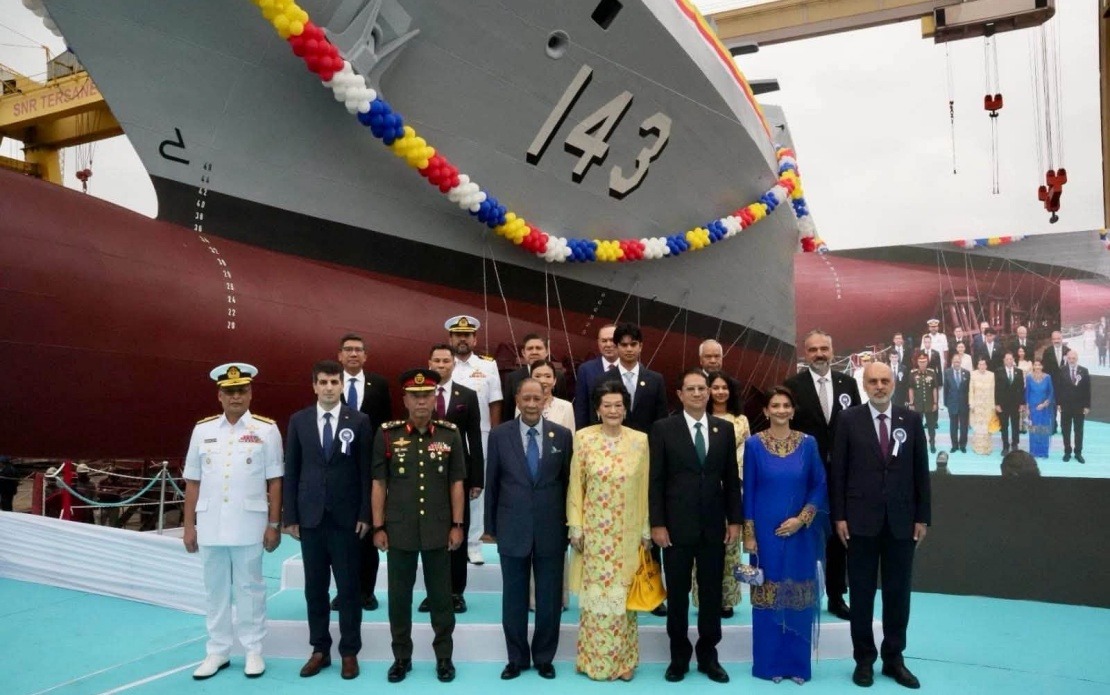
The Royal Malaysian Navy stands at a critical juncture in its modernisation journey, with Defence Minister Datuk Seri Mohamed Khaled Nordin stressing the pressing need for advanced naval platforms to navigate an increasingly complex security landscape in regional waters. Speaking during the launching ceremony of the third Littoral Mission Ship Batch 2 (LMSB2) vessel, Mohamed Khaled articulated the government's steadfast commitment to equipping the RMN with contemporary capabilities necessary to safeguard Malaysia's sovereignty and maritime economic interests. This emphasis comes at a time when Southeast Asian waters face mounting pressures from regional tensions, rising maritime trade dependencies, and the need for enhanced naval presence across vast oceanic jurisdictions.
The vessel being launched, named Tunku Osman Jewa, carries symbolic significance beyond its operational role. The ship's designation honours the legacy of the late General Tan Sri Tunku Osman Tunku Mohammad Jewa, a distinguished figure from the Kedah royal family who previously served as chief of Malaysia's Armed Forces. This naming reflected the respect accorded to his contributions to national defence, with the Sultan of Kedah, Al Aminul Karim Sultan Sallehuddin Sultan Badlishah, and Sultanah Maliha Tengku Ariff attending the ceremony to witness this tribute. The presence of Kedah's highest dignitaries underscored the national importance attached to the naval expansion programme.
The completion of the three-ship LMSB2 series represents a watershed moment for Malaysian maritime defence capabilities. Each vessel in this batch brings enhanced coastal patrol and sea control functionalities, extending the RMN's reach across the country's extensive Exclusive Economic Zone and territorial waters. The littoral mission ship design reflects modern naval thinking, balancing offensive and defensive capabilities while maintaining the flexibility required for diverse maritime operations ranging from anti-piracy missions to humanitarian assistance and disaster relief. The successive launches of these three vessels demonstrate the government's determination to maintain regular naval modernisation despite budgetary pressures and competing development priorities.
What distinguishes this procurement programme is its unprecedented partnership structure. The LMSB2 acquisition marks the first formal Government-to-Government warship collaboration between Malaysia and Turkey, signifying a deepening defence relationship with the Middle Eastern NATO ally. This partnership brings technological transfer opportunities and construction expertise, allowing Malaysia to develop indigenous naval shipbuilding capabilities while accessing Turkish design and engineering knowledge. For a nation seeking to strengthen its strategic autonomy in maritime defence, such collaborative frameworks offer pathways to reduce long-term procurement costs and build sustainable domestic expertise in advanced naval construction.
The delivery timeline outlined by Mohamed Khaled projects completion of all three LMSB2 vessels by the end of 2027, representing a methodical integration strategy that allows the RMN to absorb and operationalise the new platforms without disrupting existing fleet operations. This phased approach contrasts with rushed acquisitions that sometimes generate maintenance and training challenges. The temporal spacing between launches also permits the navy to establish requisite shore support infrastructure, train personnel adequately, and develop operational doctrines suited to these modern platforms before the next vessel enters service.
The LMSB2 programme forms a crucial component of the RMN's broader 15-to-5 Transformation Plan, an ambitious strategic framework aimed at consolidating naval operations around five primary operational flotillas while modernising ageing assets. This restructuring acknowledges geographic realities: Malaysia's maritime domain spans three geographically separated regions—the Straits of Malacca in the west, the South China Sea in the east, and the waters of Sabah and Sarawak in the east. Achieving effective presence and rapid response capabilities across these expanses requires not merely larger numbers of vessels but technologically superior platforms capable of extended deployments and sustained operations in demanding tropical conditions.
For Malaysian policymakers and defence strategists, the maritime security environment presents interlocking challenges. Piracy and armed robbery at sea, though diminished compared to previous decades, remain persistent threats in certain corridors. Smuggling networks exploit vast ocean spaces to traffic contraband ranging from narcotics to counterfeit goods, straining the RMN's interception resources. Illegal, unreported, and unregulated fishing operations depleting Malaysia's marine resources demand sustained surveillance and enforcement capabilities. Additionally, navigational freedom in contested waters requires the RMN to maintain credible presence and operational readiness, factors that modern, capable vessels directly support.
Regional dynamics further amplify the imperative for naval modernisation. Competing maritime claims in the South China Sea, increasing naval activities by extra-regional powers, and the strategic importance of sea lanes carrying trillions of dollars in annual trade converge to demand sophisticated Malaysian naval capabilities. Small nations cannot match larger neighbours in fleet size, but technological superiority and strategic positioning allow effective deterrence and presence. The LMSB2 vessels, equipped with modern sensors, communications systems, and tactical capabilities, contribute meaningfully to this strategic calculus.
The Turkey partnership also reflects Malaysia's diversifying defence procurement strategy, historically centred on traditional Western suppliers. Engaging Turkish shipbuilders introduces competitive alternatives, potentially moderating costs while accessing cutting-edge naval design. For Turkey, the Malaysian partnership offers export opportunities and influence expansion in Southeast Asia, aligning with Ankara's broader strategic outreach initiatives. This mutually beneficial arrangement demonstrates how smaller nations can leverage global defence competition to secure advanced capabilities while building strategic partnerships beyond traditional blocs.
Beyond the immediate operational implications, the LMSB2 programme carries broader institutional significance for the RMN's development trajectory. Acquiring advanced platforms necessitates corresponding investments in personnel training, maintenance infrastructure, and logistical systems. The three new vessels thus catalyse institutional modernisation extending far beyond hardware acquisition. The navy must develop new operational concepts, training protocols, and maintenance procedures tailored to contemporary systems, effectively upgrading its organisational capability alongside its material assets.
Looking forward, the successful delivery and integration of these three vessels will establish baseline expectations for continued fleet modernisation. Maritime security challenges are not static phenomena; they evolve continuously as technologies advance and regional circumstances shift. The RMN's capacity to operate modern platforms effectively will inform future procurement priorities and capability development strategies. Furthermore, successful collaboration with Turkey may establish a template for future international partnerships, potentially opening avenues for additional joint projects or technology partnerships that strengthen Malaysian maritime capabilities.
The Defence Minister's emphasis on continuous modernisation reflects realistic assessment of maritime domain realities. No navy achieves permanent superiority; it requires sustained investment, technological upgrading, and strategic modernisation efforts. Malaysia's geographic position, maritime interests, and regional responsibilities demand a navy capable of independent operations across vast distances while maintaining interoperability with regional and international partners. The LMSB2 programme, with its three modern vessels entering service through 2027, represents a concrete expression of this commitment, establishing the foundation for sustained maritime security and national protection in an uncertain strategic environment.

