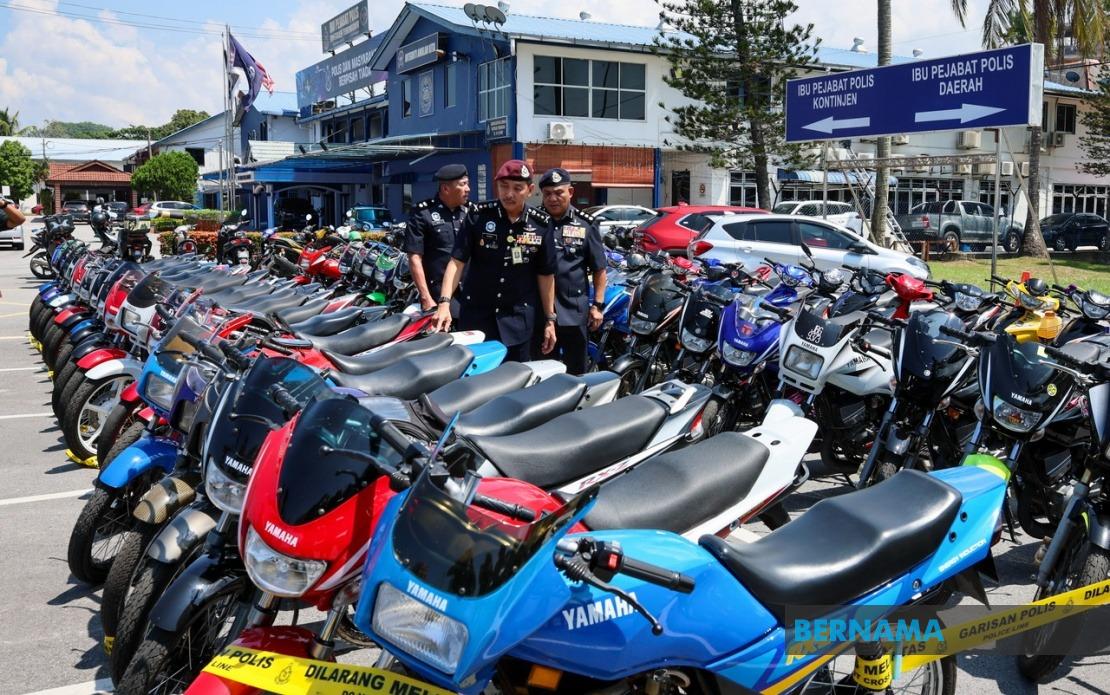
Road safety expert Shahrim Tamrin, drawing on his experience as a former board member of the Malaysian Institute of Road Safety Research (MIROS), has sounded an urgent alarm about the escalating dangers surrounding the RXZ Members motorcycle programme. Speaking from Kuala Terengganu, Tamrin has called on government bodies, enforcement agencies, and event organisers to establish a rigorous, evidence-based risk management framework to address what he characterises as an accelerating crisis rather than isolated incidents.
The data presents a troubling trajectory. The RXZ Members programme, which began in 2017, recorded just two fatalities in 2024 but this figure jumped dramatically to five deaths in 2025 before spiking to eleven in 2026. This climbing toll suggests that without intervention, the annual gathering poses an increasingly serious threat to participant safety. The latest edition, RXZ Members 8.0, held at the Gong Badak Motor Racing Circuit in Kuala Nerus over late July, drew more than 200,000 participants—making it the largest event in the programme's history. During the four-day period from July 30 through early August, Bukit Aman Traffic Investigation and Enforcement Department director Datuk Seri Muhammed Hasbullah Ali confirmed that 46 motorcycle-related accidents occurred, with eleven proving fatal, five classified as serious, and thirty remaining minor incidents.
Tamrin's proposed framework addresses the scale and complexity of managing such a massive congregation. He advocates for participant projections to be established in advance, paired with careful planning of entry and exit corridors to prevent bottlenecks and chaotic movement. The plan should designate specific rest areas where fatigued riders can recover safely, strategically position ambulance units to minimise response times to accident scenes, and establish a dedicated emergency response command centre equipped to coordinate immediate interventions. Beyond physical infrastructure, Tamrin emphasises the necessity of a robust communications strategy to relay real-time information to participants and responders alike, underpinned by detailed pre-event risk assessments conducted by qualified professionals.
Crucially, Tamrin argues that the sheer volume of participants—now exceeding 200,000—has rendered conventional traffic enforcement inadequate for the task. The RXZ Members programme has evolved from a niche motorcycle enthusiast gathering into one of Malaysia's largest annual mass assemblies, rivalling in scale many official national events. This transformation demands a corresponding shift in safety philosophy: rather than relying principally on police patrols and traffic regulation, authorities must approach the gathering as a large-scale public event requiring the integrated discipline of professional risk management. This distinction is not semantic but fundamental, as it repositions safety as a proactive design consideration rather than a reactive enforcement response.
Tamrin proposes the implementation of mandatory post-event safety audits following each gathering. These audits should meticulously document the number and nature of accidents, their geographical distribution, timing patterns, identified causes, characteristics of affected riders, and technical factors relating to motorcycles involved. Critically, such audits should assess the effectiveness of enforcement measures deployed during the event. By publishing comprehensive audit reports before the subsequent year's gathering, organisers and authorities could base improvements on empirical evidence rather than intuition or emotional reactions to tragedies. This evidence-driven approach would transform each incident into a learning opportunity, progressively refining safety protocols.
An ancillary concern Tamrin raises involves environmental and community impacts. Local residents near the Gong Badak circuit have lodged complaints about excessive noise and emissions generated by participants, creating air quality problems and quality-of-life disruptions. Tamrin recommends tightening enforcement of noise and exhaust emission standards, particularly targeting motorcycles that have been modified in ways that amplify sound and increase pollution. This recommendation reflects recognition that the RXZ gathering's impact extends beyond participant safety to affect surrounding communities, necessitating a more holistic approach to event management.
The composition of vehicles participating in the RXZ programme presents a distinctive challenge. Most Yamaha RXZ motorcycles currently in use are between two and three decades old, having changed ownership multiple times and often undergone restoration or modification work. Many face documentation complications, incomplete ownership records, and registration obstacles. Tamrin has recommended that the Road Transport Department (JPJ) devise pathways to facilitate re-registration of these older machines, provided they pass mechanical inspection at authorised Computerised Vehicle Inspection Centres (Puspakom). However, he emphasises a critical safeguard: motorcycles modified in ways that compromise safety—inadequate braking systems, structural weakening, or handling degradation—should either be restored to original specifications or excluded from participation. This balanced approach would allow well-maintained vintage machines to participate while preventing genuinely dangerous vehicles from operating during the event.
Tamrin further recommends that police and JPJ collaborate with RXZ clubs and programme organisers to establish formal training programmes for marshals and group leaders responsible for managing convoy movements. These individuals occupy a frontline position in influencing participant behaviour and could serve as force multipliers for safety messaging. By equipping them with proper training in convoy discipline, hazard recognition, and emergency response procedures, the safety infrastructure surrounding the gathering would be substantially strengthened. This grassroots engagement approach leverages the social structure within the RXZ community itself to promote safer collective behaviour.
Additionally, Tamrin proposes introducing travel advisory measures modelled on systems deployed by highway concessionaires during major festive seasons. Such advisories would inform participants about anticipated peak travel periods, suggest alternative routes to avoid congestion, and recommend designated rest stops where riders can pause without compromising safety. By disseminating this information through multiple channels—official event communications, social media, and participant organisations—authorities could encourage more distributed, safer travel patterns rather than allowing dangerous congestion to develop organically.
For Malaysia and Southeast Asia broadly, the RXZ Members programme's trajectory raises important questions about how governments should manage large-scale voluntary gatherings that fall outside traditional event permitting frameworks. Unlike organised sporting events or concerts with discrete venues and defined capacity limits, motorcycle rallies involve dispersed participation across extended routes, making safety coordination inherently more challenging. The RXZ case illustrates that as such gatherings grow in scale, the regulatory and management approach must mature correspondingly. Southeast Asian nations hosting similar events could benefit from Malaysia's emerging experience, adopting evidence-based risk frameworks rather than ad-hoc enforcement responses.
Tamrin's intervention represents a shift toward professionalisation of event safety management in Malaysia, grounded in expertise rather than reactive crisis response. His recommendations, taken collectively, form a coherent system designed to protect participants while maintaining the cultural and recreational value these gatherings hold for motorcycle enthusiasts. Whether authorities and organisers embrace this framework will significantly influence whether future iterations of the RXZ Members programme become demonstrably safer events or continue their troubling escalation in fatalities.

