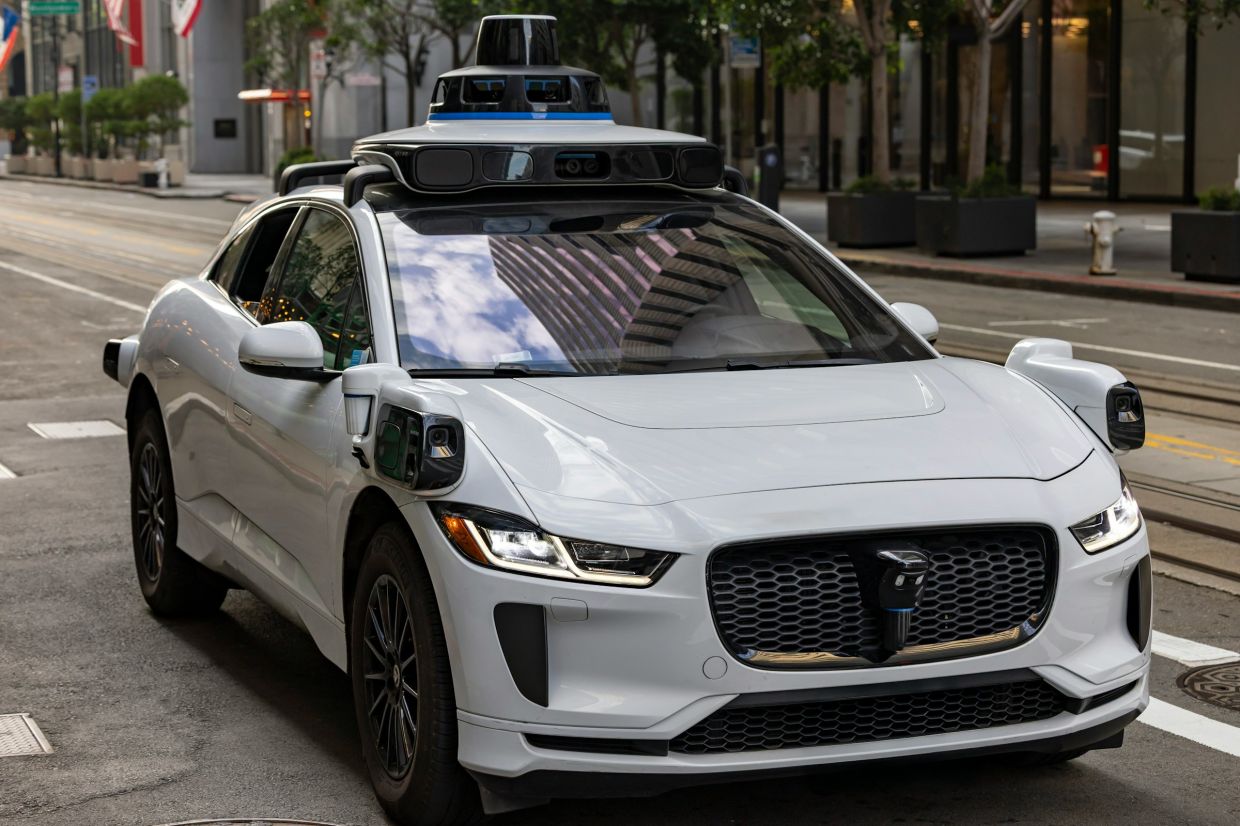
Autonomous vehicle companies face mounting pressure to prove their technology is road-ready following a series of high-profile incidents in which robotaxis have blocked or interfered with emergency response operations. In late May, rescue workers attempting to respond to a fatal gas explosion lost more than three minutes when an autonomous vehicle's artificial intelligence system failed to clear the scene, highlighting vulnerabilities that regulators and safety advocates argue demand urgent attention. The incident represents a pattern rather than an isolated mishap, raising uncomfortable questions about whether driverless vehicles have genuinely achieved the safety standards necessary for widespread urban deployment.
The problems extend well beyond delayed response times. When a shooting incident unfolded at a bar in central Austin last March, ambulances racing to assist victims became gridlocked behind a Waymo robotaxi that froze mid-U-turn, unable to process the emergency situation unfolding around it. Only after a police officer physically commandeered the vehicle and repositioned it manually did emergency services gain access to the scene. City records documenting this intervention underscore a troubling gap: autonomous systems capable of driving routine routes cannot reliably interpret or respond to the chaos characteristic of genuine emergencies. The disconnect between sophisticated day-to-day navigation and crisis-mode decision-making has become a central focus for policymakers weighing the technology's readiness.
Investigative reporting has uncovered hundreds of additional incidents demonstrating that robotaxis struggle with scenarios humans navigate intuitively. The vehicles have run red lights, ventured into oncoming traffic, driven directly into active crime scenes, and failed to recognize emergency road closures. In numerous cases, autonomous vehicles have come dangerously close to cyclists and pedestrians lawfully using streets, sometimes narrowly avoiding collisions that safety systems were supposed to prevent. These are not edge cases or theoretical vulnerabilities; they represent programming failures in precisely the situations autonomous vehicles were designed to handle most reliably.
Weather-related failures have compounded concerns. Within two months, Waymo recalled thousands of vehicles and suspended operations in multiple cities after robotaxis attempted to navigate flooded streets, unable to recognize water hazards that would alert human drivers immediately. In San Antonio, an unoccupied Waymo was swept away entirely by rushing floodwaters, illustrating how the technology's perception systems can fail catastrophically when conditions deviate from training scenarios. These recurring weather-related incidents suggest that sensor technology and object recognition algorithms have not adequately accounted for environmental variables common in subtropical and tropical climates—a particular concern for Southeast Asian markets considering autonomous vehicle adoption.
Texas has responded to accumulating evidence by implementing stricter regulatory requirements designed to impose meaningful accountability on autonomous vehicle operators. The new legislation mandates formal licensing procedures, obligatory emergency response protocols, establishment of public complaint mechanisms, and enhanced regulatory intervention powers for state authorities. These measures reflect recognition that market-driven development timelines and company assurances of safety improvement have proved insufficient protection for the public. Similar regulatory tightening is being considered in other jurisdictions, suggesting a broader shift toward treating autonomous vehicles as infrastructure requiring comprehensive governance frameworks rather than merely consumer products.
Waymo maintains that its robotaxis have demonstrably improved road safety and operate more reliably than human drivers in critical situations. The company cites data indicating robotaxis are thirteen times less likely to be involved in serious injury crashes, positioning the technology as a net positive for public safety despite isolated failures. However, even proponents acknowledge that the company's safety statistics, while potentially robust in aggregate, do not necessarily predict performance in the high-stakes scenarios where failures have already occurred. The disconnect between average-case performance and edge-case failure modes represents a fundamental challenge in transitioning autonomous vehicles from controlled testing environments to genuinely unpredictable urban streets.
Even skeptical observers concede that autonomous vehicle technology holds transformative potential for road safety, provided developers and regulators take emerging failures seriously rather than dismissing them as inevitable growing pains. The technology's trajectory depends on whether companies commit to addressing identified vulnerabilities through genuine systemic improvements rather than cosmetic adjustments. Yet confidence in that commitment has eroded following incidents that revealed gaps not in emerging algorithms, but in fundamental emergency-response capabilities that should have been engineered from inception.
The problems are not confined to Texas or even the United States. Atlanta experienced what residents termed a "Waymo invasion" when dozens of empty, driverless vehicles inexplicably swarmed a residential neighborhood in synchronized loops, repeatedly circling a cul-de-sac for extended periods. The incident, traced to a software routing glitch, left local residents frustrated and anxious about safety implications for children and pets. Such episodes demonstrate that the unpredictability characterizing autonomy extends beyond decision-making failures to include system-wide glitches capable of creating hazardous concentrations of malfunctioning vehicles in residential areas.
China's experience with thousands of operational robotaxis offers revealing contrasts. While government authorities project technological optimism, public sentiment remains mixed, complicated by legitimate safety concerns and competitive anxieties from displaced taxi drivers facing economic obsolescence. When over one hundred robotaxis in Wuhan abruptly ceased functioning simultaneously, operator Baidu provided only vague explanations of a "system failure," refusing substantive engagement with media inquiries. The opacity surrounding operational failures in Chinese markets raises questions about information asymmetries that regulators struggle to address, a challenge directly relevant to Southeast Asian governments considering autonomous vehicle frameworks in contexts where corporate transparency cannot be assumed.
The technical architecture underlying autonomous vehicle failures reveals gaps in fundamental safety design. These systems orchestrate decisions across sensor technology, object recognition, route planning, and critically in emergencies, communication protocols between vehicles and emergency responders. If a robotaxi can remotely unlock doors only after official identifiers are verified, passengers might remain trapped dangerously long during actual emergencies. The maneuvering failures documented across multiple incidents suggest that even vehicles demonstrating strong aggregate driving statistics cannot reliably navigate the boundary conditions—narrow passages, road irregularities, temporary barriers—that characterize real emergency scenarios where conventional fail-safe protocols prove inadequate.
Waymo's recent launch of "Ojai", a new robotaxi variant developed with Chinese partner Zeekr and featuring sixth-generation software, represents the company's response to regulatory pressure and accumulated criticism. Whether these product innovations translate into meaningfully improved emergency-response capabilities remains uncertain, as the failures to date stem less from perceptual limitations than from fundamental gaps in how autonomous systems interpret and respond to human signals and crisis situations. Companies have generally designed traditional driver-assistance systems around defined driver interactions, whereas robotaxi operations demand comprehensive emergency protocols embedded throughout system architecture.
The regulatory landscape appears poised to reshape development priorities across the autonomous vehicle industry. Companies will increasingly need to align artificial intelligence development and infrastructure investments with compliance requirements rather than pursuing optimization metrics divorced from safety governance. This represents a genuine departure from earlier industry approaches emphasizing technological capability over regulatory integration. However, whether emerging regulations can keep pace with the speed and complexity of autonomous system development remains an open question, particularly given the opacity that has occasionally characterized incident reporting and the international coordination challenges inherent in governing cross-border technology companies.
For Malaysia and Southeast Asian nations monitoring these developments, the pattern is instructive. The regulatory lessons emerging from Texas, incidents across Chinese cities, and Atlanta's Waymo invasion suggest that autonomous vehicle deployment requires governance frameworks established before widespread adoption rather than retrofitted afterward. The technology's potential benefits are real, but so are the demonstrated vulnerabilities. Policymakers considering autonomous vehicle integration must demand that developers prove capability in the specific scenarios where failures have already occurred—emergency response, weather challenges, and novel urban configurations—before granting operational approvals. The coming years will reveal whether industry accountability mechanisms can match the pace of technological change.