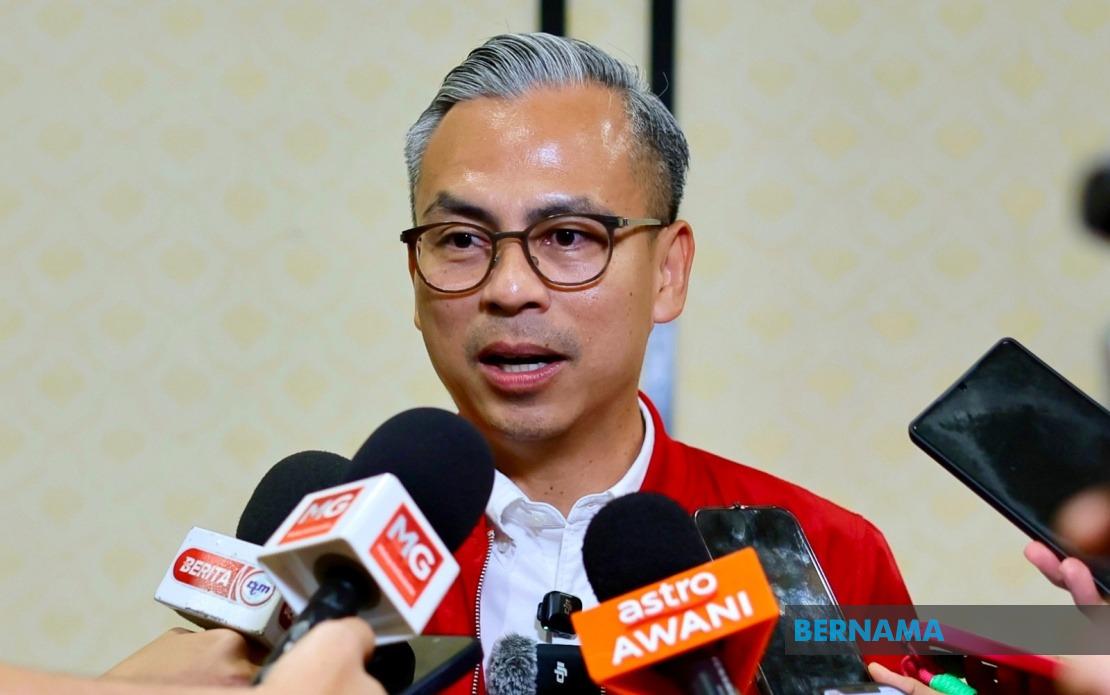
Communications Minister Datuk Fahmi Fadzil has signalled the government's willingness to facilitate a high-profile dialogue between Johor Menteri Besar Datuk Onn Hafiz Ghazi and Pakatan Harapan's Puteri Wangsa candidate Dr Maszlee Malik, offering Radio Televisyen Malaysia's broadcast infrastructure as a neutral platform for the encounter. Speaking in Muar, Fahmi indicated that RTM TV1 could host the interactive discussion at a mutually convenient time and location, with Johor Bahru mentioned as a possible venue.
The proposal marks a significant moment in the Johor campaign, as it addresses mounting pressure on opposition parties to demonstrate confidence in their candidates before agreeing to public confrontations with incumbents. Rather than positioning the encounter as a conventional political debate designed to score partisan points, Fahmi characterised the initiative as an opportunity for structured, respectful dialogue centred on substantive policy matters affecting Johor's trajectory. This framing reflects an effort to elevate the discourse beyond personal attacks or party positioning, emphasising instead the exchange of ideas regarding the state's development priorities and long-term vision.
Fahmi, who also serves as Pakatan Harapan's Communications Director, argued that the capacity to engage constructively with opposing viewpoints represents a fundamental leadership competency. His assertion that a credible leader must demonstrate professionalism when confronted with criticism carries implicit weight in a context where voters are evaluating candidates' suitability for high office. By positioning openness to dialogue as a marker of governance quality, Fahmi attempted to reframe the debate proposition not merely as campaign theatre but as a practical test of leadership readiness.
The minister specifically praised Maszlee's recent engagement with a group of 41 young voters, highlighting the candidate's demonstrated commitment to consulting with Johor's youth on aspirations for the state's future. This endorsement served multiple purposes: it validated Maszlee's candidacy in the face of questions about PH's timing in naming opposition standard-bearers, while simultaneously suggesting that Onn Hafiz should similarly embrace opportunities for direct voter engagement rather than avoiding public confrontation with rival candidates.
The Puteri Wangsa contest itself presents a complex electoral landscape. Maszlee will compete against Barisan Nasional's Teow Chia Ling, Nicholas Paul Vincent representing Parti Bersama Malaysia, MUDA's Rashifa Aljunied, and independent candidate Wang Wee Seong. This five-way competition underscores the fragmentation of electoral choice in contemporary Malaysian politics, where traditional two-coalition contests increasingly give way to multi-cornered races featuring newer parties and independent contenders. The proliferation of candidates complicates both strategic voting calculations and the messaging landscape for established parties.
Parallel to developments in Puteri Wangsa, Johor's political theatre extends to the Machap constituency, where incumbent Onn Hafiz faces a direct contest against Pakatan Harapan's Nor Hafiz Roslan. This two-candidate race contrasts sharply with the crowded Puteri Wangsa field, and illustrates the varied competitive dynamics across different state seats. The emergence of straight fights in some areas while other constituencies fragment among multiple contenders creates distinct strategic environments for voters and candidates navigating the July 11 polling day.
The timing of Fahmi's statement assumes particular significance given that early voting is scheduled for July 7, with the main election just four days later. This compressed campaign calendar leaves limited space for the proposed dialogue to occur, raising practical questions about whether sufficient time remains for both candidates to prepare and for RTM to arrange logistics. The tight timeline underscores how electoral deadlines can constrain the scope for substantive public engagement, even when political actors express willingness to participate in such forums.
Fahmi's appeal to young voters stressed the importance of overcoming logistical barriers to exercise their electoral franchise, framing voter participation as a civic responsibility essential to determining Johor's governance trajectory for the next five-year term. This exhortation reflects broader concerns about youth turnout in Malaysian elections, particularly in contexts where voting may require travel or encounter scheduling inconveniences. The minister's emphasis on the stakes involved—fundamental decisions about state development direction—attempted to motivate electoral participation by connecting individual voting acts to collective outcomes affecting Johor's future.
The proposal to conduct the dialogue on RTM rather than commercial broadcasters carries institutional implications. As the national broadcasting corporation, RTM occupies a constitutionally distinct position within Malaysia's media ecosystem, theoretically insulated from partisan pressure. Yet the offer simultaneously reflects government capacity to marshal state institutions—a prerogative that opposition figures might view with underlying wariness, notwithstanding official assurances about the platform's neutrality and focus on development agenda discussion rather than partisan combat.
The dialogue proposal arrives amid evolving patterns in Malaysian electoral communication, where live broadcast debates and interactive forums have gained prominence as voters increasingly demand direct candidate engagement beyond traditional campaign rallies and printed manifestos. The RTM offer represents institutional recognition of this shift toward more dialogical campaign formats, though questions persist about whether such forums genuinely influence voter decision-making or primarily serve as media events consumed by politically engaged minorities already inclined toward particular candidates.
For Pakatan Harapan, the gambit demonstrates strategic confidence in Maszlee's capacity to hold his own in direct confrontation with the Menteri Besar. Opposition parties in Malaysian politics have sometimes hesitated to position candidates in such high-stakes visibility situations, fearing that underperformance might damage their viability. Fahmi's public offer effectively signals PH's assessment that Maszlee possesses the rhetorical and substantive resources to emerge credibly from such an encounter, thereby implicitly making claims about candidate quality and readiness for high office.
For Onn Hafiz and Barisan Nasional, the proposal creates a subtle political trap. Declining the offer invites accusations of avoiding scrutiny and lacking confidence in defending the incumbent government's record. Yet accepting carries risks, as live broadcast encounters introduce unpredictability and potential for gaffes or awkward moments that controlled campaign environments can minimize. The positioning of the dialogue around development issues rather than partisan attack potentially neutralizes some advantages of incumbency, as it shifts focus toward future vision and policy substance rather than the government's demonstrated governance capacities over preceding years.
The proposal ultimately reveals how Malaysian electoral politics increasingly unfolds through negotiations over the format, timing, and framing of public candidate engagement, with control over communication platforms and debate parameters representing crucial competitive terrain. Whether the dialogue materialises within the compressed pre-polling timeline remains uncertain, but Fahmi's offer has already contributed to shaping campaign expectations and candidate positioning in a consequential state election where national-level political trends increasingly reverberate across local contests.

