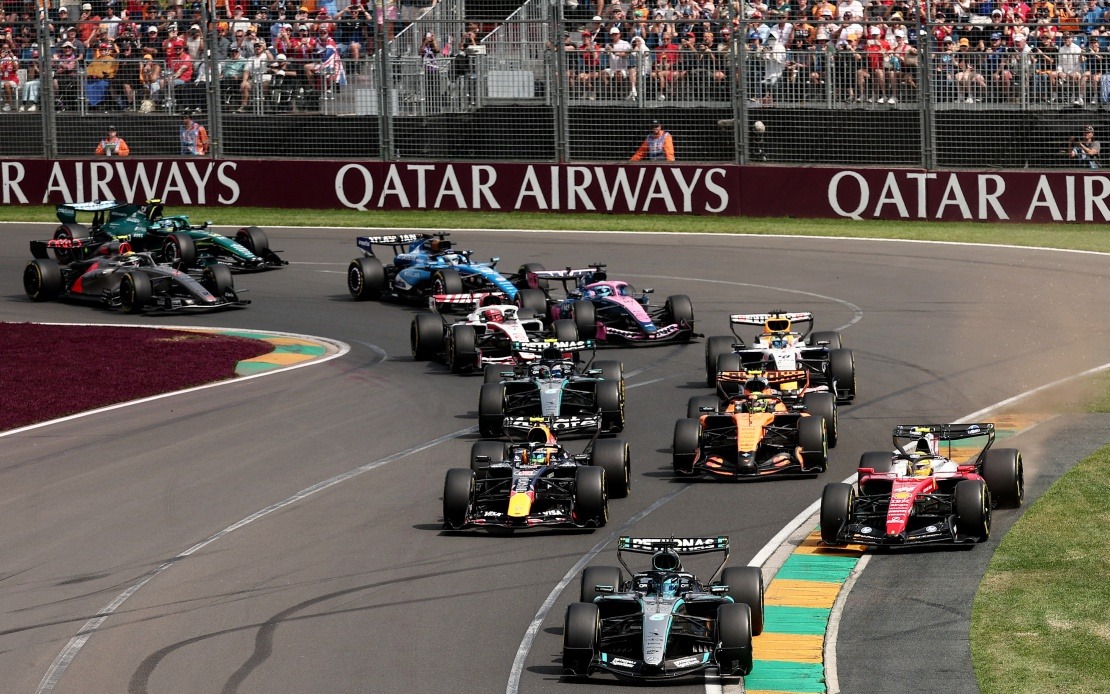
George Russell's Formula 1 championship aspirations received a damaging blow at Spa-Francorchamps on Sunday when a combination of mechanical failures and a collision with teammate Lewis Hamilton forced him to abandon the Belgian Grand Prix. The retirement has widened Russell's deficit to an alarming extent, leaving the Mercedes driver trailing Italian teenager Kimi Antonelli by 50 points in the drivers' standings with the campaign only at the halfway point. The setback has prompted fierce criticism from Russell directed at his team, raising questions about Mercedes' ability to resolve persistent technical difficulties before the championship reaches its critical phase.
Russell's frustration boiled over in an unbroadcasted radio transmission moments after his race ended at the iconic circuit. The Mercedes driver unleashed a scathing condemnation of the team's energy management systems, expressing disbelief that his vehicle had been depleted of battery charge during a critical straight section of the lap. His explosive comments reflected the mounting pressure on a driver who has endured repeated mechanical setbacks throughout the season, suggesting a growing emotional toll from the reliability problems plaguing the reigning world champions.
The weekend at Spa-Francorchamps had been troublesome for Russell from the outset. During qualifying, he found himself mysteriously half a second adrift of Antonelli's pace, a gap that would prove decisive in determining grid positions. Initial diagnostics from the Mercedes engineering team suggested that Russell's driving style might be responsible for the performance disparity, a theory that was quickly discarded as his engineers investigated further. The inability to immediately identify the problem illustrated the complexity surrounding the power unit's sophisticated battery harvesting and deployment systems, pointing to a deeper technical challenge within the team's engine package.
When Russell finally took to the circuit on race day, his vehicle suffered an engine problem on the opening lap that immediately exposed him to the chasing pack behind him. This vulnerability created the circumstances for the collision with Hamilton that ultimately ended his afternoon. The sequence of events—initial mechanical gremlins followed by contact with a teammate—encapsulates the frustrations that have haunted Russell's season as reliability issues have repeatedly undermined his competitive efforts just when optimal performance was required.
Mercedes team principal Toto Wolff acknowledged the legitimacy of Russell's emotional response while contextualizing the situation within the broader sporting and technical landscape. Wolff recognized that drivers operating at the elite level of international motorsport experience heightened emotional reactions to disappointing outcomes, whilst simultaneously emphasizing the honour and privilege of representing the Mercedes brand. His measured response attempted to balance empathy with a reminder of the responsibilities that accompany a position in Formula 1's most competitive team.
Wolff elaborated on the specific technical malfunction that compromised Russell's performance, revealing that Mercedes engineers had identified an engine-related issue preventing adequate energy deployment into the demanding Turn 18 corner. The team principal noted that the defect had been most apparent at Spa because the circuit's energy-demanding characteristics made the problem acutely visible, whereas it might have remained undetected at circuits with less severe energy requirements. Wolff estimated that this technical failure accounted for approximately half or slightly more of the qualifying deficit Russell had suffered relative to Antonelli.
The energy management challenges that Russell encountered highlight the intricate relationship between driver inputs and vehicle systems in modern Formula 1 competition. Contemporary power units represent technological marvels encompassing sophisticated battery management, energy harvesting strategies, and deployment protocols. The interaction between these automated systems and driver actions at the circuit's multiple corners creates variables that can be extraordinarily difficult to diagnose and remedy, particularly when problems manifest inconsistently. Mercedes' struggle to identify and resolve these issues quickly represents a significant competitive disadvantage against teams with more reliable power unit implementations.
Russell's comment that he has become "numb to disappointment" after a calendar year plagued by mechanical failures provides a sobering assessment of the psychological impact that unreliability exerts on even elite athletes. The psychological burden of consistent technical issues differs fundamentally from straightforward performance deficits, as reliability problems generate frustration rooted in factors beyond driver control. When mechanical gremlins repeatedly prevent a driver from competing on equal terms with teammates, the cumulative psychological effect can undermine confidence and motivation.
The championship mathematics now facing Russell present an urgent scenario requiring immediate tactical adjustments. With Antonelli having claimed six victories from ten completed races and establishing a commanding 50-point margin, Russell faces a structural championship deficit that demands sustained success at nearly every remaining event. The Hungarian Grand Prix, scheduled for the following weekend as the final round before the summer break, represents a critical opportunity for Russell to arrest the momentum shift. However, unless Mercedes can definitively resolve the power unit deployment issues that emerged at Spa, Russell may find himself battling technical obstacles rather than competitors during the closing rounds.
Wolff's public backing of Russell and assertion that "the team is 100 per cent behind him" signals Mercedes' recognition that the driver requires institutional support to navigate the morale challenges accompanying a difficult season. The team principal's reference to Russell's "difficult spell" and comparison to challenges faced by other elite athletes suggests a long-term perspective on competitive performance cycles. Nevertheless, the gap between sympathetic rhetoric and tangible technical solutions looms large, particularly given the remaining limited time before the summer break for engineers to implement meaningful reliability improvements.
The situation at Mercedes encapsulates a fundamental tension within Formula 1 between the sport's technical complexity and the human element of championship competition. Russell's evident exasperation reflects not merely disappointment at a single race result but accumulated frustration from a season where mechanical failures have repeatedly compromised his campaign during crucial moments. As the championship progresses toward its business end, the reliability differential between Mercedes and its competitors, particularly the team currently operating Antonelli's championship-winning machinery, could prove determinative in deciding the year's ultimate outcome.

