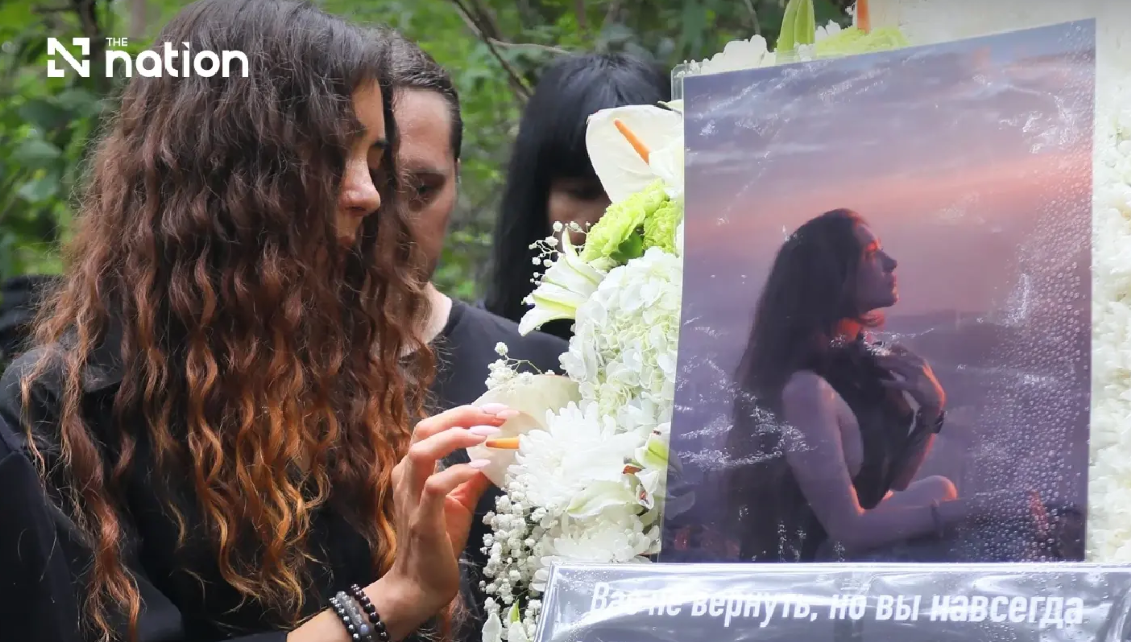
Sharina Nazimova stood at the Huai Yai subdistrict memorial site in Bang Lamung district on Thursday to honour her two Russian children alongside three members of a Thai family believed to have been killed by the same perpetrators. The ceremony brought together Thai and international mourners, provincial officials, police representatives and civil servants in a solemn gathering that reflected the cross-cultural nature of the tragedy and its impact on the broader community.
The Buddhist ritual, conducted by monks chanting traditional prayers, served as a dedicated merit ceremony for all five victims. The service represented a significant moment for Nazimova, who had raised Diana and Roman as a single mother and shared the family's Buddhist faith. Her presence at the memorial underscored the deeply personal nature of the loss, even as it acknowledged the broader significance of the case within Thai society and international relations.
Mourners created a floral tribute of white carnations, lilies and roses—flowers chosen deliberately for their symbolic associations with purity, respect and peaceful transition. Among the personal touches was a cup of coffee placed beside Diana's memory, a simple yet poignant reminder of everyday moments that would no longer be shared. The intimate detail resonated deeply with attendees, many of whom had followed the investigation closely through media coverage and public discourse.
Throughout the ceremony, Nazimova visibly struggled with grief, finding solace in the presence of relatives, friends and strangers united by compassion for her family's suffering. Her emotional vulnerability during the ritual demonstrated the weight of losing both children to violence, a burden made heavier by the distance from her homeland and the circumstances surrounding their deaths.
In her remarks, Nazimova extended her gratitude beyond her immediate family circle to encompass the entire Thai nation. She acknowledged the practical assistance provided by government agencies, law enforcement personnel and volunteer organisations, but her appreciation extended more significantly to the emotional and moral support offered by ordinary Thai citizens. This recognition of collective compassion highlighted how the tragedy, while deeply personal, had transcended individual loss to become a moment of cross-cultural empathy within Thai society.
The circumstances leading to the memorial were grim. Police arrested Thana Kerdthong, 43, and Thongchai Srinil, 39, in Wang Sombun district of Sa Kaeo province on July 31 following an intensive investigation. Authorities allege the men encountered the Russian siblings beside a road, falsely presented themselves as police officers to gain compliance, and forcibly restrained them before transporting them to a wooded area. The stated motive was motorcycle theft, suggesting a crime of opportunity that escalated fatally.
Investigators have noted that the suspects provided conflicting narratives about events, with police indicating that their accounts remain unverified against forensic evidence and other investigative findings. This inconsistency in their statements underscores a broader investigative challenge in serious crime cases, particularly when multiple perpetrators are involved and conflicting interests emerge regarding culpability and specific actions.
Following their arrest, the suspects cooperated in locating the burial site, leading investigators to the remains of Diana and Roman. The expanded investigation subsequently uncovered the graves of the Thai family of three nearby, suggesting a pattern of concealment and potentially strengthening investigators' assessment of deliberate criminal activity rather than isolated incidents. The proximity of the burial sites raises questions about the timeline and circumstances of these separate incidents.
The case has generated significant international attention, particularly from Russian authorities and media outlets monitoring the welfare of their citizens abroad. Thailand's handling of the investigation, combined with the community's visible expressions of support for Nazimova and the victims' families, has contributed to broader perceptions of Thai responsiveness to foreign nationals in distress. This dimension carries diplomatic implications for Thailand's relationship with Russia and its reputation as a destination for international tourists and residents.
The memorial service represented a formal closure for the family and the public, though the legal process continues. Attendees expressed collective hope that the criminal justice system would proceed decisively in establishing accountability and delivering justice for all five victims. This sentiment reflected confidence in Thai institutional processes, even as the crimes themselves highlighted vulnerabilities in public safety that concern residents and visitors alike.
The presence of both Thai and international mourners at the ceremony underscored how individual tragedies resonate across borders and communities. The ritual acknowledged shared human values around loss, justice and dignity, transcending the specific national identities of the victims and perpetrators. For Malaysia and the broader Southeast Asian region, the case serves as a reminder of the interconnected nature of safety concerns affecting citizens and visitors throughout the area.
Moving forward, the case will likely influence how Thailand engages with international visitors regarding personal safety messaging and community relations. Nazimova's public expressions of gratitude, despite her overwhelming loss, have contributed to narratives emphasising Thai compassion and institutional support for victims and their families, shaping perceptions that extend well beyond the immediate circle of those directly affected by the tragedy.

