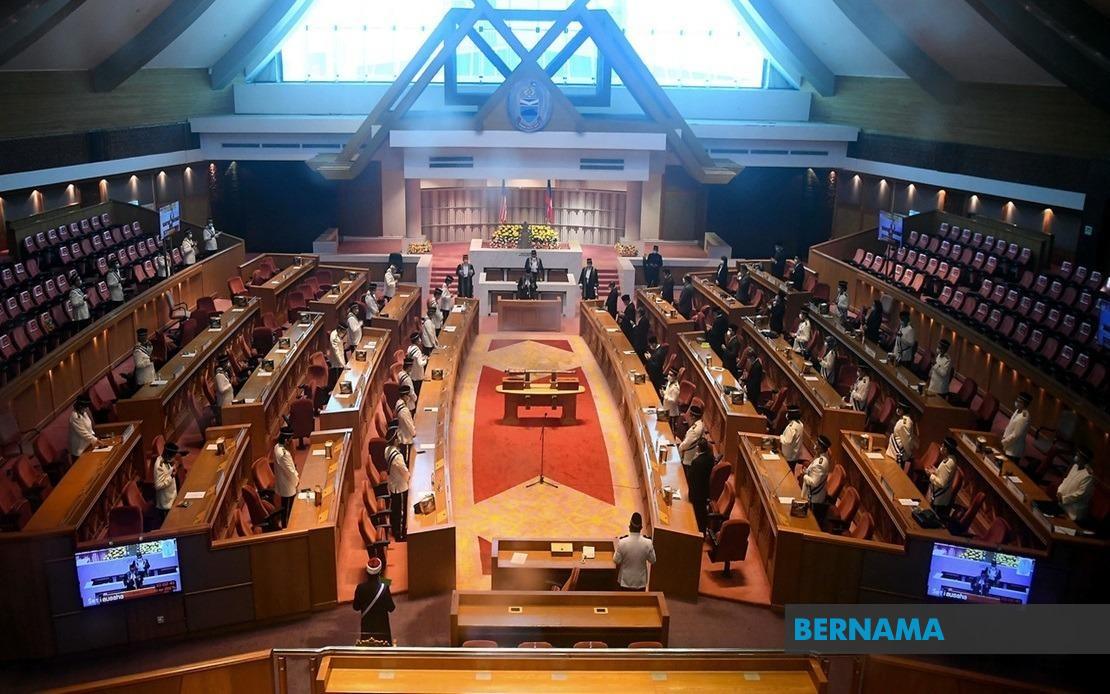
The Sabah State Legislative Assembly has approved amendments to legislation governing the state's ports authority, clearing the way for administrative changes designed to streamline maritime governance. Tabled on July 22 by Deputy Chief Minister III Datuk Ewon Benedick, who oversees industrial development, entrepreneurship and transport matters, the Sabah Ports Authority (Amendment) Bill 2026 passed following deliberation among six assemblymen, with Deputy Speaker Datuk Al Hambra Tun Juhar leading proceedings.
At its core, the amendment recalibrates the Sabah Ports Authority Enactment 1981 to reflect substantial reorganisation within the state cabinet that took effect on December 3, 2025. Under this restructuring, oversight of port-related functions shifted from the Ministry of Public Works and Utilities to the Ministry of Industrial Development, Entrepreneurship and Transport. This transfer represents a strategic realignment, grouping ports management with broader industrial and commercial development initiatives rather than treating it as routine infrastructure maintenance.
The legislative adjustment addresses a fundamental inconsistency in existing law. The original 1981 enactment defined the term "Minister" to denote the official responsible for communications and public works—language rendered obsolete once cabinet duties were redistributed. This outdated reference created potential legal ambiguity about which minister possessed statutory authority over Sabah's ports. By amending Section 2 of the enactment, lawmakers ensure that the relevant minister—now within the industrial development portfolio—is explicitly recognised as holding decision-making power over port affairs.
For Malaysian readers accustomed to federal-level maritime governance debates, Sabah's approach merits attention. While the federal government manages major international ports like Pelabuhan Klang and Port Klang through Westports and similar operators, state governments retain significant autonomy over smaller or more regionally-focused facilities. Sabah's ports—including those serving the eastern coast and supporting agricultural and resource-based commerce—remain under state jurisdiction. This amendment ensures that state-level port policy aligns coherently with industrial development strategies, potentially facilitating closer coordination between port infrastructure and manufacturing or trade promotion initiatives.
The legislative revision incorporates transitional protections ensuring administrative continuity. All decisions, approvals and actions previously issued by the minister responsible for public works regarding ports remain valid and enforceable. This safeguard prevents legal voids or challenges to prior authorisations, a prudent measure when responsibilities migrate between ministries. Officials implementing port regulations, issuing licenses, or approving infrastructure projects need certainty that their previous work stands uncontested.
Crucially, Datuk Ewon clarified that the amendment carries no financial burden for the state government. Port authorities continue operating under existing budgetary frameworks; the restructuring merely clarifies which ministry commands them. This assurance addresses a common concern in legislative amendments—that procedural changes mask hidden costs. By confirming fiscal neutrality, the government signals that this is genuinely an administrative clarification, not a budget manoeuvre.
The amendment also preserves the operational independence and substantive powers of the Sabah Ports Authority itself. The enactment's core policies and functional mandate remain unchanged; only the identity and ministerial location of the supervising minister shifts. This distinction matters for port stakeholders—shipping companies, logistics operators, and cargo handlers—who continue engaging with the authority under familiar operational rules, even as reporting lines adjust within government.
For Southeast Asian maritime commerce, clarity in port governance carries practical weight. Investors and operators rely on transparent, consistent regulatory frameworks. When state-level port legislation contains ambiguous references to displaced officials, it creates uncertainty. This amendment eliminates that friction, signalling to the private sector that Sabah's port regulatory environment remains stable and predictable despite internal government reorganisation.
The broader context reflects how Sabah's cabinet restructuring prioritises economic development. Placing ports under the industrial development ministry rather than public works suggests a policy intent to treat ports as engines for economic opportunity, not merely as public infrastructure managed by engineers. This reorientation aligns ports strategy with trade promotion, industrial diversification, and investment attraction—concerns central to regional competition for cargo traffic and maritime commerce.
The amendment's passage demonstrates Sabah's commitment to maintaining legislative coherence as governance structures evolve. Rather than allowing outdated legal language to drift, the state proactively corrected inconsistencies. This approach prevents the accumulation of confusing statutory references that later generations of lawmakers struggle to untangle.
With this amendment now law, Sabah's port governance enters a new chapter, operationally unchanged but administratively clarified. For logistics businesses, traders, and regional stakeholders in East Malaysia's maritime economy, the reassurance lies in knowing that the regulatory foundation now transparently reflects actual government decision-making authority—a foundation essential for confident investment in port infrastructure and services across Sabah's coastline.

