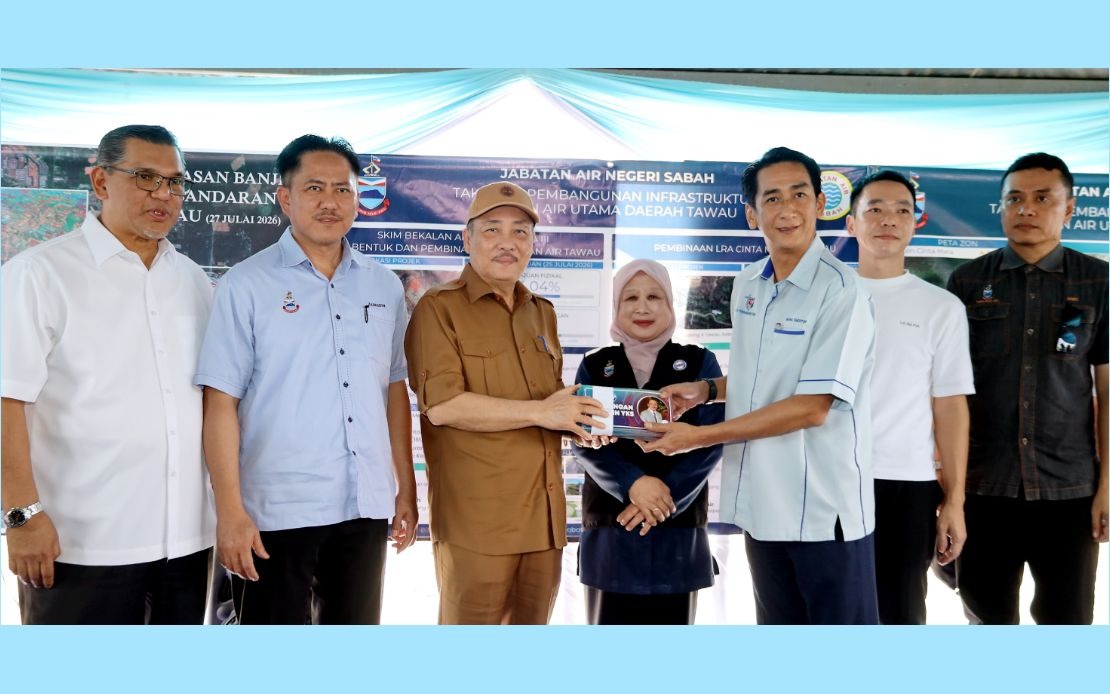
Sabah Chief Minister Datuk Seri Hajiji oversaw the handover of emergency relief funds on behalf of Yayasan Kebajikan Sabah to the Tawau Municipal Council, marking the state government's response to a natural disaster that struck the district on July 25. The foundation channelled a total of RM30,600 through Tawau Municipal Council president Mohd Shoffian Mohd Said, with each of the 102 affected household heads receiving RM300 to help offset immediate financial hardship stemming from the calamity.
The flooding event itself displaced 362 residents, who were evacuated to a temporary relief centre set up at Dewan Serbaguna Kompleks Sukan Tawau as water levels rose and inundated residential areas across the municipality. The scale of evacuation underscored the severity of the flooding and the urgent need for coordinated disaster management across multiple agencies and government departments. The relief funds represent one component of the broader support network being mobilised to assist families still recovering from property damage and loss of livelihoods.
In his statement, Hajiji acknowledged the pivotal role played by frontline responders and administrative bodies throughout the emergency period. The Civil Defence Force, Royal Malaysia Police, Fire and Rescue Department, and Health Ministry personnel worked in tandem with the Tawau disaster management committee and allied agencies to ensure that evacuated residents received immediate assistance, medical attention where needed, and shelter during the crisis. The Chief Minister's public recognition of these efforts reflects the importance of inter-agency coordination during natural disasters in East Malaysia.
The provision of RM300 per household, while modest in absolute terms, serves a practical purpose in helping families bridge immediate gaps in essential needs during the recovery phase. Many residents would have incurred costs for temporary accommodation, basic food supplies, and emergency repairs before insurance settlements or larger government assistance programmes could be accessed. For low-income families in Tawau, such direct cash transfers can mean the difference between coping and deeper financial distress during the vulnerable weeks following a natural disaster.
Tawau's exposure to flooding reflects broader environmental and geographical vulnerabilities in Sabah's coastal and lowland municipalities. The district sits in a region where seasonal rainfall patterns and tidal influences periodically create inundation risks, particularly during monsoon transitions. Climate change projections suggest that extreme weather events may intensify in frequency and magnitude across Southeast Asia, placing additional pressure on local governments to strengthen drainage infrastructure, early warning systems, and evacuation protocols. Sabah's experience with major flooding events in recent years has prompted calls for enhanced disaster preparedness and resilience-building investments.
Yayasan Kebajikan Sabah's rapid mobilisation of funds demonstrates how state-level charitable foundations can complement government response mechanisms during crises. By maintaining dedicated resources for disaster relief, the foundation provides an additional layer of support that can reach affected communities within days rather than weeks. This is particularly valuable in rural or semi-urban areas where bureaucratic processes for larger government aid schemes may move more slowly. The foundation's involvement also signifies that disaster response in Sabah is being treated as a collective responsibility spanning government agencies, charitable bodies, and community organisations.
The flooding in Tawau occurred during a period when several Malaysian states have experienced similar weather-related incidents, highlighting the interconnected nature of regional weather patterns and the shared vulnerabilities facing communities across Malaysia and Brunei. Early-year flooding in other parts of the peninsula and in Sarawak has similarly triggered emergency responses and relief distributions, suggesting that climate-driven disasters are becoming an increasingly regular feature of the Malaysian calendar. This pattern underscores the importance of standardised disaster management protocols and inter-state knowledge-sharing regarding best practices in flood response.
Looking forward, the recovery process in Tawau will extend well beyond the initial two-week emergency phase when immediate relief is distributed. Households will need longer-term support for rebuilding damaged homes, replacing lost possessions, and restoring livelihoods disrupted by evacuation and water damage. While the RM30,600 provides crucial immediate assistance, local government and state agencies will need to coordinate with federal disaster relief programmes and private sector partners to ensure that recovery is comprehensive. Insurance claims, if applicable, may also take weeks or months to process, leaving many families in financial limbo during the interim period.
The Chief Minister's emphasis on inter-agency cooperation and the welfare of flood victims reflects a growing recognition in Malaysian governance that natural disasters require whole-of-government and whole-of-community responses. The acknowledgment of specific agencies and their personnel sends a signal that frontline workers and emergency responders are valued and that their contributions to saving lives and reducing suffering are understood at the highest political level. As Sabah and other Malaysian states grapple with more frequent extreme weather events, this emphasis on coordination and mutual support may prove increasingly critical to minimising harm and accelerating recovery cycles.

