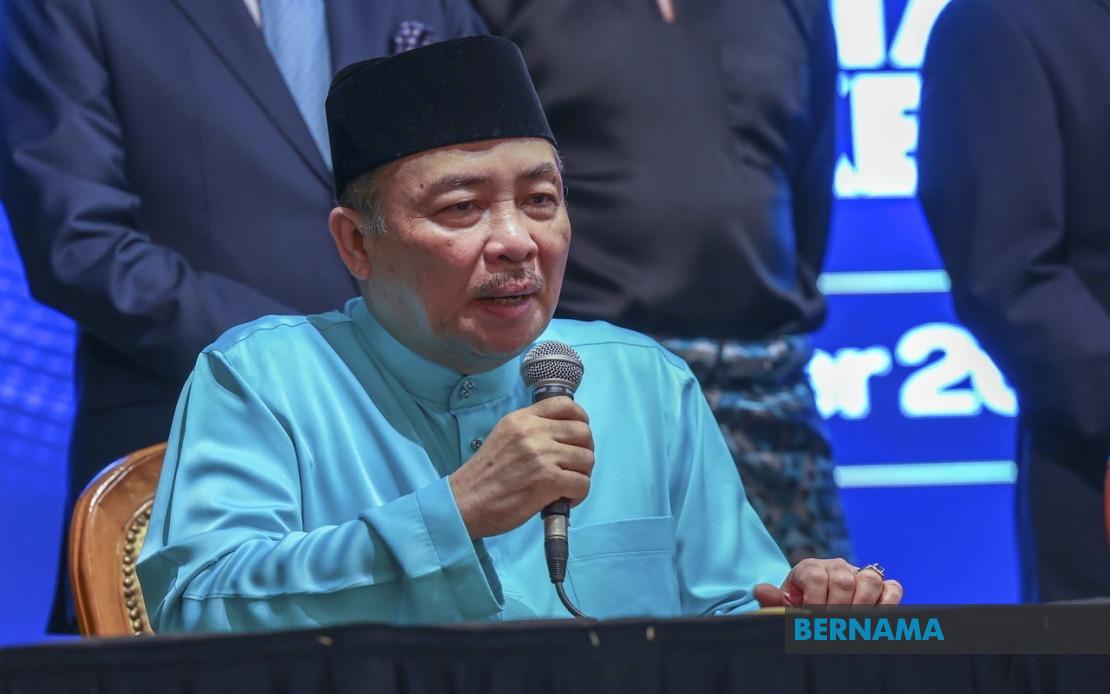
Sabah is channelling more than RM100 million into its state scholarship scheme this financial year, demonstrating the state government's determination to expand educational opportunities for students across various academic levels. The allocation will sustain existing scholarship holders while simultaneously extending support to 2,182 newly qualifying students, marking a significant expansion of the Sabah State Government Scholarship (BKNS) programme that reflects broader policy commitments to human development in the resource-rich East Malaysian state.
Chief Minister Datuk Seri Hajiji Noor framed the investment as integral to Sabah's long-term development strategy, emphasizing that education infrastructure represents a critical foundation for cultivating the skilled workforce necessary for economic competitiveness. With the current scholarship roll reaching 13,389 beneficiaries, the programme has evolved into a substantial intervention in the state's education landscape, touching the lives of families across Sabah's diverse communities and rural areas where educational access remains uneven.
The scholarship programme has deliberately prioritized science, technology, engineering and mathematics disciplines, recognising that technical expertise will drive Sabah's future prosperity. This sectoral focus reflects a strategic understanding that economic diversification—particularly in advanced sectors—requires graduates equipped with sophisticated analytical and problem-solving capabilities. The emphasis on STEM fields positions Sabah to participate more effectively in regional and global knowledge economies rather than remaining dependent on traditional resource extraction.
Beyond the primary scholarship scheme, Sabah has implemented a comprehensive ecosystem of educational support initiatives introduced since 2021, comprising fourteen distinct programmes designed to address various financial barriers faced by students and families. The one-off Higher Education Institution Registration Cash Assistance (BUDI) helps offset initial enrolment costs, while the Special Examination Cash Assistance (BAKTI) supports students during crucial assessment periods. These complementary schemes acknowledge that scholarship funds alone cannot address the multifaceted financial pressures confronting students pursuing higher education.
The Ihsan Computer Assistance (BAIK) programme demonstrates particular relevance in an increasingly digital educational environment, ensuring that technological barriers do not exclude capable students from disadvantaged backgrounds. The Sabah Student Flight Ticket Assistance (GRS-SUBFLY) addresses a geographically specific challenge—the high cost of travel between Sabah and peninsula Malaysia or international destinations—which can deter talented students from pursuing studies outside the state. Such targeted interventions show sophisticated understanding of context-specific obstacles to educational mobility.
The State Higher Education Student Contribution programme (SENTOSA) represents another layer of support explicitly acknowledging rising living costs that frequently force students to interrupt or abandon studies. Education expenses have escalated substantially across Malaysia, encompassing not only tuition fees but also accommodation, food, transportation and learning materials. For families in Sabah, where income levels lag the national average and cost-of-living pressures intensify due to geographic isolation, such comprehensive assistance becomes essential rather than supplementary.
Hajiji articulated a vision extending beyond immediate scholarship provision, encouraging students to pursue studies in strategic sectors that will define Sabah's economic trajectory. The oil, gas and energy sectors remain foundational to Sabah's revenue generation, yet require increasingly sophisticated technical expertise as global energy transitions accelerate. Technical and Vocational Education and Training (TVET) pathways offer alternative advancement routes that have historically received less prestige but offer immediate employment prospects and practical skill development. The Chief Minister's emphasis on Artificial Intelligence signals recognition that emerging technologies will reshape economic opportunities across all sectors.
The scholarship investment must be contextualized within broader Malaysian education policy debates. While federal-level initiatives like the Public Service Scholarship Programme reach certain constituencies, state-level schemes allow Sabah to prioritize local development needs and ensure that student support reaches populations that might otherwise fall through the national programme's mesh. This devolved approach enables the state government to respond more sensitively to Sabah's particular demographic patterns and economic requirements.
The RM100 million allocation represents a meaningful commitment but requires examination regarding sustainability and adequacy. Population projections suggest rising numbers of school leavers qualifying for higher education over coming years, potentially creating escalating pressure on scholarship budgets unless associated with expanded economic capacity. The state's fiscal health depends substantially on volatile commodity revenues, introducing potential vulnerability if oil prices decline or production falters.
Educational investment generates both immediate and deferred benefits. Current scholarship recipients will enter the workforce with reduced debt burdens, theoretically enabling more productive economic contributions and stronger consumer capacity. Over longer timeframes, enhanced human capital development should strengthen Sabah's competitive positioning and diversification prospects. However, translating educational credentials into meaningful employment remains contingent on broader labour market dynamics and industrial diversification outcomes that scholarships alone cannot guarantee.
The programme's success ultimately depends on post-graduation pathways. Scholarships that produce graduates unable to secure appropriate employment represent underutilized investment. Sabah's government must therefore coordinate educational support with economic development initiatives that generate employment opportunities matching graduate skill profiles, particularly in the STEM and emerging technology sectors receiving policy emphasis.
The scholarship expansion reflects political commitment to education but also illustrates how Malaysian states pursue distinct development strategies within the federal structure. Sabah's emphasis on STEM, vocational training and technology fields reveals strategic priorities shaped by geographic location, resource endowments and demographic composition. As Malaysia navigates economic transition away from manufacturing and commodity dependence, state governments like Sabah must ensure educational investments align with realistic assessment of available opportunities and economic trajectories.

