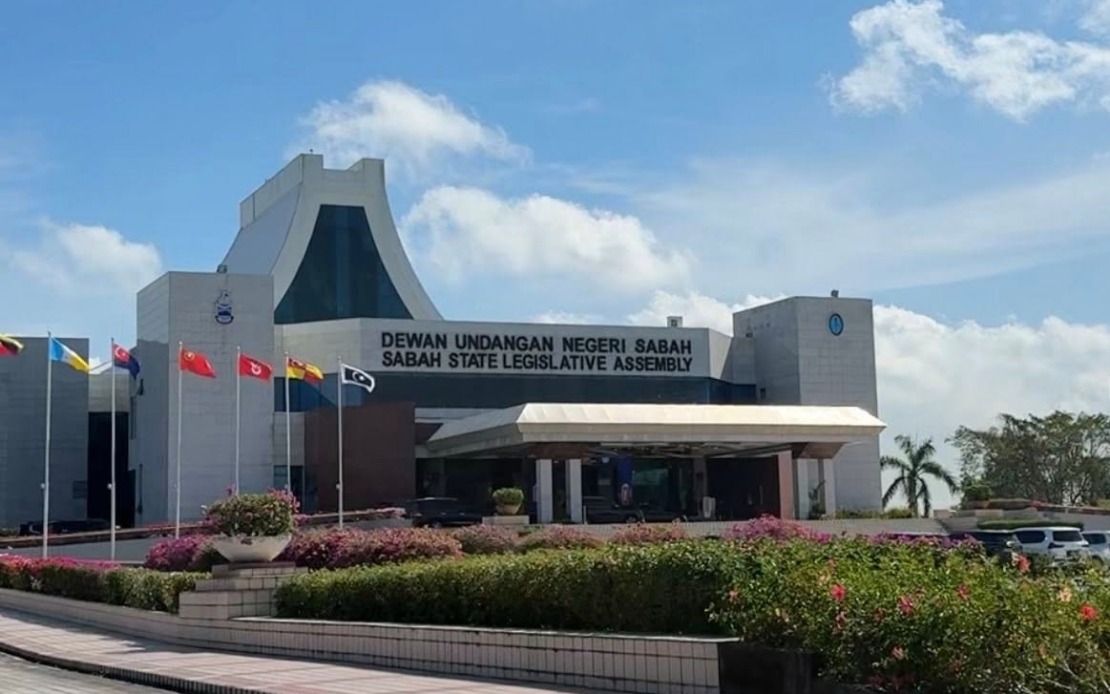
Datuk Seri Wilfred Madius Tangau, the assemblyman for Tamparuli, has moved to elevate Sabah's Native Court from its current standing as a mere tribunal to full constitutional recognition equivalent to the Syariah and Civil Court systems. Speaking during debate on the Native Court Bill 2026 in the Sabah State Legislative Assembly, Madius emphasised that this adjustment would not diminish or expand the roles of existing judicial institutions, but would acknowledge the cultural and legal significance of indigenous customary law within the state's legal framework.
The current constitutional architecture treats Sabah's Native Court as subordinate to the Civil Court, a status Madius argues fails to reflect the institution's importance in resolving disputes among indigenous communities according to traditional customs and practices. His proposal anchors itself firmly to the Malaysia Agreement 1963, the foundational document that granted Sabah substantial autonomy in managing its own internal affairs upon joining the federation. By framing the amendment within this historical context, Madius invokes a principle long central to Sabah's political identity: the preservation of indigenous institutions as integral to the state's distinct constitutional settlement.
The distinction between constitutional status and functional jurisdiction is crucial to understanding Madius's position. He took pains to clarify that elevating the Native Court would not convert it into a rival institution competing with civil or religious courts for cases. Instead, the amendment would formally recognise that the Native Court operates within its own sphere of authority—resolving customary disputes among indigenous populations—with the same legal legitimacy as courts operating under written statutes. This demarcation preserves institutional clarity while correcting what Madius frames as a historical asymmetry in how different justice systems are formally valued.
The underlying argument rests on a philosophical distinction between caseload and institutional legitimacy. Madius contends that the strength of any court system cannot be measured solely by the volume of disputes it processes. Rather, institutional strength derives from public confidence in fair decision-making, wisdom in judgment, and independence from extraneous influence. Applied to Sabah's Native Court, this reasoning suggests that even if the institution resolves fewer cases than its counterparts, its capacity to deliver justice according to principles that indigenous communities recognise and respect gives it equal standing in the broader judicial ecosystem.
For Malaysia's federal structure, this proposal carries implications beyond Sabah's borders. The Native Court system represents one of the few remaining institutional frameworks through which indigenous customary law retains practical authority in modern Malaysia. Upgrading its constitutional status would signal formal recognition that plural legal systems—customary, civil, and religious—coexist legitimately within the nation's polity. Such a move could encourage greater attention to similar customary institutions in other states and strengthen arguments from indigenous groups elsewhere that their traditional dispute-resolution mechanisms warrant constitutional protection.
The Malaysia Agreement 1963 remains a document whose full implications are still being contested and elaborated through legislative action. When Madius anchors his proposal to this agreement, he taps into a reservoir of Sabahan political sentiment regarding the state's distinctive constitutional position. The agreement promised Sabah control over matters affecting its indigenous population and their customs. Proponents of constitutional elevation for the Native Court argue that recognising its status would give practical effect to commitments made at federation's founding, transforming historical promises into contemporary legal architecture.
The Native Court Bill 2026 itself represents the legislative vehicle through which these aspirations are being pursued. Rather than rely solely on constitutional amendment—a more cumbersome process requiring federal involvement—the state legislative approach allows Sabah to strengthen the court's operational framework and clarify its role. However, as long as the Civil Court retains superior constitutional standing, questions about hierarchy and ultimate appellate authority remain unresolved. Constitutional amendment would provide the definitive settlement that legislative reform alone cannot achieve.
Among East Malaysian constituencies, Sabah's Native Court proposal will likely resonate in Sarawak, which possesses similar customary institutions and has maintained considerable autonomy in indigenous affairs. Both states negotiated entry into the federation with protections for native law and custom explicitly retained. Should Sabah succeed in constitutionally elevating its Native Court, Sarawak may face political pressure to pursue comparable recognition for its own customary institutions, potentially triggering broader conversation about how indigenous legal systems fit within Malaysia's constitutional framework at the highest levels.
The timing of this proposal amid debates about federalism, indigenous rights, and constitutional recognition suggests broader currents within Malaysian politics. As indigenous communities across the region increasingly assert claims to cultural preservation and self-determination, questions about the formal legal standing of traditional institutions gain urgency. Madius's intervention plants Sabah's flag in this debate, positioning the state as serious about translating rhetorical commitments to indigenous autonomy into tangible constitutional reform.

