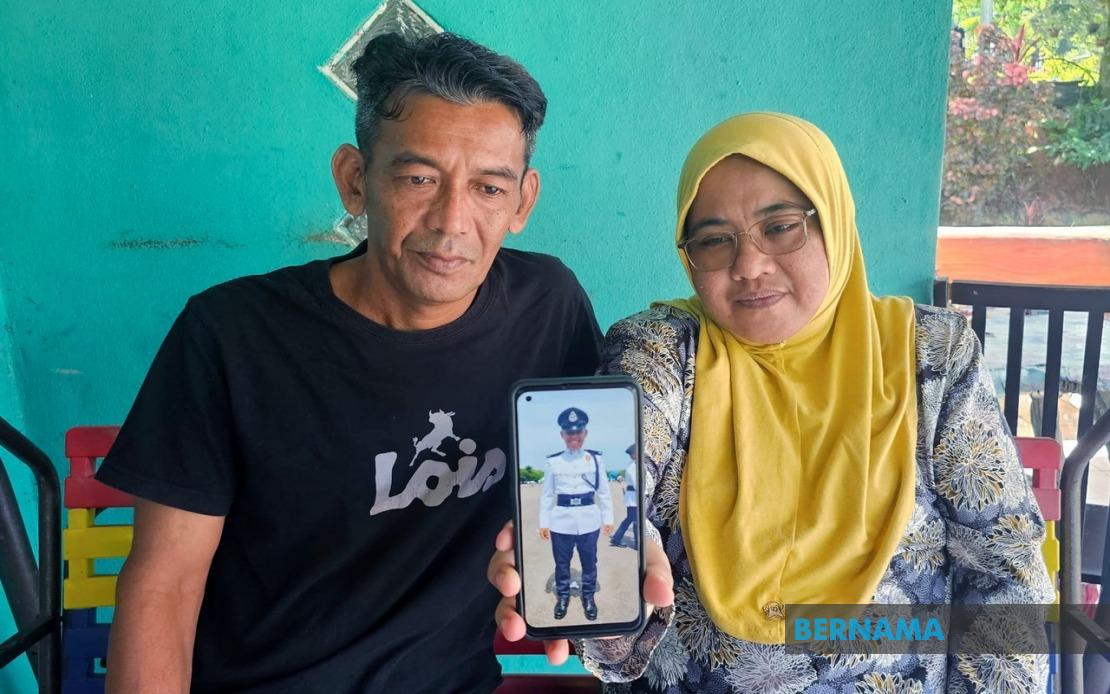
The sudden death of Constable Muhammad Raimi Ismarubee has transformed what should have been a joyful family reunion into an unimaginable tragedy. The 26-year-old officer, posted to the Weston Police Station in Beaufort, Sabah, was electrocuted while moving a metal pole used for harvesting coconuts outside the station yesterday, claiming his life alongside two colleagues. His parents in Felda Kerteh 2, Dungun, Terengganu, had been counting down the days to his anticipated arrival later this month, making the sudden notification of his death all the more devastating.
For Ismarubee Ismail and his wife Nor Azila Zakaria, the shock proved almost unbearable. Just hours before learning of the tragedy, they had received a WhatsApp message from their son at 2 pm, sharing the news of a successful drug operation he had participated in. When a friend's telephone call came at 6 pm that evening informing them of his death, the father struggled to process the incomprehensible news. The contrast between that routine operational update and the finality of death within four hours underscores the tragic nature of workplace accidents that claim lives without warning.
Muhammad Raimi had been serving at Weston Police Station since September 2024, barely eight months into his policing career. Despite the distance separating him from his family in the Terengganu peninsula, he maintained regular contact and had become a financial pillar for the household. According to his mother, he had been scouting for affordable flight tickets since June to finance a return journey home, unwilling to burden his parents with the cost. This financial conscientiousness reflected a young man who, despite earning a modest constable's salary, prioritized his family's welfare and his own independence.
The last occasion on which he had managed to return to Felda Kerteh 2 was in January of this year. The seven-month separation had left his family eager for another glimpse of him, another chance to spend time together. His mother and father spoke of how he remained attentive to his siblings' educational needs, purchasing laptops and other study materials without hesitation, and sending money home almost monthly to support household expenses. Such dutiful behaviour towards family is deeply valued in Malaysian culture, and both parents took pride in their son's character.
Looking ahead, Muhammad Raimi had shared with his parents plans for his personal future. He had expressed his intention to become engaged to a young woman from Sabah, with matrimony tentatively planned for the following year. However, conscious of his obligations to his family, he had resolved to delay the wedding until his youngest sibling had completed their Sijil Pelajaran Malaysia examination. This thoughtful approach to balancing personal aspirations with familial responsibility once again illustrates the kind of individual he was—someone who weighed the emotional and practical needs of those closest to him.
The electrocution incident that claimed Muhammad Raimi's life also claimed two additional officers from the same station. Corporal Chiu Teck Siong, aged 40, and Lance Corporal Mohamad Nur Hafiz Ibrahim, aged 29, died under identical circumstances while assisting in the movement of the metal coconut-harvesting pole. The fact that three trained personnel fell victim to the same hazard raises serious questions about workplace safety protocols at the Weston Police Station and whether adequate safeguards were in place to protect officers during routine tasks involving potentially hazardous equipment.
The incident highlights a sobering reality for law enforcement personnel across Malaysia: police work extends far beyond the confrontation of criminal activity. Officers are regularly engaged in maintenance, logistics, and general operational tasks that, if conducted without proper safety measures, can prove as lethal as any confrontation with suspects. The metal pole in question was being repositioned for agricultural purposes, an innocuous-sounding activity that would not ordinarily trigger thoughts of mortal danger.
For the Ismarubee family, the immediate priority has been bringing their son's remains home. The police department arranged for his body to be transported back to Terengganu, where he was laid to rest at the Felda Kerteh 2 Muslim Cemetery yesterday. His mother described him as a good son, language that masks the profound emptiness his absence will create in the household that depended on his financial and emotional support. The younger siblings who benefited from his generosity must now reconcile with the loss of a protector and provider.
Beyond the personal tragedy affecting one family, the incident serves as a reminder of the occupational hazards faced by Malaysia's law enforcement community. While public discourse often focuses on violent threats, workplace accidents claim lives with equal finality and often with less scrutiny regarding prevention. As police institutions conduct internal reviews of what occurred at the Weston Police Station, broader questions emerge about whether similar dangers exist at other facilities and whether current safety training and protocols adequately address the range of tasks officers undertake.
The contrast between Muhammad Raimi's final message—a professional update on operational success—and the reality of his death within hours exemplifies the unpredictability of such tragedies. Neither he nor his family could have anticipated that his last communication home would indeed be his final one. For his parents, the holiday they had been planning to share with him will instead be consumed by grief, yet they will find some measure of comfort in the memory of a dutiful son who, in his short life, made meaningful contributions to his family and his community through conscientious service.

