Sabah's state government has received RM600 million of a promised RM1.5 billion interim special grant from the Federal Government and is now urging authorities to release the outstanding RM900 million before the year concludes. The partial disbursement arrived on June 12, marking progress on commitments made by Prime Minister Datuk Seri Anwar Ibrahim during the state's Kaamatan Festival celebrations in May. However, officials have been careful to frame this as a temporary arrangement rather than a final resolution to the long-standing dispute over Sabah's constitutional share of federal revenues.
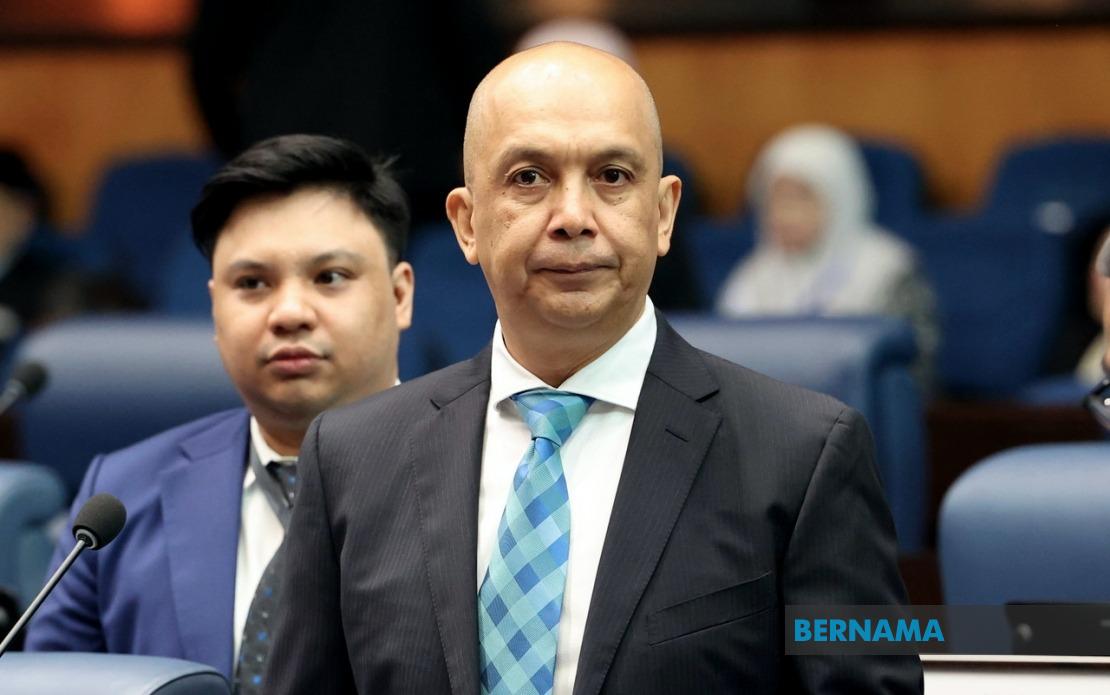
Sabah Assistant Finance Minister II Datuk Mohd Ishak Ayub emphasized that the interim arrangement should not be misinterpreted as acceptance of the RM1.5 billion as the definitive amount the state deserves. Speaking in response to parliamentary questions from multiple assemblymen representing both government and opposition benches, Mohd Ishak underscored that Sabah's government has not waived its rights under the Federal Constitution's Articles 112C and 112D. This careful legal positioning reflects the delicate nature of negotiations between Kuala Lumpur and Kota Kinabalu, where the state has persistently claimed entitlement to 40 per cent of specific federal revenues as originally stipulated in constitutional provisions.
The dispute over Sabah's revenue share represents one of Malaysia's most contentious fiscal federalism issues, with roots extending back decades. The 40 per cent formula, enshrined in the Constitution, has long been a source of tension between the state government and the Federal Government, particularly under successive administrations. By accepting the interim payment without prejudice, Sabah's leadership is attempting to balance immediate fiscal relief against the possibility of negotiating a more generous long-term arrangement. The fact that three separate pieces of correspondence passed between federal and state authorities in early June suggests ongoing active negotiations behind the scenes.
The timing of the announcement, coinciding with the Kaamatan Festival, underscores how Sabah's financial relationship with the federal centre carries significant political weight in the state. Chief Minister Shafie Apdal's Warisan party, which commands considerable influence in state politics, has made the revenue entitlement a signature issue. The participation of multiple assemblymen from both Warisan and the opposition UPKO party in raising these questions during the state assembly session indicates that this is not a purely partisan concern but rather a matter commanding broad political consensus in Sabah.
For Malaysian federalism more broadly, the Sabah revenue question remains emblematic of persistent tensions between centralized and devolved fiscal authority. The interim grant approach essentially buys time for both sides to continue negotiations without either party backing down from its stated position. Federal authorities can argue they are providing additional resources to Sabah, while the state government maintains its assertion of constitutional entitlement. This arrangement is likely to remain in place unless a more comprehensive settlement is reached through ongoing diplomatic channels.
Beyond the raw financial dimensions, the grant has implications for Sabah's ability to fund public services and development projects. The RM600 million already received will provide some capacity for addressing immediate spending pressures, though state finance officials must carefully manage expectations about when and whether the remaining RM900 million will materialize. For Malaysian taxpayers and observers of public finance, the arrangement raises questions about transparency and the predictability of intergovernmental fiscal transfers, which remain somewhat opaque in the Malaysian federal system.
In parallel parliamentary developments, state welfare officials outlined adjustments to social assistance programmes for vulnerable Sabahans. Datuk Rina Jainal, Sabah's Assistant Minister for Women, Health and People's Wellbeing, indicated that the state government would maintain welfare payments within a RM200 to RM350 monthly range, contingent on improved financial circumstances. The specific income threshold for welfare eligibility has been adjusted upward from RM1,198 in 2025 to RM1,236 currently, reflecting modest expansions in the coverage of assistance schemes as the state's fiscal position allows.
The expansion of welfare eligibility ceilings reflects broader policy recognition that poverty thresholds and living costs have shifted, particularly given inflationary pressures affecting household budgets across Malaysia. By raising the income ceiling, Sabah is effectively expanding access to assistance programmes without requiring significant increases in per-capita benefit amounts. This targeted approach allows the state to stretch limited resources across a wider segment of the population while maintaining benefit levels that prevent welfare schemes from becoming unaffordable as caseloads grow.
Federal-level welfare adjustments remain dependent on parliamentary budget announcements and depend on the federal government's overall fiscal position. This dual-layer system, where state governments manage some welfare programmes funded partly through federal transfers, creates interdependencies that complicate planning at the state level. Sabah's officials must navigate these constraints while meeting constituent expectations for adequate social protection, a balancing act that becomes more difficult when interim arrangements rather than predictable long-term funding mechanisms are in place.
The broader context involves Sabah's ongoing efforts to strengthen its fiscal autonomy and economic development capacity. The state faces demographic and geographical challenges that make development more expensive than in peninsular Malaysia, yet it historically receives proportionally less federal investment. Enhanced revenue transfers could theoretically enable Sabah to fund infrastructure, education, and healthcare improvements necessary to reduce regional disparities. Whether the current interim arrangement represents a stepping stone toward comprehensive fiscal reform or merely a temporary palliative remains uncertain.
Looking forward, both the state and federal governments face pressure to formalize arrangements rather than relying on time-limited interim measures. Investors and development agencies require clarity about Sabah's fiscal capacity and spending authority over planning horizons. The current arrangement, while better than nothing, introduces uncertainty that could inhibit medium-term development planning. Political leaders in both Kuala Lumpur and Kota Kinabalu will need to determine whether to pursue a definitive settlement of the revenue question or continue managing this issue through ad-hoc interim payments.

