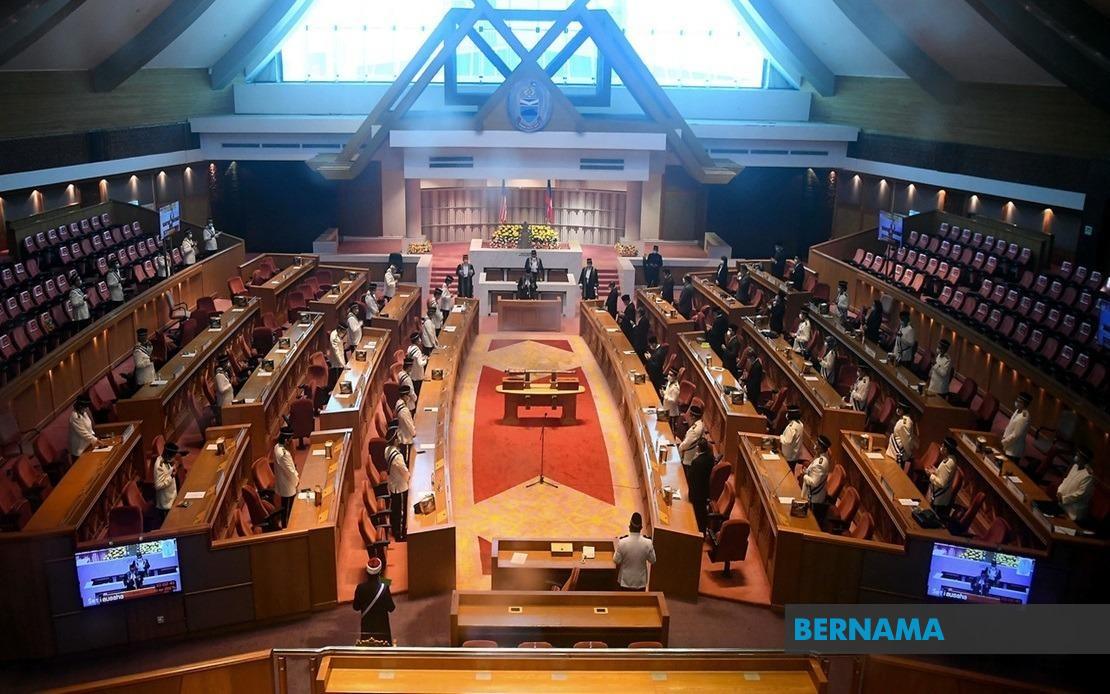
Sabah's battle against massive water wastage has entered a critical phase, with the state government committing to slashing non-revenue water losses from their current level of 59.6 per cent down to 45 per cent within the next six years. Speaking in the state legislative assembly in Kota Kinabalu, Assistant Minister of Works and Utilities Datuk Limus Jury outlined an aggressive roadmap that will reshape how the Sabah Water Department manages precious water resources across the state's vast geography.
The scale of water loss in Sabah underscores a challenge that afflicts water utilities across Southeast Asia. Non-revenue water—the gap between treated water supplied and water actually paid for by consumers—represents both a financial and environmental catastrophe. At nearly 60 per cent, Sabah's rate is among the highest in Malaysia and indicates that for every litre treated at significant cost, more than half disappears before reaching paying customers. This leakage represents hundreds of millions of ringgit in annual losses and strains infrastructure already stretched by population growth and urbanisation.
The Sabah Water Department's response reflects a multi-pronged technical strategy rather than a single silver-bullet solution. Infrastructure renewal stands at the centre of this approach. The department has prioritised replacing critical sections of pipelines that have deteriorated over decades, particularly in older urban centres where corrosion and structural failures account for substantial losses. Simultaneously, the utility is addressing consumer-side problems by replacing faulty water metres and removing those exceeding seven years of age, preventing undercounting that masks genuine consumption and inflates apparent water loss figures.
Operational improvements complement these hardware upgrades. Integrated operations centres now coordinate real-time monitoring across districts, enabling swift response to emerging problems. Pressure management systems regulate water flow through distribution networks, reducing stress on aging pipes and minimising ruptures. Equally critical is the systematic detection and repair of leaks before they become catastrophic—a proactive rather than reactive posture that marks a departure from traditional utility management in the region.
The crackdown on illegal water connections reveals another dimension of the problem. In many developing areas, unmetered informal connections siphon water outside official channels, compounding recorded losses and depriving the utility of revenue. By targeting these illegal networks alongside legitimate infrastructure defects, the department aims to recover water currently unaccounted for and improve billing accuracy. This enforcement component often generates political sensitivity, yet remains essential for systemic improvement.
Under the 13th Malaysia Plan framework, both federal and state governments are funding territorial initiatives across Sabah's 30 districts. Federal resources support interventions in 18 districts, while the state treasury covers a further 12, creating overlapping programmes that avoid duplication. This dual-layer approach reflects recognition that water management transcends state capacity alone and requires sustained national commitment. The investment signals that Kuala Lumpur views Sabah's water security as integral to broader regional development goals.
Three districts—Kota Kinabalu, Tawau, and Lahad Datu—are receiving concentrated support through the NRW Rehabilitation, Monitoring and Maintenance Active Leakage Control Project. Kota Kinabalu's rehabilitation phase commenced in September 2022 and is nearing completion this year, targeting recovery of 10 million litres daily. The equivalent projects in Tawau and Lahad Datu, launched in February 2024, operate on longer timelines extending to February 2027, reflecting the technical complexity of rehabilitating sprawling rural and semi-urban networks.
The projected recovery rates—10 million litres daily in Kota Kinabalu and combined totals of 24 million litres in the two eastern divisions—seem modest against the baseline losses. If achieved across all districts through parallel initiatives, however, these gains would accumulate substantially. The challenge lies in scaling from pilot projects to state-wide implementation whilst managing the competing demands of expanding service to previously unserved populations. This tension between improving existing infrastructure and extending networks to growing communities shapes utility strategy throughout Southeast Asia.
Sabah's water loss reduction targets align with sustainability imperatives gaining traction across Malaysia. With climate variability threatening water security in regions dependent on seasonal rainfall patterns, minimising wastage becomes a strategic priority alongside supply expansion. The state's commitment to 45 per cent NRW by 2030 positions it between current performance and theoretical optima typically ranging from 10 to 15 per cent in mature utilities, a realistic intermediate goal acknowledging structural constraints.
The financial implications extend beyond operational budgets. Water authorities that reduce losses improve cost recovery ratios, freeing capital for expansion into underserved areas and investment in treatment upgrades. For Sabah, progress on NRW reduction could enhance the Sabah Water Department's financial sustainability and its capacity to service growing urban populations in Kota Kinabalu and Tawau without proportional increases in treated water production. This multiplier effect makes the NRW programme central to broader economic and social development trajectories.
Implementing such programmes requires sustained technical expertise, adequate funding, and political commitment extending beyond electoral cycles. Sabah's decision to allocate resources and establish clear performance targets suggests seriousness, yet success depends on consistent execution across multiple agencies and districts. The involvement of the Federal Government through the 13th Malaysia Plan provides oversight mechanisms and ensures alignment with national water security strategies, potentially stabilising the initiative against local political fluctuations.
The six-year timeline represents an ambitious but achievable goal if infrastructure projects maintain momentum and operational improvements consolidate gains from pilot interventions. Comparable utilities in the region have demonstrated that systematic approaches can reduce NRW by 10 to 15 percentage points within similar timeframes. For Malaysian policymakers monitoring water security across all states, Sabah's detailed roadmap offers a replicable model combining federal support, state initiative, and district-level execution tailored to local geographies and governance structures.

