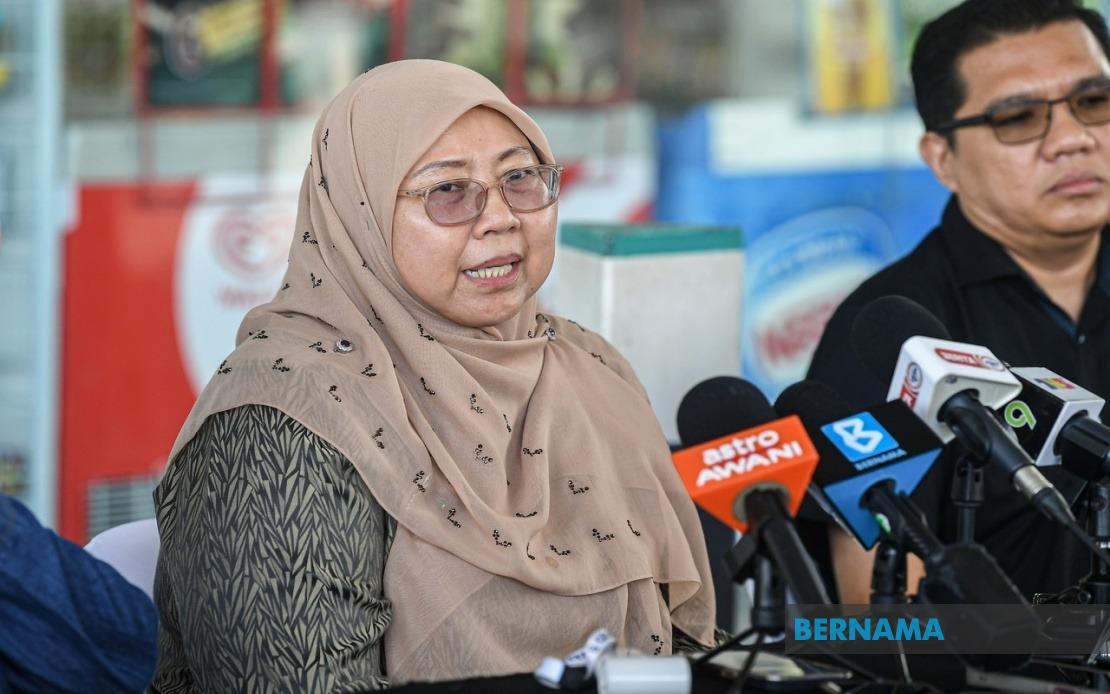
Pakatan Harapan's campaign machinery in Johor remains undeterred by what it characterises as minor acts of vandalism and sabotage, with the ruling coalition pressing ahead at full throttle toward the July 11 state election. Speaking in Johor Bahru on Tuesday, PKR secretary-general Datuk Fuziah Salleh downplayed several incidents involving damaged campaign materials, describing them as isolated events that have failed to dent the party's overall momentum in the contest.
The incidents reported include the removal and destruction of election posters, damage to billboard advertisements, and the deliberate burning of party flags across various constituencies. While acknowledging these occurrences, Fuziah stressed that the Federal ruling coalition has maintained its campaign intensity and voter engagement, with no noticeable slowdown in activities or public support. Her remarks, made during a press conference focused on reviewing subsidy mechanisms, underscore PH's confidence heading into the final stretch of campaigning with just over a week remaining before voters go to the polls.
The campaign calendar reveals the scale of PH's mobilisation efforts across Johor. Each of the coalition's candidates has been assigned an exhausting schedule that spans from early morning to late evening, with many participating in as many as ten separate campaign programmes daily. This relentless pace reflects both the competitive nature of the contest and PH's determination to maximise ground presence and direct voter contact. Fuziah emphasised that feedback from communities, particularly among younger voters and first-time participants in elections, has been notably encouraging, suggesting the coalition's message is resonating across demographic groups.
A significant portion of Fuziah's remarks centred on clarifying confusion surrounding campaign pledges announced by several PH candidates for the Skudai and Perlis state seats. These candidates had previously released what they described as policy commitments, causing some observers to question whether PH was fragmenting its electoral platform. Fuziah made a careful distinction between candidate-level pledges and comprehensive party manifestos, a semantic distinction that carries real implications for understanding how modern political campaigns operate in Malaysia's multi-layered electoral system.
According to Fuziah, the announcements by individual candidates represent localised commitments addressing constituency-specific concerns rather than binding state-level policies. She cited examples such as waste collection problems and other municipal issues, arguing that these fall outside the scope of what constitutes a formal electoral manifesto. In her view, a true manifesto encompasses major policy frameworks that a governing party intends to implement at the state level, whereas candidate pledges are narrower in scope and serve primarily to address the particular needs and frustrations of residents within individual constituencies.
This distinction matters because it prevents the fragmentation of PH's campaign messaging while allowing candidates sufficient autonomy to campaign on matters most relevant to their local electorates. In a state like Johor with its varied geography, demography, and economic structure, communities face vastly different challenges. Urban areas may prioritise public transport and municipal services, while rural constituencies might focus on agricultural support and infrastructure development. Fuziah's explanation suggests PH is attempting to balance a unified state-level strategy with flexibility for local adaptation—a challenge every ruling coalition faces when managing campaigns across diverse regions.
The delay in announcing PH's formal state manifesto until the following day underscores the party's decision to control the timing and framing of its major policy announcements. While individual candidates pursue local campaigns, the unified manifesto serves as the overarching blueprint that voters can evaluate when deciding which coalition deserves their support at the state level. This staged approach to campaign messaging is common among sophisticated political organisations seeking to build narrative momentum through the final week of campaigning.
Fuziah's portfolio as Deputy Minister of Domestic Trade and Cost of Living also provides her with credibility when discussing PH's performance on bread-and-butter economic issues. The subsidy assistance mechanism she was reviewing relates directly to concerns about cost of living that preoccupy Malaysian voters across all states. Her presence at the petrol station event served dual purposes—maintaining government visibility on an issue affecting household budgets while simultaneously reinforcing PH's campaign narrative about the ruling coalition's attentiveness to economic pressures faced by ordinary citizens.
The Johor state election represents a significant test for PH's political strength in one of Malaysia's largest states. A total of 172 candidates are contesting across the various state seats, creating an enormous organisational challenge for the coalition and its component parties. Early voting is scheduled for July 7, allowing a portion of the electorate to cast ballots before the main polling day on July 11. This compressed timeline means the final week of the campaign becomes critical, with opportunities to influence voters rapidly narrowing as election day approaches.
From a Southeast Asian perspective, elections in Malaysia's major states carry implications beyond their immediate electoral outcomes. Johor's economic significance and its role as a commercial hub linking Malaysia to Singapore mean that political stability and clear governance frameworks matter to both domestic stakeholders and foreign investors. How PH manages its campaign and, if successful, how it governs the state will offer signals about the health and sustainability of the ruling coalition at the Federal level. For opposition parties and international observers, the Johor result will provide crucial data about voter sentiment and the coalition's capacity to maintain electoral support in key demographic segments across the broader region.

