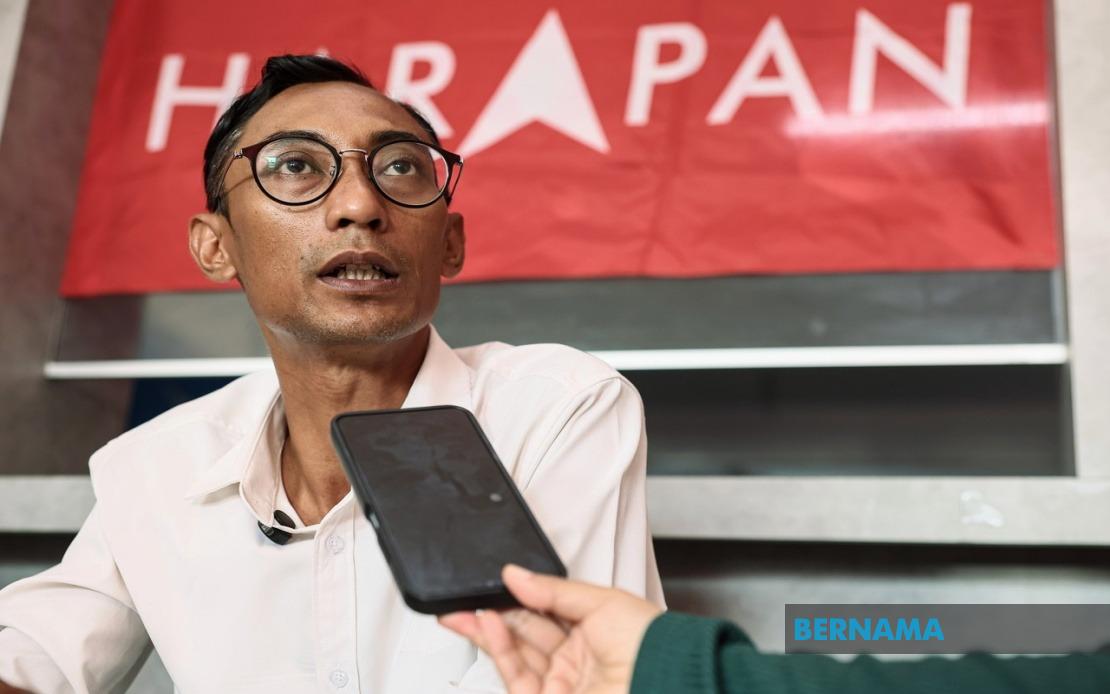
Pakatan Harapan's Saiful Nizam Samat is banking on a distinctive campaign strategy for the Endau state seat, centring his bid around a mission to amplify the constituency's concerns directly to the federal capital. The approach represents a deliberate geographic and political positioning, with Saiful Nizam arguing that better alignment with Putrajaya's decision-making machinery will translate into faster implementation of development initiatives benefiting the 30,000-strong constituency in Mersing, one of Johor's more remote parliamentary areas.
The candidate's framing—titled 'Suara Endau ke Putrajaya' (Endau's Voice to Putrajaya)—departs from traditional state-level campaign messaging by explicitly linking local success to federal integration. Rather than competing for attention alongside constituencies like Iskandar Puteri, which sits within the higher-profile Iskandar Malaysia economic corridor, Saiful Nizam has chosen to position Endau as a constituency requiring specialized federal attention. This strategy suggests a calculation that Endau's challenges—likely including infrastructure deficits, economic diversification, and service delivery gaps—require not just state-level remedies but coordinated federal intervention.
During the first week of campaigning, Saiful Nizam reported robust reception from voters spanning generational and demographic divides. Young voters and senior citizens alike have engaged with his messaging, indicating that the campaign's multi-channel approach is successfully penetrating different voter segments. This breadth of appeal matters significantly in Malaysian state elections, where mobilizing constituencies beyond traditional party strongholds often determines margins of victory. The candidate's willingness to highlight early momentum reflects confidence in both his campaign organization and the underlying appeal of his core message about federal connectivity.
The campaign machinery itself combines conventional grassroots methods with digital outreach, a hybrid approach increasingly essential in Malaysian electoral contests where voters consume political messaging across multiple platforms. Saiful Nizam's team has invested in a specially composed campaign theme song designed to create memorable, shareable content—a tactic that recognizes younger voters' preference for engaging, entertainment-adjacent political communication rather than purely policy-focused rhetoric. This production choice also facilitates viral spread across social media platforms, potentially extending the campaign's reach beyond traditional canvassing boundaries.
Geographically, Saiful Nizam is prioritizing visits to polling districts encompassing Orang Asli settlements, a demographic often underserved by political campaigns and historically experiencing lower voter turnout. This targeting strategy reflects recognition that Endau's development needs intersect significantly with indigenous community concerns around land rights, economic participation, and cultural preservation. Engaging these communities directly rather than treating them as peripheral constituencies suggests a campaign philosophy that authentic development coordination requires understanding specific local contexts and vulnerabilities.
The Endau contest features a four-way race complicating the political dynamics considerably. Barisan Nasional's Alwiyah Talib enters as the two-term incumbent, holding the institutional advantage of incumbency alongside BN's traditional machinery. Perikatan Nasional's Hasnul Hakimi Hussien represents an PN bid to penetrate Johor despite the coalition's historical weakness in the state, while independent candidate Jati Awang of the Parti Orang Asli Malaysia (ASLI) offers a distinctly community-focused alternative oriented toward indigenous interests. This fragmentation potentially benefits Saiful Nizam if anti-incumbent sentiment concentrates around his candidacy rather than dispersing across multiple alternatives.
Saiful Nizam's explicit calls for diaspora voter mobilization underscore the campaign's awareness that migration affects constituency composition meaningfully. Endau residents working in Singapore, the Klang Valley, and other regions represent potential votes if returned to the constituency by polling day on July 11. This outreach acknowledges that Malaysia's internal migration patterns create transient electorates that campaigns must actively encourage to participate. Such appeals also signal confidence that those who have left Endau maintain sufficient investment in the constituency's future to justify logistical effort returning home for voting.
The candidate's framing of his opponent's incumbency as insufficient for meeting contemporary development needs reflects PH's broader Johor strategy, which emphasizes renewal and federal-level coordination over continuity. Alwiyah Talib's two terms provide experience but also a record against which performance can be measured—a vulnerability if local perception suggests development has stalled or concentrated benefits narrowly. Saiful Nizam's campaign implicitly argues that fresh federal alignment offers better prospects than another term under an incumbent whose relationship with Putrajaya may lack the coordination advantages PH candidates promise.
The Johor state election scheduled for July 11 represents the second direct test of electoral preferences since the 2023 general election redrew Malaysia's political landscape. The state context differs significantly from federal polling, where different coalition calculations and state-specific grievances reshape voter calculations. Johor remains an arena where BN retains structural advantages, making PH gains dependent on candidate-specific factors and localized narratives rather than broader national tidal movements. Saiful Nizam's 'Endau's Voice to Putrajaya' mission operates as precisely such a localized narrative, attempting to create specific reasons for voters to reject continuity in favour of change.
Early voting on July 7 precedes Saturday's main polling day, allowing campaign teams to gauge momentum through turnout patterns while maintaining final days for last-minute persuasion efforts. Saiful Nizam's campaign intensity during these final stages suggests recognition that margins in state elections frequently reflect organizational capacity and voter enthusiasm during crucial final moments. His emphasis on aggressive multi-channel campaigning reflects calculation that in a four-way contest, voters require repeated exposure to his message and emotional investment in his candidacy to overcome default patterns favouring the sitting representative.
The campaign's success will ultimately hinge on whether Endau voters accept Saiful Nizam's argument that federal alignment offers meaningful development advantages over continued local representation within the incumbent's network. This represents a philosophical choice between believing that established political relationships better serve constituency interests or that fresh federal connections unlock previously constrained opportunities. The outcome will reveal whether Endau's electorate prioritizes experience and continuity or perceives sufficient accumulated grievances to warrant redirecting the constituency's political voice toward new federal channels.

