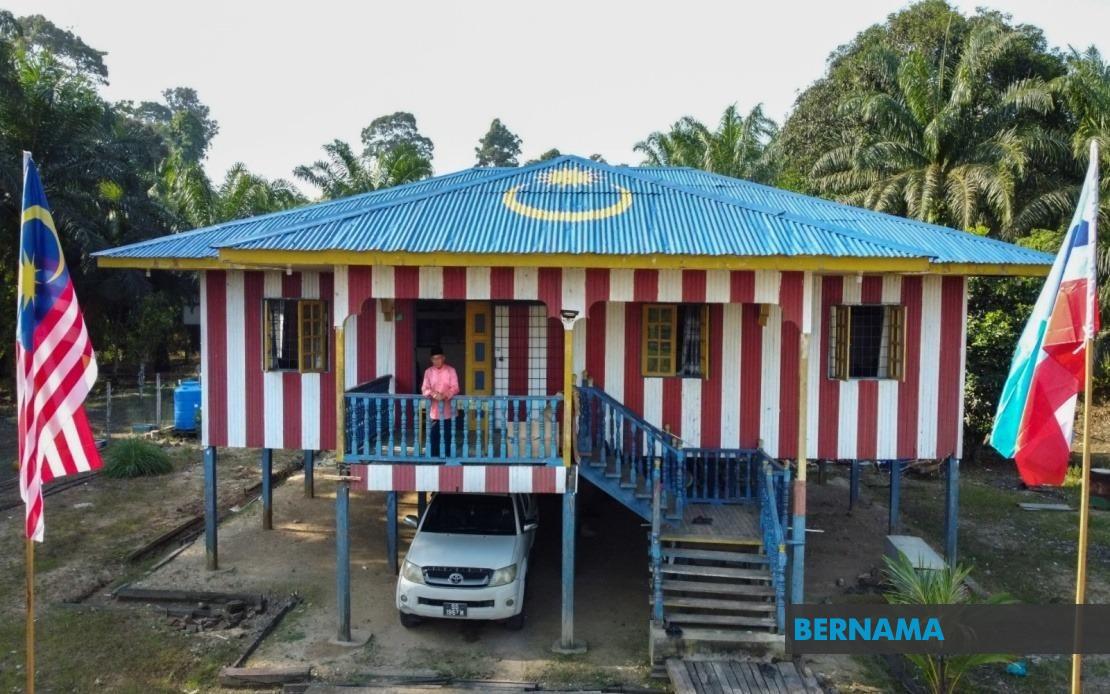
In the Batu 15 area of Sandakan, an ordinary residential property has transformed into an extraordinary statement of national devotion. Teratak Gemilang, the home of 68-year-old entrepreneur Mohd Halikin Angga, stands as a vivid physical embodiment of pride in Malaysia, its exterior painted in the unmistakable red, white, blue and yellow hues of the Jalur Gemilang. The residence extends beyond mere aesthetic display—it functions as a personal gallery celebrating the nation's political heritage, with walls adorned by portraits of successive prime ministers and the country's constitutional monarchs.
The journey to creating this patriotic sanctuary began two decades ago in 2004, when Mohd Halikin Angga first conceived the idea of permanently honouring Malaysia's flag through his own home. His inspiration drew from multiple wellsprings: a profound affection for his nation combined with deep respect for his parents, who had endured the complexities of colonial rule before independence. The motivation intensified whenever he observed the ceremonial removal of flags following National Day celebrations, and particularly when he witnessed discarded flags scattered on roadsides, damaged by wind or fallen from vehicles. These incidents moved him to create a permanent, dignified tribute to national symbols that would remain standing year-round.
The architectural transformation proved ambitious in scope. The wooden structure now features a striking deep-blue roof crowned with a golden-yellow crescent moon and 14-pointed star—the central elements of Malaysia's flag—while its walls display bold red and white striping that dominates the street view. Multiple Jalur Gemilang flags flutter proudly throughout the compound, creating an environment where national symbolism pervades every sightline. This comprehensive redesign required Mohd Halikin to finance the project entirely through his own resources, reflecting a personal commitment that transcends commercial or political motivation.
Crossing the threshold into Teratak Gemilang reveals another dimension of Mohd Halikin's patriotic vision. The interior functions as a modest but meaningful museum dedicated to Malaysian leadership. The living room walls showcase a chronological sequence of portraits featuring the Yang di-Pertuan Agong, the Yang di-Pertua Negeri Sabah, and every prime minister from the nation's founder Tunku Abdul Rahman Putra Al-Haj through to the incumbent premier. This visual history transforms the domestic space into an educational environment where family members and visitors encounter the faces and legacies of those who have guided the nation.
Among Mohd Halikin's most treasured possessions is a historic photograph documenting a pivotal moment in Malaysian history: Tunku Abdul Rahman meeting with 20 North Borneo leaders in 1961 to discuss the proposed formation of Malaysia. The story of how he acquired this image reflects his devotion to preserving national memory. During a flight to perform Umrah in 2005, Mohd Halikin discovered the photograph in a newspaper. Recognizing its historical significance, he approached the cabin crew with a request to retain the publication, subsequently framing and incorporating it into his collection. This anecdote illustrates how his patriotism extends beyond performative display into active preservation of the nation's documentary heritage.
Mohd Halikin's commitment to Malaysian identity penetrates even the most intimate family decisions. Three of his seven children bear names honouring prominent national figures and statesmen. His eldest child carries the name of Tun Dr Mahathir Mohamad, while his second is named after Tun Abdullah Ahmad Badawi. His sixth child, Nur Zahirah, was named in tribute to the 13th Raja Permaisuri Agong. In Mohd Halikin's philosophy, naming constitutes far more than administrative formality—it represents an intentional legacy mechanism, embedding hopes that successive generations will internalize and remember the contributions made by past leaders to national development.
Since its completion over two decades ago, Teratak Gemilang has evolved into an unintended tourist attraction, particularly during the National Month festivities. Visitors frequently pause to photograph the residence, drawn by its distinctive appearance and the evident sincerity behind its creation. The property has transcended its original purpose as a private residence, becoming a public symbol that communicates patriotic sentiment to anyone passing through the neighbourhood. This organic transformation from personal project to community landmark reflects how individual expressions of national pride can resonate across broader audiences.
Mohd Halikin remains unwavering in his commitment to maintaining Teratak Gemilang's patriotic character indefinitely. He has explicitly determined that the house shall permanently retain the colours of the Jalur Gemilang, ensuring that the patriotic spirit animating the original conception continues to radiate outward to subsequent generations. This decision reflects a conviction that consistent visual reminders of national identity strengthen collective consciousness and reinforce emotional connection to the broader Malaysian project.
Looking toward upcoming commemorations, Mohd Halikin articulates aspirations extending beyond his individual household. He envisions Teratak Gemilang functioning as a catalyst for unity and patriotic sentiment within Sabah's diverse multiracial community. As the nation approaches the 2026 Malaysia Day and National Day celebrations, he hopes his modest monument will contribute to strengthening communal bonds and reinforcing the pluralistic values upon which the federation was established. In this framing, Teratak Gemilang transcends mere personal expression, becoming instead a statement about what national belonging could signify in a society marked by ethnic and religious diversity—a silent argument that patriotism constitutes not division but potential unity.

