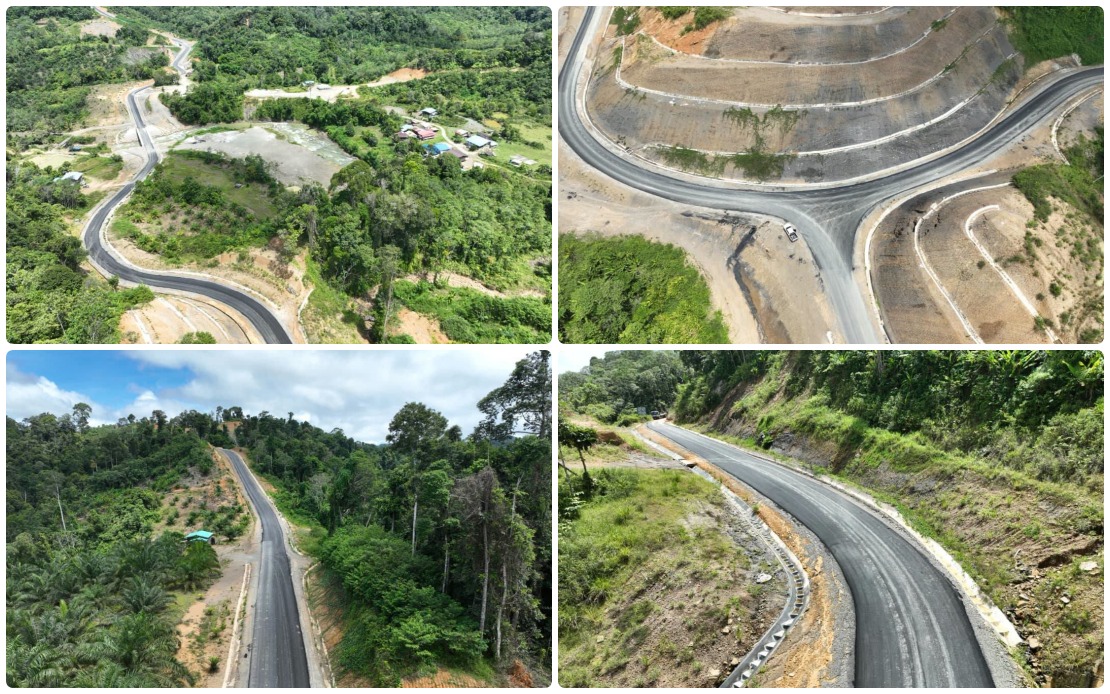
A significant infrastructure milestone has been reached in Sabah's interior as the Sapulut-Salong-Pagalungan-Pensiangan road project has been fully paved through to Pensiangan town, substantially transforming accessibility for one of the region's most remote parliamentary constituencies. The completion of this route represents a watershed moment for communities that have long struggled with isolation, offering immediate practical benefits alongside longer-term prospects for economic development and population retention.
Datuk Seri Arthur Joseph Kurup, the Minister of Natural Resources and Environmental Sustainability and Pensiangan's Member of Parliament, has positioned the road's completion as a cornerstone achievement of his parliamentary mandate. During a recent inspection visit to Pensiangan town, Kurup observed tangible signs of the project's impact, noting a visible shift in the presence of private vehicles and the newfound ease with which professionals and residents can traverse the landscape. The transformation speaks to infrastructure's capacity to reshape daily life in ways both measurable and deeply personal to those experiencing them.
The reduction in travel time stands as the most immediately striking benefit. The journey from Keningau to Pensiangan town has contracted from more than six hours to approximately three hours—a 50 per cent decrease that has profound implications for commerce, medical access, and professional mobility. During the monsoon season and periods of adverse weather, the improvement carries even greater significance; previously, heavy rain could strand travellers indefinitely on roadside stretches, creating genuine safety hazards and unpredictability for those dependent on reaching the town. The reliability now offered by the improved route addresses a longstanding vulnerability within the region's connectivity infrastructure.
The broader strategic vision articulated by Kurup extends well beyond simple road construction. He has framed the Sapulut-Pensiangan project as component of an integrated master development plan targeting Sabah's interior territories, with particular emphasis on transforming Pensiangan constituency. This comprehensive approach reflects a recognition that infrastructure alone cannot drive sustained development without complementary investments in economic capacity, services, and institutional frameworks. The minister's public statements indicate awareness that the road represents an opening through which other development initiatives must flow to yield tangible community benefit.
One dimension of this integrated strategy involves border connectivity and regional trade. Phase Four of the road project envisions extension to the Kalimantan border, a development that would position Pensiangan at an intersection of cross-border commerce and tourism. Such positioning could fundamentally alter the constituency's economic character, transitioning it from a purely interior agricultural region toward a node for trade flows and visitor movement. The prospect of formalised border infrastructure—an immigration and customs complex currently under approval—suggests governmental commitment to realising this vision beyond the aspirational stage.
Complementary projects underscore this multi-sectoral development philosophy. The Sapulut coffee processing facility represents an attempt to add value to local agricultural production rather than simply extracting raw materials. Agricultural collection centres at Pagalungan and agrobazaars at Salong provide marketing and distribution infrastructure. Jetty and boat facility upgrades at Pangkalan Salong maintain alternative transport routes whilst enhancing their efficiency. These initiatives collectively aim to create economic interdependencies and opportunity nodes throughout the constituency rather than concentrating development in a single urban centre.
Digital connectivity infrastructure has also received attention, with telephone and internet upgrades woven into the development framework. This recognition of the digital dimension reflects awareness that physical road access alone cannot address the information isolation that compounds geographical remoteness. Professional services, educational opportunity, and market access increasingly depend on reliable telecommunications, making these upgrades essential complements to road construction.
Educational investment forms another pillar of the development strategy. The construction of Sabah's first Sixth Form Centre for Nabawan district at Sekolah Menengah Kebangsaan Nabawan addresses a critical gap in rural post-secondary education. This facility enables young people to complete their secondary education without departing their home districts, reducing the financial and social costs of tertiary education pursuit and potentially increasing participation rates from communities that previously found such pathways inaccessible.
Kurup's observation regarding population behaviour offers perhaps the most telling indicator of the road's transformative potential. His comment that young people are increasingly returning to villages to develop land and support local economic activity suggests the project may be reversing long-standing patterns of rural-to-urban migration that have afflicted remote Sabahan communities. When road access removes a principal barrier to livelihood possibility, when improved connectivity enables entrepreneurship and service provision, settlement patterns can stabilise around improved economic realities. This reversal carries profound implications for community stability and cultural continuity.
The implications for other Malaysian and Southeast Asian border regions merit consideration. Sabah and similar interior territories throughout the region face genuine infrastructural disadvantages that compound geographical challenges. The Sapulut-Pensiangan project demonstrates that comprehensive, multi-modal development investment addressing road infrastructure, telecommunications, productive capacity building, and service accessibility can measurably shift conditions in even deeply remote areas. However, the project's success also underscores the substantial investment required and the necessity for coordinated implementation across multiple sectors and timescales.
For Malaysian policymakers overseeing regional development, the Pensiangan experience offers both encouragement and cautionary lessons. The visible transformation in vehicle presence and travel patterns validates the investment made. Yet sustained impact depends on whether complementary initiatives materialise as planned and whether local communities can effectively mobilise the infrastructure and support services now available. Road construction represents necessary but insufficient condition for lasting economic transformation in remote regions.

