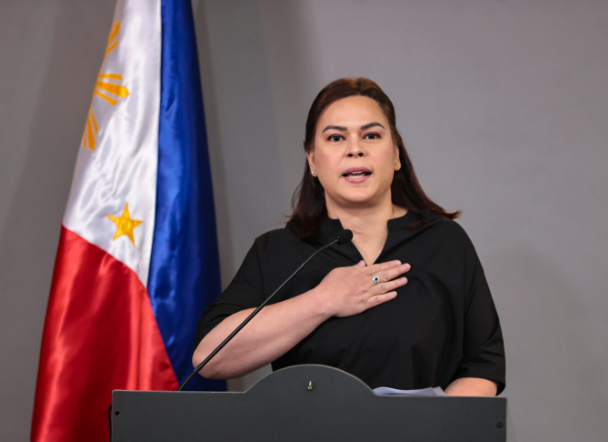
Vice President Sara Duterte has characterised the large religious demonstration that took place along Epifanio de los Santos Avenue on Tuesday as emblematic of a broader groundswell of public discontent with the Ferdinand Marcos Jr administration. Speaking on the same day that thousands of Iglesia ni Cristo members assembled on the major thoroughfare, Duterte framed the gathering as validation of concerns she has raised consistently since the start of 2024 about the government's performance and direction. The vice president's intervention adds significant political weight to the INC's show of strength, which ostensibly focused on issues of judicial fairness but comes amid mounting criticism of the Marcos administration from multiple quarters.
Duterte's characterisation of the government as characterised by poor governance strikes at the heart of Marcos Jr's legitimacy, which rests substantially on promises of competent administration following the turbulent Rodrigo Duterte presidency. She contended that the administration has failed to grapple meaningfully with the urgent challenges confronting ordinary Filipinos, suggesting instead a pattern of evasion and misdirection. By connecting the Edsa demonstration to broader governance failures, Duterte positioned the INC's grievances within a larger narrative about administrative incompetence and lack of direction at the highest levels of government.
The vice president levelled pointed criticism at what she characterised as the president's emotional and psychological distance from the struggles of ordinary citizens. She highlighted how millions of Filipinos face mounting pressure from surging commodity costs, employment precarity, and the relentless climb in expenses for basic necessities such as food and transport. Rather than developing and implementing concrete policy responses to these interconnected challenges, Duterte argued, the administration has instead opted for a more authoritarian approach to managing public opinion and political opposition. This framing positions the government as unresponsive to material concerns while simultaneously intolerant of legitimate criticism.
Central to Duterte's attack is an allegation that the administration employs the language of accountability as a smokescreen for suppressing legitimate political dissent and questioning. She suggested that those who raise concerns about alleged financial impropriety within the presidential residence, criticise administrative performance, or voice concerns about actions taken by the president face potential legal jeopardy despite engaging in activities protected by democratic norms. Such tactics, according to Duterte, undermine the constitutional protections for free expression and create a chilling effect on democratic discourse. She implied that the government is weaponising institutions that ought to be impartial in service of narrow political objectives.
The INC's gathering itself was framed by the religious organisation as a protest against what it termed selective justice and distortions of law, specifically in response to a plunder complaint filed against Senator Rodante Marcoleta. The use of such language by the massive organisation signals broader anxieties within significant segments of Philippine society about the impartiality of the judiciary and the even-handed application of legal processes. By aligning herself with these concerns, Duterte positioned herself as a defender of institutional fairness against what she portrayed as arbitrary executive power.
Duterte's denunciation of the administration's handling of dissent carries particular weight given her own precarious political position. The House of Representatives impeached her on grounds including alleged menaces directed at Marcos and his spouse, unexplained accumulation of wealth, and alleged misappropriation of confidential government resources. She faces trial before the Senate Impeachment Court beginning on July 6, making her recent statements not merely political commentary but also part of her defensive strategy. Nevertheless, her arguments about governmental intolerance of criticism and the politicisation of accountability mechanisms resonate with concerns raised by civil society organisations and international observers monitoring the Philippine political environment.
The timing of Duterte's intervention is strategically significant. By the middle of 2024, the Marcos administration had already faced mounting pressure from multiple directions, including from the Philippine National Police's counternarcotics operations, persistent inflation affecting household budgets, and diplomatic tensions in the South China Sea. The emergence of organised, visible expressions of discontent, particularly from a substantial religious organisation like the INC with millions of adherents, suggested that dissatisfaction extended beyond usual political opponents to encompass segments of the population that had not typically been mobilised for political purposes. Duterte's amplification of this discontent lends it additional credibility and reach.
For Malaysian and regional observers, the unfolding tensions within Philippine governance carry implications beyond Manila's immediate political circles. The Philippines remains a significant regional actor in Southeast Asian security architecture and economic cooperation, and sustained internal political turbulence can affect its capacity to participate effectively in regional initiatives. The apparent polarisation within Philippine society, coupled with concerns about democratic institutions and judicial independence that Duterte has articulated, raises questions about governance resilience in a major Southeast Asian democracy. The contrast between institutional vulnerability in the Philippines and the stability sought by regional partners engaged in multilateral frameworks suggests that Philippine political consolidation remains an ongoing project.
Moreover, the INC's mobilisation and Duterte's political positioning illustrate how religious organisations can function as vehicles for broader expressions of political grievance in Philippine democracy. Unlike some neighbouring countries where religion and politics maintain clearer boundaries, the Philippines demonstrates significant interpenetration between religious identity and political engagement. The willingness of a major religious bloc to stage visible demonstrations against particular government policies signals shifts in the delicate coalition-building necessary for Philippine political survival. Duterte's alignment with these concerns represents not merely a rhetorical manoeuvre but potentially a substantive reconfiguration of political forces heading into the 2025 election cycle.
The substance of Duterte's critique—that government has prioritised silencing criticism over solving problems—taps into grievances that extend across socioeconomic divides. Economic hardship, particularly the cost pressures on ordinary households, transcends class boundaries in ways that make them potent political concerns. By framing these material struggles as evidence of administrative failure compounded by governmental intolerance of dissent, Duterte articulated a narrative that potentially unifies diverse sources of discontent under a single explanatory framework. Whether this narrative gains traction among broader segments of the Philippine electorate will significantly influence the trajectory of Philippine politics through the remainder of the Marcos administration and beyond.

