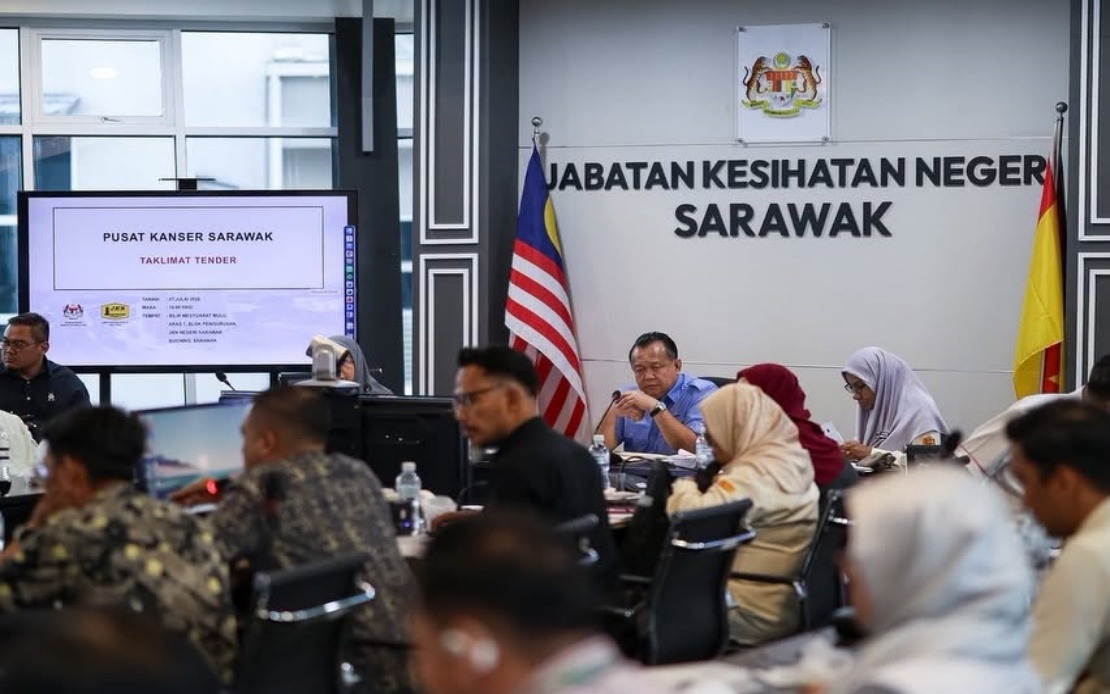
The long-awaited Sarawak Cancer Centre project is moving closer to reality, with construction set to commence in early 2027 following the formal awarding of the contract to a successful bidder. Works Minister Datuk Seri Alexander Nanta Linggi disclosed the timeline during a recent site visit to Kota Samarahan, indicating that the Letter of Acceptance will be issued in January 2027 once the tendering process reaches conclusion. This announcement represents a significant milestone for a healthcare infrastructure initiative that has been in development for some time and carries considerable importance for cancer treatment and management across Sarawak.
The project currently stands at the design-and-build tender stage, a competitive procurement process that has attracted substantial industry participation. Ten contractors have advanced beyond the pre-qualification screening phase, demonstrating that the project specifications and scope have generated serious interest among major construction firms. These successful candidates attended a detailed briefing session to comprehend the full scope of work and technical requirements before preparing their competitive bids. The three-month window allocated for proposal preparation indicates a complex undertaking requiring careful planning and resource allocation from participating contractors.
Once tender evaluation concludes and the successful contractor is formally notified, work will commence immediately on the detailed design phase. The selected contractor will have 60 months—a five-year period—to complete all design and construction activities. This timeline, while substantial, reflects the project's complexity and scale as a modern tertiary healthcare facility. Following practical completion, a two-year Defects Liability Period will commence, during which the contractor remains responsible for rectifying any construction defects or performance shortcomings, ensuring quality standards are maintained throughout the handover period.
The cancer centre's design must satisfy stringent requirements established by Malaysia's Health Ministry while incorporating contemporary healthcare facility concepts and best practices. This dual consideration ensures the facility meets national standards while offering patients a modern treatment environment. The hospital will occupy a 10.9-hectare site in Kota Samarahan, positioned adjacent to the existing Sarawak Heart Centre, creating a specialised healthcare cluster dedicated to serious illnesses. This co-location strategy provides operational efficiencies, shared support services, and opportunities for integrated care pathways between cardiology and oncology departments.
With a projected bed capacity of 310, the cancer centre will provide comprehensive services spanning both outpatient consultations and inpatient admissions. This configuration allows for diverse treatment modalities including surgical oncology, medical oncology, radiation therapy, and supportive care services. The facility's scale positions it as a major regional cancer treatment hub, likely serving not only Sarawak's population but potentially drawing patients from surrounding states and neighbouring regions seeking specialised care unavailable locally. The dual service model ensures cancer patients can access diagnostic and therapeutic services without unnecessary referrals to distant facilities.
Financial arrangements for this ambitious project reveal the state government's substantial commitment to healthcare infrastructure development. The total project cost is anticipated to exceed RM1 billion, with Sarawak allocating this amount from its budget. However, the funding mechanism incorporates reimbursement provisions in accordance with an agreed arrangement, suggesting potential federal participation or cost-sharing mechanisms that will reduce the immediate financial burden on the state treasury. This structured approach to financing large-scale healthcare projects reflects contemporary infrastructure development practices across Malaysian states.
The Sarawak Cancer Centre project carries broader significance for Malaysia's regional healthcare equity agenda. Sarawak, as the nation's largest state geographically, has historically faced challenges in delivering specialised medical services to inland and rural populations. A purpose-built cancer centre of this scale in the Kota Samarahan area—positioned relatively centrally within the state's developed regions—enhances accessibility for cancer patients requiring advanced treatment. Proximity to Kuching's commercial and transportation infrastructure ensures easier patient access and support from family members.
For Malaysian readers, this development illustrates the government's recognition that cancer treatment cannot rely entirely on Kuala Lumpur and Selangor facilities. The creation of tertiary cancer centres in states like Sarawak distributes healthcare capacity geographically and reduces treatment costs associated with interstate patient movement. Oncology services represent one of the most expensive healthcare domains, requiring specialised equipment, highly trained personnel, and continuous investment in emerging therapeutic technologies. State-level facilities help democratise access to these services.
The project timeline indicates realistic expectations about construction sector capacity and the complexity involved in establishing a modern medical facility. Infrastructure projects in Sarawak, particularly those requiring sophisticated building systems, specialised medical equipment, and trained personnel, necessitate careful project management. The five-year construction period accounts for not only structural work but also complex installations including imaging systems, surgical suites, and oncology treatment equipment that often involve extended procurement and commissioning periods.
Industry participation from ten pre-qualified contractors suggests confidence in project viability and commercial returns, even accounting for Sarawak's geographical and logistical challenges. Competition among established construction firms typically drives quality and efficiency improvements. The tender process transparency and structured approach also enhance accountability and ensure value for money in public healthcare expenditure.
As Sarawak continues diversifying its economy beyond petroleum and timber, healthcare infrastructure investment represents a strategic pivot toward services-based economic development. A world-class cancer centre attracts medical professionals, supports research activities, and generates employment in specialised healthcare sectors. These secondary economic benefits extend beyond immediate patient care delivery, contributing to broader state development objectives.
The announcement of a concrete start date in January 2027 represents progress on a commitment that will significantly reshape cancer care capabilities across Malaysian Borneo. Successful completion of this project will mark a watershed moment in Sarawak's healthcare infrastructure development, establishing institutional capacity for addressing one of the world's most pressing health challenges.

