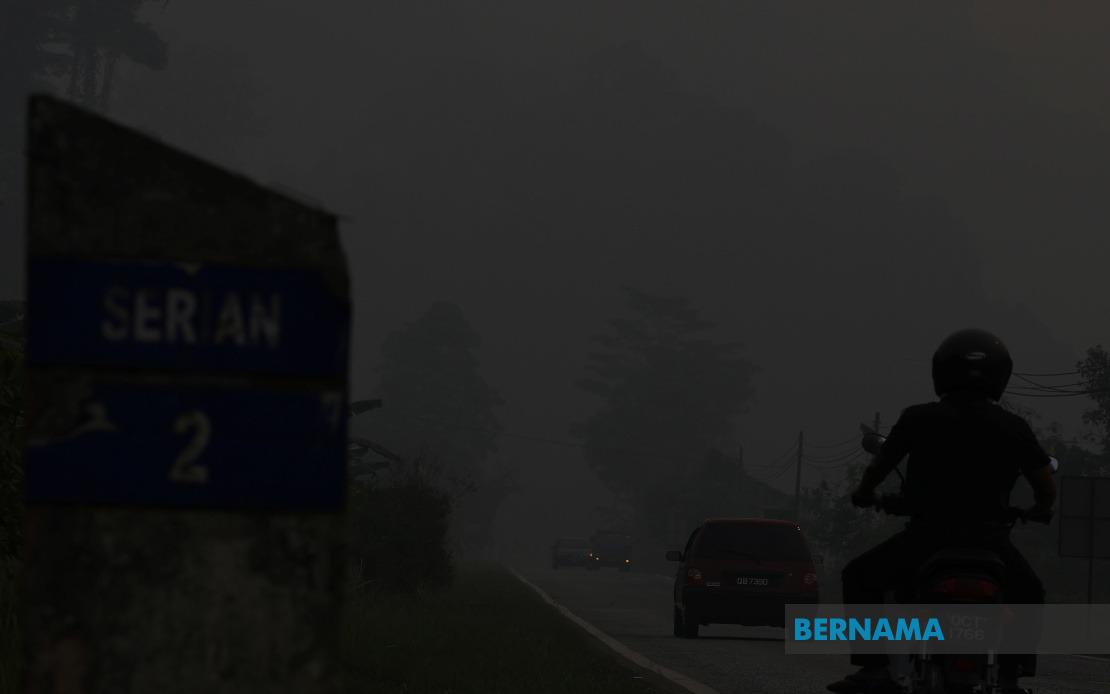
The Sarawak Disaster Management Committee has issued guidance to organisers across the state to make informed decisions about their scheduled events based on prevailing air quality conditions, as haze episodes continue to pose risks to public health. Speaking through chairman Datuk Amar Douglas Uggah Embas, the committee has emphasised that responsibility for proceeding, postponing or cancelling gatherings rests with individual event organisers, though they must base such determinations on careful assessment of potential health impacts, particularly for vulnerable populations.
The guidance comes at a time when air quality in multiple locations across Sarawak has deteriorated sharply, with several monitoring stations recording readings classified as hazardous. The decision-making framework laid out by SDMC reflects a pragmatic approach that acknowledges the operational autonomy of event planners while emphasising the importance of public welfare considerations. This balance between permitting organisers discretion and encouraging responsible environmental assessment represents the current policy stance, absent any binding directives from higher authorities.
Under the committee's advisory framework, organisers face a critical threshold at an Air Pollutant Index reading of 200. Beyond this level, SDMC strongly recommends that outdoor physical activities, sporting events and strenuous exercise programmes be reconsidered, with particular caution advised when children, elderly persons or other populations with heightened vulnerability to air pollution are expected to participate. This guidance recognises that certain demographic groups face elevated health risks from prolonged exposure to poor air quality, making careful event planning essential.
To help organisers navigate these challenges, SDMC has suggested several practical alternatives to outright cancellation. Events can be relocated indoors where feasible, physical activities can be modified to reduce exertion levels, or gatherings can be rescheduled to periods when air quality forecasts suggest improvement. This tiered approach allows communities and businesses to maintain their planned activities while implementing risk mitigation measures appropriate to prevailing conditions.
The committee has also outlined escalation procedures should air quality continue to deteriorate. Should the API exceed 500, established guidelines authorise the closure of government and private sector offices and workplaces, with exemptions only for essential services. Such measures remain contingent upon a formal declaration of a Disaster Emergency by the National Disaster Management Committee, the federal body with authority over nationwide disaster response protocols.
Background coordination mechanisms underscore the severity with which authorities view the situation. SDMC has positioned itself as working in close liaison with both state and federal agencies to maintain continuous monitoring of air quality trends and to implement progressive measures in accordance with established disaster management protocols. This coordinated approach ensures that responses remain proportionate to observable conditions and that information flows between different levels of government.
Concrete readings recorded across the state illustrated the severity of haze conditions when the advisory was issued. The Serian District Police Headquarters monitoring station recorded the state's highest API reading at 412, registering in the hazardous category. Samarahan followed with 332, while Kuching city recorded 304, all classified as unhealthy or hazardous levels. These represent the most significantly affected areas, though degradation was observed statewide.
Other locations reported varying degrees of air quality decline. Sarikei, Sibu, Bintulu and Mukah all registered unhealthy readings ranging from 197 to 176, while Samalaju, Kapit and Miri recorded readings between 175 and 159. Even the Miri Industrial Training Institute monitoring station logged 156, indicating that even areas outside major population centres were experiencing measurable air pollution. This geographic spread highlights the trans-boundary nature of haze episodes in Southeast Asia.
For Malaysian event organisers and the broader business community, the Sarawak guidance offers important operational considerations. The framework establishes that air quality will remain a legitimate factor in event management decisions without imposing mandatory closures unless conditions reach extreme levels. This approach preserves planning flexibility while creating clear benchmarks for when additional caution becomes necessary, providing organisers with objective criteria to justify decisions to stakeholders.
The relevance of this guidance extends beyond Sarawak to other Malaysian states and the Southeast Asian region more broadly. Haze episodes driven by transboundary pollution sources have become increasingly frequent, and frameworks for managing their impacts on public health and economic activity remain inconsistently developed across the region. Sarawak's structured approach to balancing event continuity with health protection offers a model that other jurisdictions might consider adapting.
The underlying challenge reflected in this advisory concerns the tension between economic and social continuity and public health imperatives during periods of environmental degradation. Event cancellation creates genuine disruption to livelihoods, community engagement and cultural activities, yet poor air quality poses documented health risks. The SDMC framework attempts to navigate this tension through graduated responses tied to objective measurements, empowering organisers with information while leaving final decisions to their judgement and responsibility.
Looking forward, the sustainability of this approach depends on both organisers' willingness to make prudent decisions and improvements in regional coordination to reduce haze episodes themselves. While immediate management of event activities addresses near-term challenges, longer-term solutions require addressing the agricultural and industrial practices that generate transboundary pollution. Until such broader solutions materialise, frameworks like SDMC's will remain essential tools for protecting public health during seasonal air quality crises.

