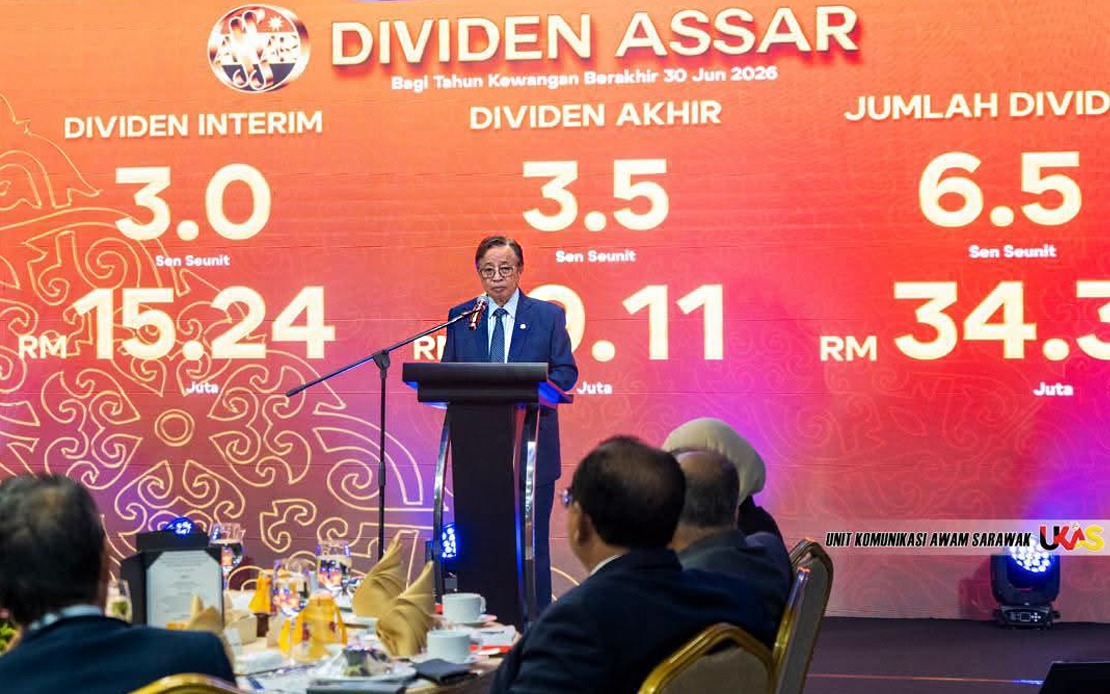
Sarawak's government is weighing a significant expansion of its flagship investment vehicle, the Amanah Saham Sarawak scheme, to encompass the non-Bumiputera community through a proposed subsidiary fund structure. Premier Tan Sri Abang Johari Tun Openg disclosed the initiative following the ASSAR dividend announcement ceremony in Kuching on July 13, signalling the state's intent to broaden participation in locally-managed equity investments beyond the traditionally restricted Bumiputera segment.
The proposal represents a strategic pivot toward financial inclusivity in Sarawak's investment landscape. Under the proposed framework, a new vehicle termed ASSAR 2 would operate parallel to the existing Bumiputera-focused ASSAR programme, enabling non-Bumiputera Sarawakians to channel capital into state-based equities and participate in dividend distributions. This dual-track approach mirrors methodologies employed by national institutions such as Permodalan Nasional Berhad, which have successfully managed segmented investment products serving different demographic groups within Malaysia's broader financial ecosystem.
Abang Johari emphasised that the initiative aligns with Sarawak's stated commitment to inclusive governance, a principle that extends beyond political representation into economic participation. By facilitating investment opportunities across communal lines, the state aims to deepen local capital mobilisation and strengthen the constituency of stakeholders with vested interests in Sarawak's economic trajectory. This inclusive framework potentially reduces social tensions around resource distribution and wealth creation, creating a broader base of beneficiaries from state economic growth.
The expansion proposal carries particular relevance for Sarawak's Chinese and Indian communities, as well as recent migrants and non-indigenous Bumiputera populations who have historically been excluded from Bumiputera-reserved investment instruments. Opening such avenues could accelerate capital accumulation among these groups while simultaneously expanding the asset base available for deployment in Sarawak-based enterprises and projects. The move may also generate additional investable funds that managers can deploy toward higher-yielding opportunities, potentially enhancing dividend performance across both funds.
For Malaysian investors and policymakers observing from other states, this initiative offers a template for reconciling communal investment preferences with broader financial inclusion objectives. The proposal does not dismantle existing Bumiputera protections but rather creates parallel structures, a pragmatic compromise that preserves affirmative action principles whilst removing barriers to non-Bumiputera participation. This model could prove instructive as other state governments navigate similar policy tensions between equity and accessibility.
Abang Johari noted that formal feasibility assessment would be conducted by ASSAR's board and management team before implementation, suggesting a measured approach rather than immediate rollout. This deliberative process allows administrators to address technical, regulatory, and operational considerations—including governance structures, dividend allocation methodologies, and compliance frameworks—that would require refinement before launch.
The timing of this announcement follows Sarawak's consistent economic growth trajectory, which the premier referenced as justification for expanded investment capacity. Sarawak's diversified resource base, spanning hydrocarbon production, agricultural exports, and manufacturing sectors, provides a substantive foundation for equity investments. Pooling capital from expanded investor demographics could accelerate sectoral development and infrastructure deployment, creating a virtuous cycle of economic expansion and shareholder returns.
From a Southeast Asian perspective, Sarawak's approach reflects broader trends toward financial democratisation across the region. As governments recognise that inclusive investment frameworks generate stronger economic multiplier effects than restricted models, similar initiatives are likely to gain traction in neighbouring jurisdictions. The success or challenges of ASSAR 2 will therefore attract regional interest from policymakers evaluating comparable schemes.
The proposal also carries implications for Sarawak's non-Bumiputera business communities, particularly small and medium enterprises seeking access to growth capital. An enlarged ASSAR ecosystem could channel investments toward SME-supporting infrastructure, technology adoption, and supply chain development, indirectly benefiting enterprises regardless of founder ethnicity through improved business ecosystems.
Implementation will require careful legislative and regulatory groundwork. State authorities must clarify fund eligibility criteria, investment allocation guidelines, dividend distribution mechanisms, and governance accountability frameworks to ensure ASSAR 2 functions with equivalent professionalism and transparency as its Bumiputera counterpart. Institutional credibility depends upon consistent performance and perceived fairness across both tranches.
The announcement positions Sarawak as proactive in reconciling communal economic interests with inclusive growth aspirations. Rather than viewing Bumiputera provisions and non-Bumiputera inclusion as mutually exclusive, the dual-fund approach acknowledges both principles as compatible policy objectives. If successfully implemented, this model could reshape discussions about affirmative action's relationship with economic dynamism across Malaysia and the broader region, demonstrating that targeted protections and expanded access need not exist in perpetual tension.

