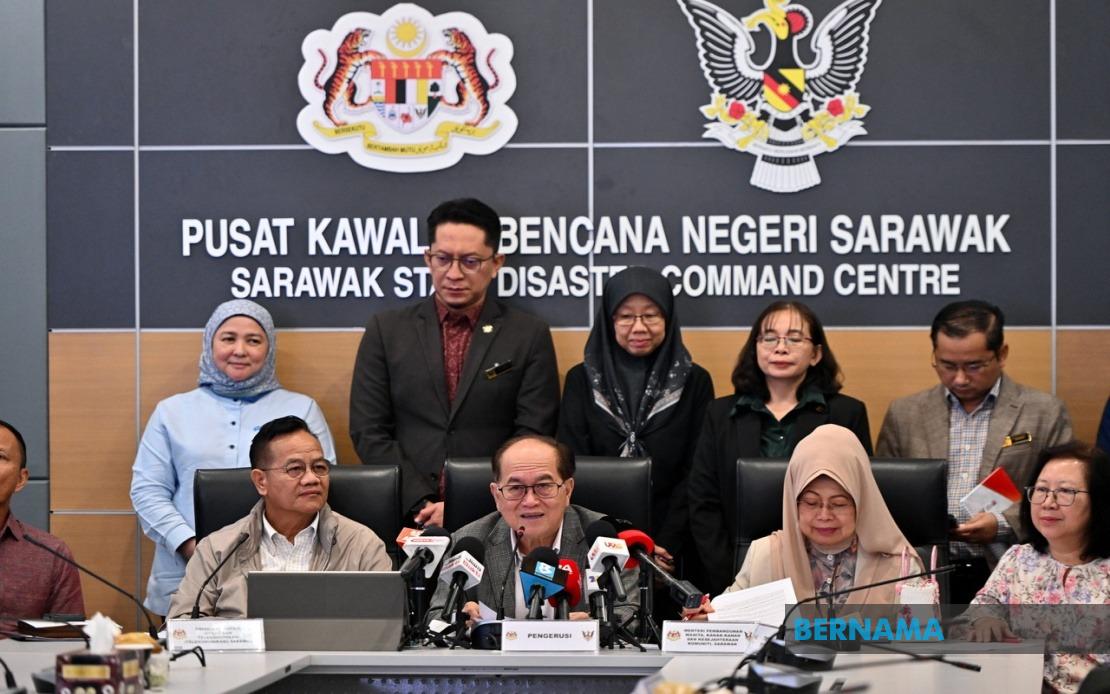
Sarawak's government has established a critical trigger point for haze-related emergency procedures, with Deputy Premier Datuk Amar Douglas Uggah Embas announcing that an Air Pollutant Index reading of 500 will activate an official state of emergency across affected regions. The threshold represents a significant policy marker for one of Malaysia's most vulnerable states during the annual transboundary smoke season, signalling the point at which standard crisis protocols give way to extraordinary measures that fundamentally disrupt normal economic and social activity.
Under the emergency framework outlined by Uggah, who chairs the Sarawak State Disaster Management Committee, escalation to the 500 API level will trigger mandatory involvement from the National Disaster Management Agency based in Kuala Lumpur. This federal coordination mechanism ensures that Sarawak's crisis management efforts align with national disaster protocols and enables centralized decision-making across multiple agencies and jurisdictions. The hierarchical involvement of federal authorities reflects the cross-state implications of severe haze events, which can affect air quality across the entire region and demand resources beyond any single state's capacity.
The consequences of an emergency declaration would be sweeping for Sarawak's economy and daily life. Once implemented, government offices at all levels would cease operations, while private sector businesses would face mandatory closure. Only essential services deemed critical to public health and safety—including hospitals, utilities, security forces, and transport infrastructure—would maintain functionality. For a state heavily dependent on commerce and services, such disruptions represent significant economic losses alongside the health impacts of hazardous air quality.
Uggah emphasized that the cross-border nature of haze pollution demands coordinated diplomatic solutions rather than unilateral state action alone. Recognizing that smoke originates primarily from land-clearing and agricultural burning in Indonesian Borneo, Sarawak has tasked Natural Resources and Environmental Sustainability Minister Datuk Seri Arthur Joseph Kurup, who serves as deputy chairman of the disaster committee, with engaging Indonesian counterparts through established ASEAN diplomatic channels. This regional approach acknowledges that no enforcement mechanism exists within national jurisdictions for transboundary air pollution, making multilateral cooperation through regional frameworks the only viable long-term solution.
The coordination with federal authorities extends beyond immediate emergency response to encompass broader diplomatic engagement. Sarawak State Disaster Management Committee has committed to working with the federal government to ensure that state concerns receive appropriate representation through both national and ASEAN channels. Should proposals emerge to provide technical or financial assistance to Indonesia in addressing the root causes of haze—such as supporting sustainable land management or forest protection initiatives—these would be evaluated and coordinated through proper governmental and diplomatic procedures rather than pursued independently by Sarawak.
Meanwhile, Sarawak is proceeding with cloud seeding operations scheduled to commence on September 3 and continue through September 5, weather permitting. This precipitation-enhancement initiative serves a dual purpose beyond haze mitigation. Officials recognize that the region is simultaneously experiencing severe water stress, with four critical catchment areas showing concerning depletion levels: Simunjan, Lingga, Spaoh, and Lijok. The cloud seeding program aims to replenish water supplies across these areas while simultaneously increasing atmospheric moisture to help suppress haze particles and reduce overall air pollution.
The water shortage dimension adds urgency to environmental management efforts in Sarawak. A prolonged dry season has strained water resources that supply both residential consumers and industrial operations. By deploying cloud seeding technology, authorities attempt to address two interconnected environmental crises simultaneously—the acute challenge of transboundary haze and the chronic stress of diminishing freshwater availability. This integrated approach reflects the reality that environmental problems in tropical regions are rarely isolated; drought conditions that concentrate air pollutants and deplete water supplies often emerge together during El Niño weather patterns.
For Malaysian readers and regional observers, Sarawak's establishment of the API 500 threshold demonstrates how state governments are operationalizing climate and environmental governance within federal frameworks. The decision to set a specific numerical trigger rather than relying on subjective assessment reflects international best practices in disaster management, providing clarity to businesses and residents about when emergency protocols activate. Such transparency enables contingency planning across sectors, though it also highlights the vulnerability of equatorial economies to transboundary environmental hazards beyond their control.
The diplomatic dimensions of Sarawak's response underscore broader Southeast Asian challenges in managing shared natural resources and environmental degradation. Indonesia's agricultural expansion and land-clearing practices create externalities borne primarily by neighboring populations in Malaysian Borneo, yet remediation requires consensus among sovereign nations and coordination through institutions like ASEAN that lack binding enforcement powers. For Malaysia, this reality necessitates sophisticated diplomacy balancing trade relationships with Indonesia against health and environmental protection imperatives.
Looking forward, the effectiveness of Sarawak's API 500 protocol will depend partly on whether cloud seeding succeeds in reducing air pollution during critical periods. If haze severity continues to spike despite mitigation efforts, pressure may mount for more aggressive federal intervention or enhanced ASEAN-level mechanisms for addressing transboundary pollution. The September cloud seeding operations will provide preliminary data on technological approaches to haze reduction, informing policy decisions for future seasons.

