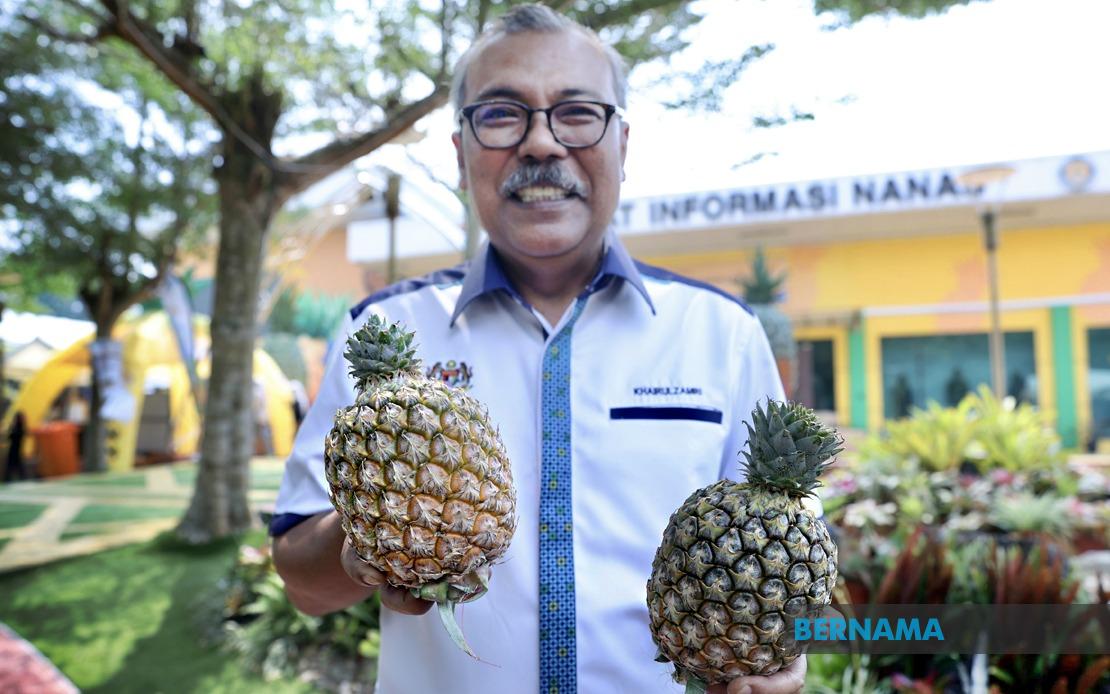
A premium pineapple variety cultivated in Sarawak is commanding attention at Malaysia's flagship agriculture showcase, signalling a potential breakthrough for the nation's fruit industry. The Sarawak Gold (SG1) pineapple, which has been transported in substantial quantities to MAHA 2026 currently underway at the Malaysia Agriculture Expo Park (MAEPS) in Serdang, represents years of agricultural research aimed at developing a competitive alternative to established commercial varieties. With seven tonnes of the fruit on display at Laman Nanas within the expo grounds, visitors are experiencing firsthand what industry officials believe could reshape Malaysia's pineapple production and export landscape.
According to Mohd Khairuzamri M. Salleh, director-general of the Malaysian Pineapple Industry Board (LPNM), the SG1 variety possesses several characteristics that distinguish it from conventional pineapple cultivars currently dominating global markets. The fruit delivers sweetness comparable to the MD2 variety, which commands premium prices internationally, while displaying a distinctive rose-shaped crown that enhances its visual appeal and market differentiation. Most critically, SG1 maintains consistent quality and flavour throughout the fruit, addressing a persistent challenge in pineapple cultivation where fruit characteristics can vary significantly from base to crown.
The most compelling advantage of the SG1 lies in its accelerated maturation cycle. Requiring only nine months from planting to harvest, the variety substantially outpaces MD2, which demands fourteen months for full maturation. This temporal efficiency translates directly into increased productivity per cultivating season, allowing farmers to achieve multiple crop rotations within the same timeframe required for traditional varieties. For Malaysian growers facing competitive pressures from established pineapple-producing nations and rising operational costs, this advantage could prove economically transformative.
Density of cultivation represents another strategic advantage that LPNM officials emphasise. The SG1 variety tolerates remarkably high planting densities between 25,000 and 30,000 plants per acre, substantially exceeding conventional spacing requirements for other varieties. This capability enables farmers to maximise output from limited land resources, a particularly significant consideration across Malaysia where agricultural land faces competing pressures from urban development and alternative agricultural uses. The high-density cultivation model addresses concerns about scalability without requiring massive expansion of farming operations.
The industry board is pursuing an expansion strategy that would establish SG1 cultivation throughout Peninsular Malaysia, complementing existing production concentrated in Sarawak. Seedling distribution to growers across wider geographical areas is anticipated to commence within the following year, suggesting that implementation timelines are progressing according to planning schedules. This geographical diversification would reduce supply chain vulnerabilities and position different regions of Malaysia as competing production centres within regional and international markets.
Export viability has already been demonstrated through preliminary market testing. Trial shipments from Sarawak to Singapore have successfully navigated commercial channels, validating both quality standards and logistical feasibility. Mohd Khairuzamri indicated that the variety's resilience characteristics create genuine potential for market penetration into significantly more demanding geographic markets, specifically highlighting China and New Zealand as priority export destinations. These markets represent substantial revenue opportunities but demand consistently high quality standards that Malaysian producers have historically struggled to maintain competitively.
Beyond fresh fruit commercialisation, the Malaysian pineapple industry is actively repositioning its public narrative and value proposition. The theme underpinning this year's Laman Nanas presentation, "Value Creation for Food Security," reflects a deliberate effort to expand consumer and stakeholder understanding of pineapple industry contribution beyond fresh produce markets. The industry narrative emphasises a "one planting, three harvests" concept that extends value extraction throughout the entire cultivation cycle. Utilisation of plant waste and byproducts for ruminant feed production, textile manufacturing, and paper pulp represents a circular economy approach that addresses sustainability concerns while creating additional revenue streams for farming operations.
The broader MAHA 2026 exhibition running through early September serves as the platform for this industry repositioning effort. With approximately 2,000 exhibitors and anticipated visitation exceeding four million visitors during the ten-day event at MAEPS, the showcase provides unprecedented opportunity for direct farmer-to-consumer and farmer-to-business engagement. For an industry seeking to attract renewed investment and cultivate younger generations' interest in agricultural careers, such visibility proves invaluable in shifting perceptions from commodity production toward innovative food security solutions.
The emergence of SG1 pineapple occurs within a broader global context of agricultural competition where Southeast Asian nations compete intensively for market share across fresh fruit categories. Thailand, the Philippines, and Vietnam have successfully developed export brands and cultivar advantages that command premium positioning. Malaysia's pineapple industry, while historically significant, has witnessed declining market share and younger farmer participation. The SG1 variety, combined with strategic positioning around sustainability and value-added processing, represents a deliberate attempt to recapture industry momentum and establish Malaysia as an innovator rather than a commodity producer.
For Malaysian consumers and businesses, the commercial success of SG1 carries implications extending beyond agricultural productivity metrics. Successful establishment of a distinctive domestic variety strengthens food security through reduced dependency on imported cultivars and foreign agricultural technologies. Export earnings potential directly supports rural livelihoods across pineapple-producing regions and strengthens Malaysia's competitive positioning within Southeast Asia's fruit trade networks. The industry's emphasis on waste valorisation and circular economy principles aligns with government sustainability objectives and provides models potentially transferable to other agricultural subsectors facing similar pressures.
The pathway from research variety to commercial scale production involves numerous technical, regulatory, and market-development hurdles that Malaysian industry officials must navigate successfully. Securing farmer adoption requires not only demonstrating agronomic advantages but also establishing supply chains, financing mechanisms, and market guarantees that reduce production risks. International certification requirements for export markets demand consistent documentation and quality assurance protocols that differ substantially between destination markets. Success hinges upon coordinated effort across government agencies, research institutions, and private sector growers willing to transition from established practices to new cultivation protocols.

