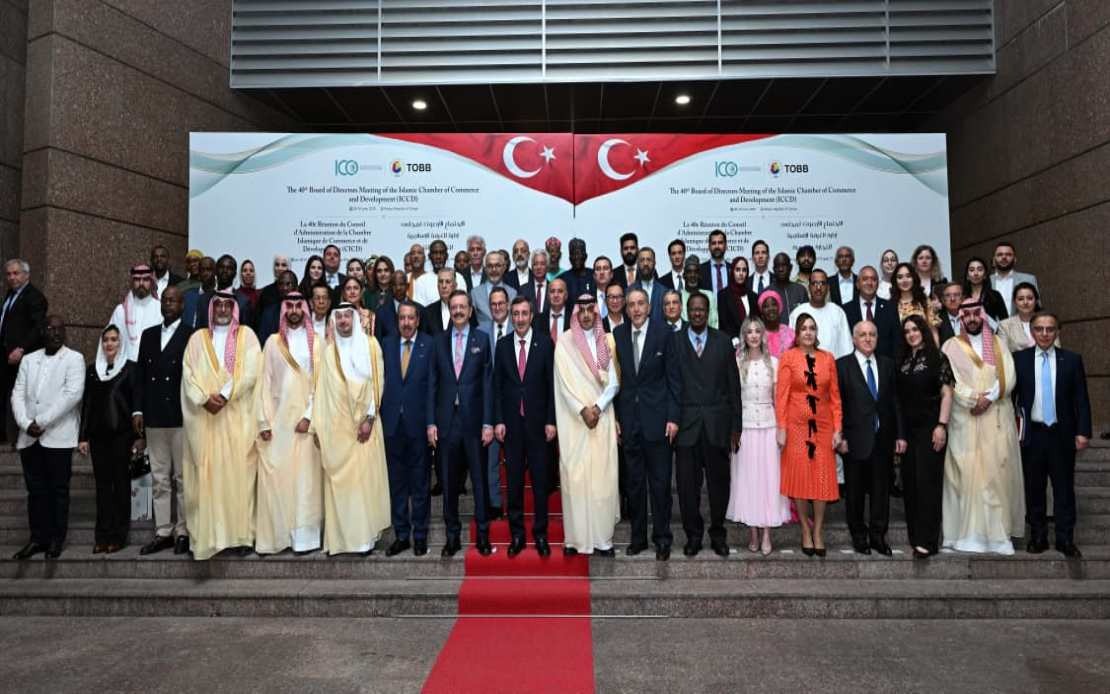
Saudi Arabia has signalled renewed commitment to deepening economic cooperation with Muslim-majority nations across the Islamic world, with particular emphasis on strengthening ties with Southeast Asian powerhouses Malaysia and Indonesia. The call was articulated by Abdullah Saleh Kamel, chairman of the Federation of Saudi Chambers and president of the Islamic Chamber of Commerce and Development, during the 40th ICCD Board of Directors Meeting held in Ankara, Turkiye.
Kamel's remarks underscored how the Kingdom views its participation in the ICCD as a natural continuation of its long-standing role as a major financial and institutional pillar supporting the organisation since its founding. By positioning the Federation of Saudi Chambers as the representative voice of Saudi business interests within the ICCD, Saudi Arabia is demonstrating its intent to translate political and diplomatic relationships into concrete commercial opportunities across the Islamic world.
The emphasis on Malaysia and Indonesia reflects a strategic recognition that these two major Southeast Asian economies represent critical growth engines within the Muslim-majority world. Both nations have demonstrated sustained economic dynamism, significant foreign direct investment capacity, and expanding middle classes that present lucrative opportunities for Saudi businesses and investors. The acknowledgment of these two countries alongside Saudi Arabia signals a triangular economic vision that could reshape trade patterns across Asia and the Middle East.
According to the statement, the ICCD has identified several interconnected development priorities that bind together economies like Malaysia and Indonesia with broader Islamic world cooperation. Private-sector expansion and entrepreneurial activity, particularly among younger demographics, feature prominently in this vision. Youth unemployment and underemployment remain persistent challenges across much of the Muslim-majority world, making job creation through private enterprise a shared development imperative that transcends borders and regional boundaries.
Food security and sustainable agriculture have also emerged as critical focal points for ICCD cooperation. These are particularly relevant for Malaysia and Indonesia, both of which face pressures balancing agricultural production with environmental conservation and import dependency. By framing these issues within an Islamic cooperative framework, Saudi Arabia and the ICCD are positioning themselves as facilitators of shared solutions rather than competitors for resources or markets. This cooperative approach could help mitigate regional tensions and create mutually beneficial supply chains across the Islamic world.
Regional trade connectivity stands as another pillar of the proposed economic integration model. Enhanced infrastructure, simplified customs procedures, and harmonised trade standards among Muslim-majority nations could substantially reduce transaction costs and accelerate commerce. For Malaysia and Indonesia, improvements in intra-Islamic trade could diversify their export markets beyond traditional Western partners and reduce economic vulnerability to external shocks or trade disputes with major developed economies.
The ICCD's ambitions extend beyond immediate commercial transactions. The organisation is explicitly seeking to foster what the statement characterises as economic integration among Islamic countries. This deeper integration—moving beyond superficial trade relationships toward genuine structural alignment—would require coordinated investment in complementary industries, shared research and development initiatives, and potentially coordinated trade negotiation strategies with non-Islamic economies.
Kamel emphasised the ICCD's determination to expand both intra-Islamic trade and investment flows in ways that generate tangible economic benefits for entrepreneurs and young professionals throughout the Muslim world. This dual focus on volume and quality reflects recognition that simply increasing transaction volumes matters less than ensuring those transactions create sustainable employment, skill development, and wealth creation. For Malaysian and Indonesian readers, this signals that Saudi Arabia views these nations not as markets to extract resources from, but as genuine economic partners where mutual prosperity depends on shared success.
The recent meetings in Ankara also addressed crucial institutional matters for the ICCD itself. The Board of Directors and Finance Committee discussed initiatives aimed at strengthening the chamber's operational effectiveness and expanding its capacity to execute programs fostering economic cooperation among Islamic nations. These discussions likely encompassed staffing, technology infrastructure, and strategic planning needed to operationalise the ambitious cooperation framework Kamel outlined.
Particularly noteworthy is the ICCD's preparation for its golden jubilee celebration scheduled for 2027. Rather than treating this milestone as merely commemorative, the organisation appears intent on using it as a catalyst for renewed institutional commitment and potentially expanded membership and participation. For Malaysia and Indonesia, this represents an opportunity window—the next few years may offer advantageous terms for deepening involvement in ICCD structures before the 2027 celebration crystallises new institutional arrangements.
The broader geopolitical context underlying Saudi Arabia's outreach merits attention for Malaysian observers. By cultivating stronger institutional and commercial relationships with major Muslim-majority economies, Saudi Arabia reinforces its position as a natural convener and leader within the Islamic world. This leadership aspiration has both defensive and offensive dimensions—it protects Saudi interests against challenges from rival Islamic powers while simultaneously expanding Saudi influence through economic rather than military channels.
For Malaysia specifically, these developments suggest potential opportunities for Malaysian businesses to access Saudi capital and market connections while simultaneously positioning Malaysia as an intermediary between Saudi Arabia and broader Southeast Asian markets. The emphasis on youth entrepreneurship and private-sector growth aligns well with Malaysia's own development priorities and could catalyse new joint ventures, technology transfers, and investment flows that benefit both economies.
The ICCD's expanded focus on Southeast Asian economies also reflects demographic and economic realities reshaping the Muslim-majority world. With Southeast Asia's growing middle class, expanding consumer markets, and strategic geographic position astride global trade routes, the region has become increasingly central to any serious discussion of Islamic world economic development and integration. Saudi Arabia's explicit recognition of Malaysia and Indonesia's roles signals maturation of the Kingdom's understanding that Islamic world leadership today depends on engaging the dynamic economies of Asia as equal partners.

