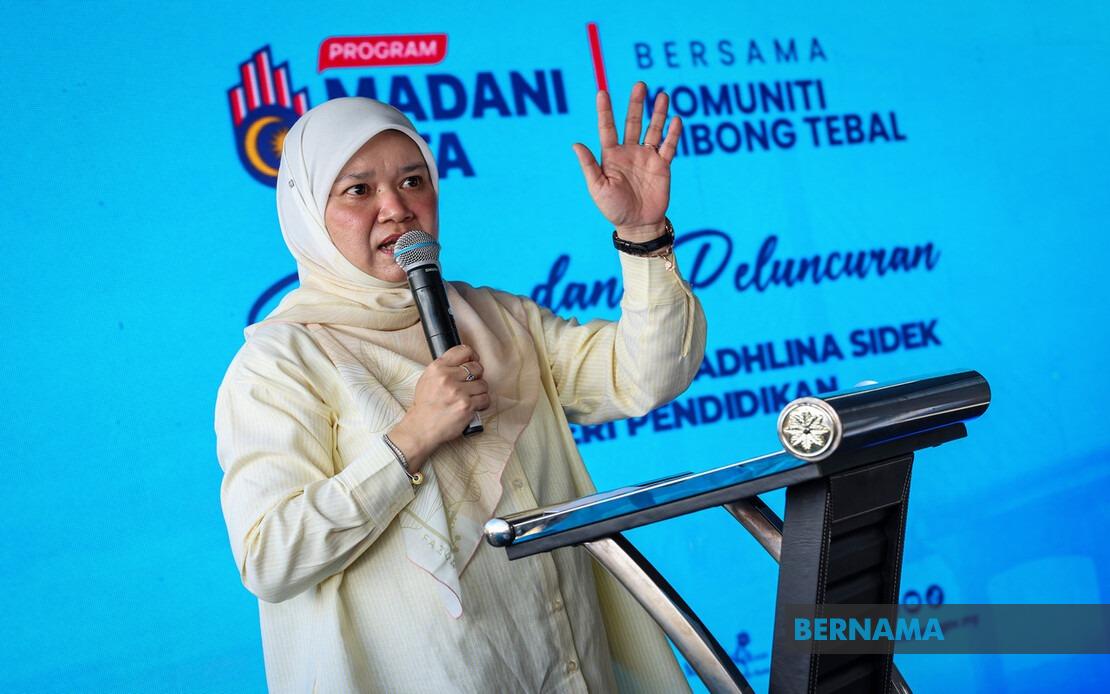
Education Minister Fadhlina Sidek has praised the NADI Mahir school uniform initiative as an effective policy tool for reducing household expenses while simultaneously stimulating economic activity among grassroots entrepreneurs. Speaking in Nibong Tebal on August 8, Fadhlina described the instalment-based purchasing system as a meaningful response to the persistent financial pressures families face when preparing children for the school year, a critical pain point that has long challenged Malaysian households regardless of income level.
The NADI Mahir Jahit programme represents a dual-purpose intervention within Malaysia's broader digital inclusion and skills development framework. By enabling parents to spread uniform costs across multiple payments rather than bearing the full expense upfront, the scheme addresses a genuine affordability barrier that can deter school attendance, particularly in lower-income communities. Simultaneously, the initiative provides sustainable income pathways for 120 programme alumni who have completed vocational training through NADI's Pintar Services and now operate as independent tailoring entrepreneurs. This structural approach demonstrates how targeted government support can align social welfare objectives with economic empowerment.
As Member of Parliament for Nibong Tebal, Fadhlina positioned the initiative within her constituency's development priorities, emphasizing its relevance to constituent welfare. Her endorsement carries particular weight given the convergence of improved accessibility and local economic benefit, factors that resonate strongly with voters across Malaysia's diverse socioeconomic landscape. The presence of senior officials from the Ministry of Communications and the Malaysian Communications and Multimedia Commission at the launch underscores the cross-agency coordination required to implement such programmes at scale.
The NADI ecosystem extends beyond uniform procurement into comprehensive community support mechanisms. The NADI Tuisyen Rakyat programme, which provides subsidized tutoring services, has enrolled over 42,000 students nationwide, with 73 participants from Nibong Tebal alone. The 2025 Sijil Pelajaran Malaysia examination results demonstrated tangible academic returns, with 65 outstanding students attributed to the tutoring programme. For Malaysian parents navigating education costs alongside other household expenses, this integrated support structure—combining affordable uniforms, subsidized tutoring, and skills development—creates meaningful financial relief across multiple dimensions of school-related spending.
Digital and technological skill-building represents another significant component of NADI's community engagement strategy. The NADI E-Sukan platform leverages esports as a vehicle for youth talent identification, confidence building, and collaborative team development. Nibong Tebal has recorded notable competitive achievements through this channel, including a national championship victory in NADI E-Sukan MADANI Mobile Legends and strong performances in culinary competitions. These successes illustrate how structured digital engagement can complement traditional academic pathways and create recognition opportunities for young people whose talents might otherwise remain underdeveloped.
The introduction of artificial intelligence literacy through the 1 NADI 1 Prompt Engineer initiative reflects Malaysia's strategic positioning within the global technology economy. By democratizing access to AI training—11 participants have enrolled in Nibong Tebal alone—the programme prepares individuals for emerging employment opportunities in the Fourth Industrial Revolution. This forward-looking dimension addresses a critical skills gap as Malaysian employers increasingly demand AI-literate workforces, ensuring that communities beyond urban tech hubs can participate in high-value economic sectors.
Fadhlina's articulation of NADI's multi-sectoral benefits indicates how integrated community development can address interconnected challenges. Rather than treating school affordability, youth engagement, skills training, and technological literacy as separate policy domains, the NADI framework positions them as complementary interventions targeting the same communities and population cohorts. This holistic approach proves particularly valuable for regions like Nibong Tebal, where diverse household circumstances require multifaceted support mechanisms.
The entrepreneurship dimension warrants particular attention for Southeast Asian policymakers considering similar programmes. By guaranteeing market access for trained tailors through the school uniform supply chain, NADI provides business stability that traditional microfinance or skills training alone might not generate. The 120 tailoring entrepreneurs operate within a structured ecosystem that combines technical training, business development support, and steady demand—a model that could be adapted across the region to support other occupational groups facing market entry barriers.
From a fiscal perspective, the instalment model represents intelligent public spending that generates multiplier effects beyond the direct uniform cost. Parents redirecting budget allocations due to improved affordability can reinvest savings into other household needs—nutritious meals, academic materials, health services—thereby stimulating broader economic activity. The income generated by participating tailors circulates within local economies, supporting families and communities while reducing government welfare expenditure. This multiplier effect extends the programme's economic impact beyond its direct beneficiaries.
The programme's scaling nationally—with 42,000 tutoring participants and expanding skills training cohorts—demonstrates that community-focused initiatives can achieve significant reach within Malaysia's education system. However, sustainable growth will require ongoing evaluation of programme quality, entrepreneur support systems, and parent awareness. Regional variations in implementation quality and resource allocation may necessitate differentiated approaches depending on local economic conditions and existing infrastructure.
Fadhlina's emphasis on empowering local entrepreneurs reflects a governance philosophy that positions government as a facilitator rather than sole service provider. By creating market conditions enabling private entrepreneurs to participate in education-related supply chains, Malaysia leverages distributed economic capacity while improving service accessibility and quality through competition. This model aligns with contemporary development thinking emphasizing public-private collaboration and community-level agency.

