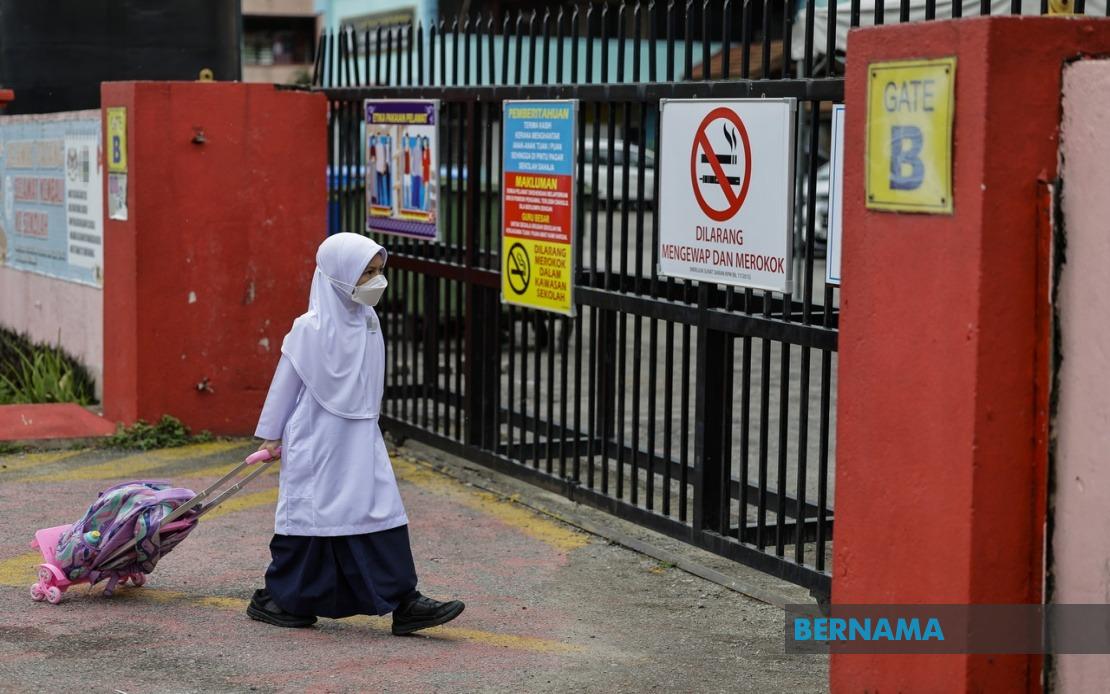
Malaysia's Deputy Education Minister Wong Kah Woh has confirmed that principals and headmasters across the country retain the authority to close their schools when air pollution readings reach hazardous thresholds, provided they coordinate with their respective State Education Departments and District Education Offices. The clarification comes as several regions nationwide experienced unhealthy Air Pollutant Index readings, raising renewed concerns about the timing and execution of haze management protocols in educational institutions.
Wong's statement underscores a framework that has evolved over nearly a decade of managing seasonal haze. The Ministry of Education maintains standing circulars dating back to 2016, with updated guidance issued in 2019 and again in 2023, demonstrating an institutional commitment to refining responses as air quality challenges persist. These circulars establish clear benchmarks and procedural guidelines that school administrators can reference when making decisions about operations during periods of poor air quality. The existence of multiple iterations reflects the ministry's recognition that haze management strategies require periodic reassessment based on accumulated experience and changing environmental patterns.
According to Wong, schools must implement progressive restrictions as pollution worsens. When the Air Pollutant Index climbs to 100 or higher, institutions must immediately halt all outdoor activities and suspend mass gatherings on school premises. This threshold serves as a critical trigger point where administrators begin transitioning operations toward indoor arrangements. Outdoor sporting events and athletic competitions face postponement at this level, recognising that sustained physical exertion in polluted air poses particular risks to developing lungs and cardiovascular systems in children and adolescents.
The higher threshold of 200 carries more severe implications. At this API level, the discretion shifts toward potential closure rather than merely modified operations. An API reading of 200 indicates "very unhealthy" air quality according to Malaysian Air Quality Standards, where vulnerable populations experience health effects and the general public may begin reporting symptoms. For a school environment housing hundreds of students and staff, maintaining normal operations becomes difficult to justify from a health and safety perspective. The delegation of closure authority to principals acknowledges that school leaders possess intimate knowledge of their specific situations and can weigh local factors that may not be apparent to centralised ministry officials.
Responsibility for monitoring and decision-making is distributed across multiple levels of Malaysia's education hierarchy. The ministry itself maintains continuous oversight through state and district education offices, which gather real-time API data and communicate changing conditions to schools. However, principals bear the immediate responsibility for translating these alerts into operational decisions appropriate for their institutions. This structure recognises that a single nationwide mandate would struggle to account for the vast variation in geography, student demographics, and local air quality patterns across Malaysia's thirteen states and three federal territories. Peninsular Malaysia's industrial regions may experience sustained high readings while other areas remain unaffected by the same pollution event.
The haze challenge has evolved into a recurring feature of Malaysia's environmental calendar, particularly during dry seasons when transboundary pollution from regional land-clearing activities affects the country. Schools have become focal points in this discussion because they house vulnerable populations—children with developing respiratory systems and those with pre-existing conditions like asthma. The education sector's exposure to these events directly impacts learning continuity, as schools must balance operational disruptions against legitimate health concerns. Parents increasingly expect clear communication and transparent decision-making about when their children's schools will remain open or closed based on air quality.
The framework Wong outlined reflects a shift toward transparency and institutional discretion rather than heavy-handed top-down mandates. By clarifying that principals can make closure decisions, the ministry signals trust in school leadership while establishing objective criteria—the API threshold of 200—that removes ambiguity about when such decisions become permissible. This approach differs from some earlier periods when schools operated without clear guidance, leading to inconsistent responses and parental frustration. The emphasis on consultation with education department officials also ensures that individual school decisions do not occur in isolation but within a coordinated regional response.
For Malaysian parents and students, this clarification carries practical implications. Families can expect communication from schools about their haze management protocols and the specific conditions that would trigger activity suspensions or closures. Teachers should anticipate needing to pivot between outdoor and indoor lesson plans, or reorganise curricula when air quality forces changes to academic schedules. The staggered response—outdoor activity suspension at API 100, potential closure at API 200—provides intermediate steps that reduce the disruption of full school closures while still protecting student health during moderate pollution episodes.
The regional context amplifies the significance of Malaysia's haze management in schools. Neighbouring countries including Singapore, Indonesia, and Brunei experience similar transboundary pollution challenges, yet each manages educational responses differently. Malaysia's approach of delegating closure authority to principals while maintaining ministry oversight offers a middle path between centralised control and complete institutional autonomy. This model has become a reference point in regional discussions about balancing operational continuity with environmental health imperatives.
Wong's remarks, delivered during an official event in Taiping, suggest the ministry views haze management as an ongoing operational reality rather than an exceptional circumstance requiring special administrative arrangements. The standing circulars and regular monitoring protocols indicate that education officials expect periodic air quality crises and have incorporated them into normal administrative procedures. This institutionalisation reflects the sobering reality that Malaysia faces structural challenges related to regional haze that may persist for years regardless of mitigation efforts.
Moving forward, the effectiveness of this framework depends on consistent implementation and communication. Schools must ensure that staff understand the trigger points and can act decisively when API readings reach critical thresholds. Parents need accessible information about their children's school's specific protocols and decision-making criteria. The ministry, through its state and district offices, must continue providing real-time air quality updates and supporting schools that face difficult decisions about operations. The success of this decentralised approach ultimately rests on the professionalism and responsiveness of principals nationwide, who now carry clear authority—and by extension, accountability—for decisions affecting thousands of students.

