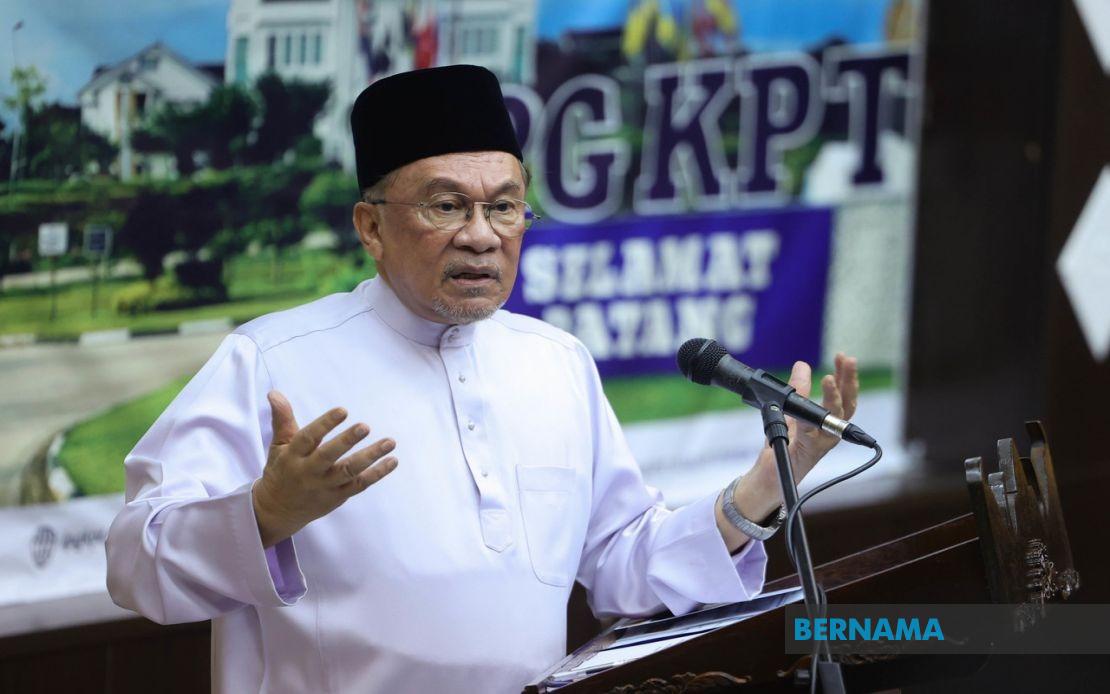
Prime Minister Datuk Seri Anwar Ibrahim has issued a forthright warning to educational institutions across Malaysia that concealing bullying incidents in order to maintain institutional reputation is both unethical and counterproductive to student welfare. Speaking in Nilai on July 17, Anwar stressed that schools must prioritise the safety and wellbeing of victims over concerns about how reported cases might affect their standing in the community or among parents.
The Prime Minister's intervention into this sensitive issue comes at a time when bullying remains a persistent challenge in Malaysian schools, affecting student mental health and academic performance. Anwar's remarks carry particular weight given the cultural tendency in some quarters to downplay such incidents as normal childhood behaviour or minor infractions that schools prefer to handle quietly. By framing transparency as a moral imperative rather than an institutional liability, the Prime Minister is attempting to shift the narrative around how the education system should respond to these incidents.
Anwar articulated his position with a specific hypothetical scenario designed to reframe how educational leaders should evaluate their performance. He noted that a school with 1,000 students reporting two bullying cases should not face criticism for doing so, nor should its principal or headteacher be regarded as presiding over a dysfunctional institution. The critical distinction he drew was between transparency and accountability. Schools that identify and report bullying cases are performing their duty correctly, whereas those that discover incidents but choose to conceal them are fundamentally failing their students and communities. This framing challenges the assumption that transparency about problems reflects poorly on school management.
The underlying philosophy Anwar expressed suggests that reported bullying cases actually indicate an institution functioning as it should, with systems in place to detect and surface problems. Conversely, schools where bullying goes undetected or unreported may simply have weak safeguarding mechanisms or a culture that discourages victims and witnesses from coming forward. By inverting the reputational calculus, the Prime Minister is attempting to incentivise schools to develop robust reporting channels rather than cultivate environments where such incidents remain hidden.
Crucially, Anwar attributed the persistence of bullying in schools to a broader educational failure to adequately inculcate character development and moral values among students. Despite increased access to religious education compared to previous generations, he observed that bullying remains endemic, suggesting that knowledge of religious principles alone is insufficient if not coupled with practical application and meaningful engagement with ethical concepts. This observation has significant implications for how Malaysia's education system structures its curriculum and teacher training, pointing to potential gaps between what is taught in religious and moral education classes and what students actually practise in their daily interactions.
The Prime Minister's critique extends beyond bullying itself to question the fundamental purpose of education in contemporary Malaysia. He challenged the prevailing emphasis on academic excellence and technical skill development, arguing that these achievements are hollow if divorced from deeper understanding of human dignity and interpersonal respect. His rhetorical question about the value of technocrats and PhD holders lacking humanity struck at the heart of ongoing debates about whether Malaysian education adequately prepares students for meaningful participation in society beyond economic productivity. This perspective aligns with broader global discussions about education's role in developing not just skilled workers but empathetic citizens.
Education Minister Fadhlina Sidek's presence at the event signals ministerial alignment with the Prime Minister's stance, though the remarks do not appear to announce specific new policies or initiatives. The joint appearance suggests that the education portfolio is committed to supporting schools that report bullying transparently, potentially signalling that schools should expect support rather than censure for identifying and addressing these incidents. For school administrators, this message from the highest levels of government may provide reassurance that transparent reporting will not trigger investigations or reputational damage from the Ministry itself.
The implications of this intervention extend throughout Malaysia's education ecosystem. Teachers, who Anwar acknowledged carry substantial responsibility for fostering institutional cultures that develop character alongside academics, will likely interpret these remarks as empowerment to address bullying proactively. Conversely, school boards and administrators may feel pressure to implement more robust reporting mechanisms and to resist any temptation to resolve bullying cases through internal, informal channels that leave victims without proper protection or recourse.
For parents and students, Anwar's remarks provide implicit assurance that incidents disclosed to schools should be addressed seriously rather than dismissed or covered up. The distinction the Prime Minister drew between schools being faulted for reporting bullying versus being culpable for failing to act creates a framework in which parents can hold institutions accountable based on their response rather than their reported incident rates. This reframes parental perception of what constitutes a safe school, potentially shifting emphasis away from schools that report zero bullying cases (potentially indicating underreporting) toward those that demonstrate robust systems and transparent handling of incidents.
However, the Prime Minister's remarks also implicitly acknowledge that Malaysia's education system has not yet fully achieved a culture of transparency around student welfare issues. The fact that schools feel pressure to conceal bullying incidents to protect reputation suggests deeper cultural and structural challenges in institutional accountability. Whether government directives alone can shift this dynamic remains uncertain without complementary reforms to school oversight, teacher training in safeguarding, and the establishment of independent reporting mechanisms that protect whistleblowers and victims from potential retaliation.
The Prime Minister concluded by praising Malaysia's teaching profession as performing at high standards, tempering his critique with recognition of educators' professional commitment. This balanced approach seeks to encourage reform without demoralising the teachers who will be essential to implementing any changes in institutional culture. Going forward, how schools across Malaysia respond to this directive will reveal whether Anwar's moral framing of transparency proves sufficient to overcome institutional incentives to maintain positive reputations, or whether structural reforms and accountability mechanisms are necessary to ensure bullying cases are consistently reported and properly addressed.

