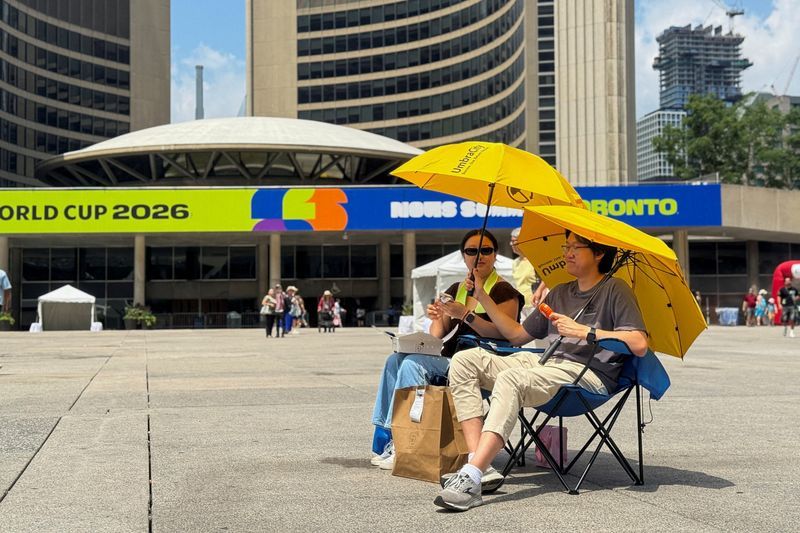
Thousands of football fans planning to attend the Portugal-Croatia World Cup round of 32 fixture in Toronto on Thursday face potentially dangerous weather conditions, with municipal health officials urging supporters to prioritise hydration and exercise caution before stepping into what is forecast to be a brutally hot day. The match, taking place at Toronto Stadium—the tournament's most compact venue and site of the host city's final World Cup game—arrives as Canada braces for a severe heatwave across multiple regions, adding an extra layer of concern for event organisers and public health authorities already stretched by extreme weather episodes nationwide.
Environment Canada has issued an official heat warning for the city, with the meteorological agency forecasting that temperatures will climb above 35 degrees Celsius, a threshold that becomes genuinely hazardous when combined with elevated humidity levels. According to Michelle Murti, Toronto's chief medical officer of health, the conditions are expected to feel considerably worse than the actual thermometer reading, with the heat index potentially reaching 40 degrees Celsius. This distinction between ambient temperature and perceived heat is critical—the human body struggles to cool itself effectively when humidity is high, since perspiration cannot evaporate efficiently from the skin, leaving people vulnerable to heat exhaustion and more serious conditions.
Murti stressed the importance of preventative measures well before spectators experience symptoms of heat-related illness. Her advice centred on maintaining constant fluid intake throughout the day rather than waiting for thirst signals to develop, a physiological response that typically arrives too late during exposure to extreme conditions. She also highlighted the particular danger of alcohol consumption in such circumstances, noting that alcoholic beverages accelerate dehydration precisely when the body most needs fluid retention. This guidance carries special weight for World Cup atmospheres, where celebrations and refreshments often go hand in hand, potentially creating a recipe for preventable medical emergencies among fans.
Beyond the heat itself, meteorological forecasts hint at additional complications. Health officials are actively preparing contingency arrangements for the possibility of severe thunderstorms that could develop as the day progresses. Such weather patterns frequently materialise during peak summer heat events in the Greater Toronto Area, as moisture-laden air becomes unstable. Should such storms materialise with intensity, viewing parties and fan zones established throughout the city for public entertainment could face cancellation, forcing rapid adjustments to gathering plans and potentially disappointing crowds already assembled in preparation.
Toronto has invested considerable effort in hosting World Cup activities, establishing multiple public fan zones and organising watch parties throughout the city for every tournament match thus far. The decision to concentrate these viewing opportunities reflects the municipality's desire to create inclusive celebration spaces while managing crowd safety during a major sporting spectacle. However, the combination of extreme heat, humidity, and potential storm activity now threatens to undermine these carefully orchestrated arrangements, forcing organisers into difficult decisions about when and whether to proceed with outdoor activities.
The broader Canadian context adds urgency to these health warnings. From British Columbia in the west to the Atlantic provinces in the east, Canadians have endured a succession of weather extremes—severe flooding in some regions, intense heat in others—creating a nation-wide state of heightened vulnerability. With Canada Day celebrations scheduled for Wednesday, immediately preceding the Portugal-Croatia match, the window for recovery between major outdoor events is minimal, leaving both infrastructure and public health services operating at stretched capacity.
At Nathan Phillips Square, the city's iconic public plaza, evidence of preparation was visible on Tuesday. The municipality had installed misting stations designed to provide relief to crowds, with visitors actively seeking refuge beneath the cooling spray. The setup reflects recognition that voluntary measures alone would be insufficient—passive cooling infrastructure becomes necessary when heat reaches hazardous levels. Yet even such installations offer only temporary respite, and public health authorities recognise that the real test comes during the actual match itself, when potentially thousands of spectators will be concentrated in and around the stadium for extended periods.
Individual visitors expressed the practical reality of the situation. Megan Rennie, a Toronto resident, articulated the paradox facing fans: the desire to attend a significant sporting event directly conflicts with legitimate safety concerns about prolonged exposure to dangerous heat. She acknowledged that while empathy extends to the players themselves—who face identical environmental challenges while performing at maximum physical intensity—the spectator experience itself becomes questionable when conditions become genuinely threatening to health. Similar reservations were voiced by visiting supporters, with some prioritising indoor accommodation and air conditioning over extended outdoor celebration.
The situation presents a genuine dilemma for tournament organisers and municipal authorities. World Cup matches cannot be rescheduled due to weather, and the investment in fan engagement is substantial. Yet permitting large gatherings under hazardous conditions without adequate warnings and safety infrastructure would represent negligence. The approach taken thus far—explicit health warnings, installation of cooling facilities, clear guidance on hydration and alcohol avoidance—represents the reasonable middle ground: facilitating the event while ensuring that participants understand the risks and possess the information necessary to protect themselves.
For Malaysian and Southeast Asian observers, the Toronto scenario offers a sobering preview of challenges that become increasingly common as climate patterns shift. Heat-related illness remains a genuine public health concern in tropical and subtropical regions, where football enthusiasts already endure challenging conditions during matches and outdoor sporting events. The lessons from Canada—the necessity of explicit warnings, the critical importance of proactive cooling infrastructure, and the need for clear public health messaging—carry direct applicability to stadium and venue management across Asia, where large crowds regularly gather for sporting and entertainment purposes under conditions that rival or exceed those forecast for Toronto.

