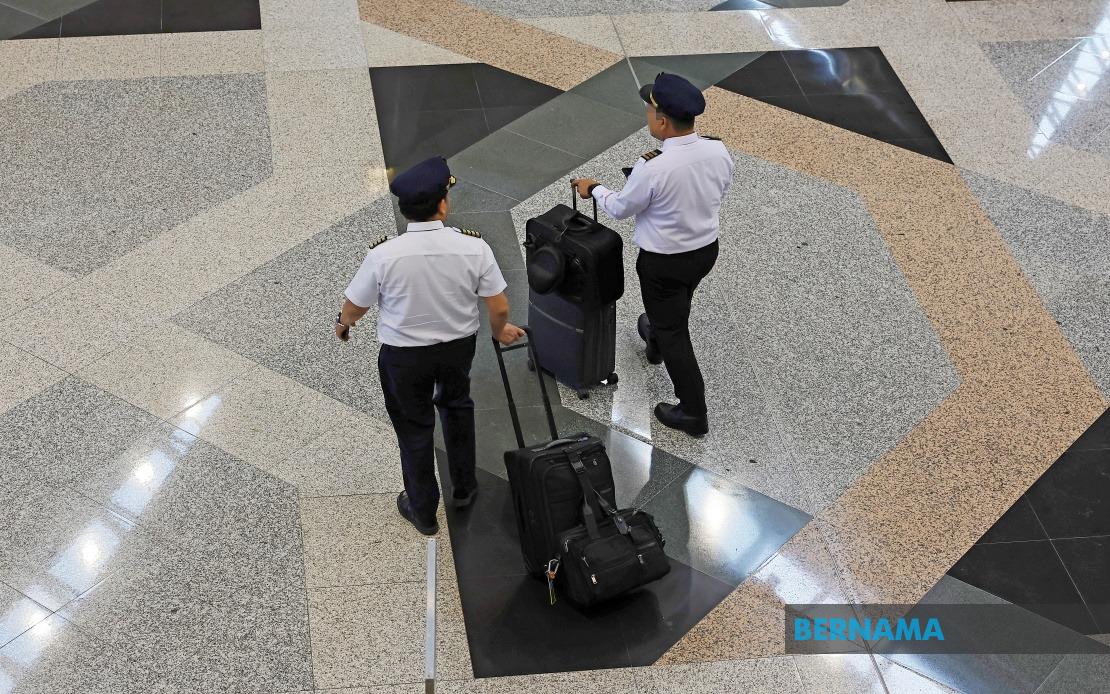
A prominent civil society leader has raised serious concerns about security protocols at Kuala Lumpur International Airport following the detention of a Malaysian pilot on drug-smuggling charges at an Indonesian airport. Tan Sri Lee Lam Thye, chairman of the Alliance For A Safe Community, has called for relevant authorities to undertake a comprehensive review of how passengers and crew members are vetted before boarding aircraft, particularly given the circumstances surrounding the 39-year-old pilot's apprehension at Soekarno-Hatta International Airport's Terminal 3 with an alleged 25 kilogrammes of drugs.
While acknowledging that the accused remains entitled to the presumption of innocence until formally convicted through proper legal proceedings, Lee has highlighted the troubling implications of the incident for Malaysia's aviation sector. The case raises fundamental questions about whether screening measures at the country's busiest airport are sufficiently rigorous to detect contraband, especially when those attempting to transport illegal goods hold positions within the aviation industry itself. The apparent ability to transit through KLIA's security apparatus without detected drug shipments suggests potential vulnerabilities that demand urgent investigation and remediation.
Lee's concerns extend beyond the technical aspects of baggage screening and X-ray equipment. He has specifically questioned whether airport personnel and crew members benefit from any exemptions or streamlined procedures that might inadvertently create security gaps. His statement emphasises that absolutely no category of traveller—regardless of professional status, rank, or familiarity with airport operations—should receive preferential treatment that circumvents standard security protocols. This principle is particularly crucial in aviation, where the stakes of compromised security are measured in lives rather than mere property loss.
The incident threatens to undermine public confidence in Malaysia's aviation infrastructure at a critical time for the country's tourism and business sectors. International travellers and foreign investors consider airport security a fundamental measure of a destination's overall safety and reliability. Any perception that screening procedures are inconsistent, subject to exception, or penetrable by insiders could deter visitors and damage Malaysia's competitive standing against other regional aviation hubs. The reputational consequences extend beyond individual airports to encompass the entire national aviation system and the regulatory bodies responsible for oversight.
Lee has called upon multiple agencies to collaborate on this review process, specifically naming airport security operators, the police, and the Civil Aviation Authority. This multi-agency approach reflects the complexity of airport security, which involves coordination between commercial operators managing the facilities, law enforcement responsible for investigations and enforcement, and regulatory bodies setting standards and monitoring compliance. Each agency brings distinct expertise and operational responsibilities, and their collaborative assessment would identify system-level weaknesses that single-agency reviews might overlook.
The case also raises questions about vetting procedures for aviation personnel with access to aircraft and secure airport areas. Pilots and crew members necessarily undergo background checks and security clearances, but the incident suggests these processes may not adequately account for the possibility that individuals initially deemed suitable for sensitive positions could subsequently develop involvement in criminal activities. Intelligence sharing between aviation authorities and drug enforcement agencies, coupled with periodic reassessment of personnel with security access, may warrant consideration as part of a modernised screening framework.
Malaysia's position as a major regional aviation hub means that any security incident—whether actual or perceived—can have repercussions across Southeast Asia and beyond. Airlines operating from KLIA, international aviation partnerships, and the reputation of Malaysian regulatory bodies all depend on demonstrated excellence in security management. The incident at Jakarta airport, while technically occurring on Indonesian territory, inevitably reflects on the quality of preparations that KLIA made before the pilot's departure.
Lee's insistence that security measures be enforced consistently without exception represents a fundamental principle of effective security systems. Selective enforcement inevitably creates vulnerabilities that knowledgeable actors can exploit. If crew members or airport staff perceive that security checks are less stringent for certain individuals or circumstances, the entire screening system becomes compromised. Consistency also serves the interests of those subject to screening, as it prevents arbitrary targeting based on subjective criteria and grounds the security process in objective, transparent procedures.
The broader context includes Malaysia's well-documented challenges with drug trafficking, which have prompted significant enforcement actions and public health responses. The aviation sector, with its international connections and the high value-to-weight ratio of drug trafficking operations, represents a particular vulnerability. Airport security serves as a critical line of defence not only against bringing contraband into the country but also preventing Malaysia from becoming a transit point for drugs destined for international markets. The Jakarta incident suggests this line of defence may require reinforcement.
As investigations proceed into the pilot's case and the precise circumstances allowing him to transport alleged drugs through KLIA, the outcome will likely influence decisions about security investments and procedural changes. Whether gaps in screening capability, insufficient training of security personnel, or inadequate coordination between agencies emerge as primary factors will determine which remedial measures should be prioritised. Lee's call for comprehensive review ensures these questions remain under public scrutiny rather than being quietly addressed through behind-the-scenes administrative adjustments.

