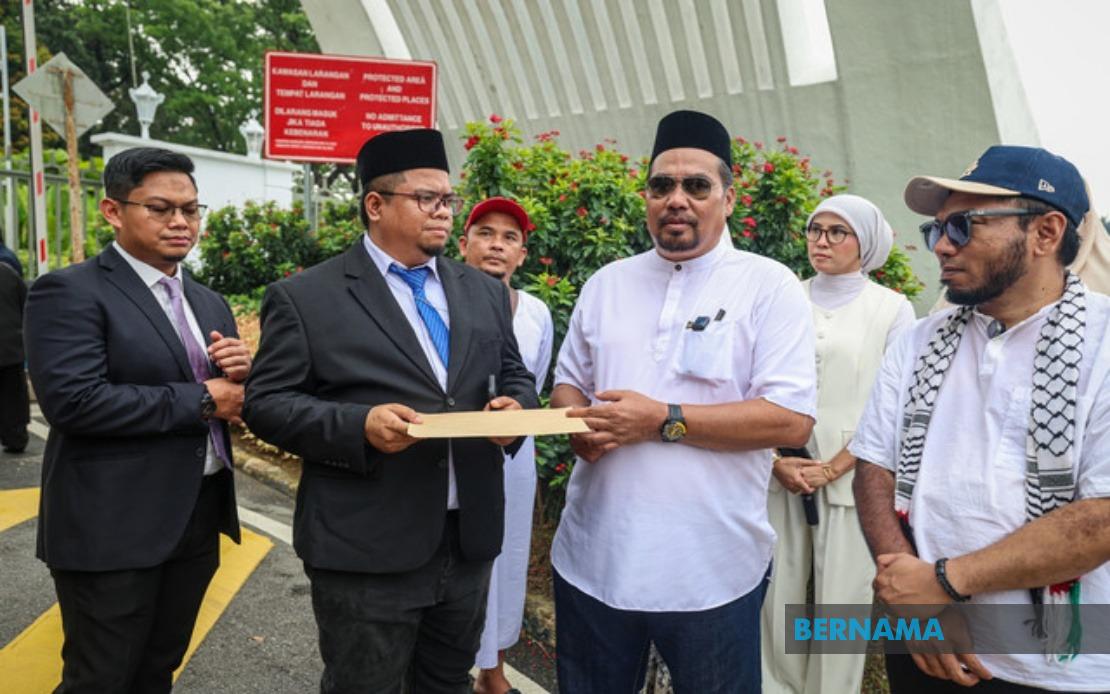
A prominent social media activist collective has intensified pressure on Malaysia's government to pursue accountability over widespread mismanagement at Tabung Haji, the state Islamic pilgrimage fund, in the wake of damaging findings from a special investigative commission. During a peaceful demonstration at Parliament on August 11, Sekretariat Gerak Gempur Media Sosial Rakyat Malaysia (SEKPUR) delivered a formal memorandum to Minister Senator Dr Zulkifli Hasan's office, channelled through his press secretary Zairudin Hashim. The submission marks a significant public mobilisation around corporate governance failures that have compromised the financial security of millions of Muslim Malaysians who depend on the institution for haj savings and pilgrimage support.
The Royal Commission of Inquiry's 211-page report, released publicly on July 29, documented systematic weaknesses in Tabung Haji's institutional management spanning the period from 2014 to 2020. These findings gain particular weight from their presentation to Parliament in a special sitting convened specifically to brief lawmakers on the commission's conclusions and the fund's prospects for financial rehabilitation. The timing of SEKPUR's intervention—immediately following this parliamentary briefing—suggests the activist group is leveraging public and political attention to translate investigative findings into concrete enforcement action.
Mohd Yani Alias, SEKPUR's secretary, framed the group's demands in explicitly non-partisan terms, emphasising that accountability should transcend political affiliation or organisational loyalty. His statement that "we do not care who is responsible or which party they belong to" reflects broader public sentiment that the scale of Tabung Haji's difficulties demands consequences regardless of factional considerations. This rhetorical stance carries particular significance in Malaysia's polarised political environment, where institutional reform efforts frequently become entangled in partisan divisions. By positioning accountability as a matter of principle rather than political positioning, SEKPUR attempts to insulate its demands from accusations of selective justice.
The group grounded its appeal explicitly in constitutional authority, citing the Yang di-Pertuan Agong's directive that those accountable for Tabung Haji's troubles must face prosecution and legal consequences to the fullest extent permissible. Mobilising the monarchy's explicit endorsement of enforcement lends institutional weight to SEKPUR's demands and implicitly suggests that failure to pursue accountability would contradict the sovereign's stated intention. This invocation of royal authority reflects how activist groups in Malaysia strategically deploy different institutional bases—parliamentary, constitutional, and monarchical—to amplify their advocacy beyond grassroots mobilisation.
Beyond immediate accountability mechanisms, SEKPUR's memorandum articulated concerns about Tabung Haji's structural long-term viability and its capacity to deliver competitive returns to depositors through hibah distributions, which constitute the fund's primary attraction to savers. The activist group's focus on financial sustainability alongside punishment addresses a fundamental tension: pursuing wrongdoing without simultaneously restoring investor confidence risks accelerating withdrawals and deepening the institution's financial crisis. This dual emphasis reflects sophisticated understanding that accountability and institutional recovery represent complementary rather than competing objectives.
The memorandum additionally flagged escalating haj pilgrimage costs as a mounting pressure on ordinary Malaysians, arguing that rising expenses undermine the fund's foundational purpose of making the religious obligation accessible across socioeconomic strata. This complaint intersects with broader economic pressures facing Malaysian households, particularly middle and lower-income Muslim families for whom haj represents a major lifetime financial commitment. The inclusion of cost concerns alongside governance issues situates Tabung Haji's troubles within the lived experience of intended beneficiaries rather than treating them as abstract institutional problems.
Transparency in haj quota administration also featured prominently in SEKPUR's submission, highlighting tensions between the fund's role as both a savings vehicle and a conduit for allocating pilgrimage spaces. Malaysia's haj quota system involves complex processes for determining which applicants receive slots in any given year, creating scope for perception—or reality—of unfair distribution. SEKPUR's emphasis on transparency suggests concerns that opaque quota management has accompanied or compounded the financial mismanagement documented by the RCI, potentially concentrating both benefits and burdens unequally across the pilgrimage applicant population.
The Royal Commission's 25 recommendations for institutional strengthening offer a baseline standard against which government responsiveness can be measured. As of late July, Tabung Haji had implemented approximately 75 percent of these proposals, indicating neither wholesale adoption nor systematic obstruction, but rather mixed progress. SEKPUR's intervention suggests activist assessment that this implementation trajectory remains inadequate and that government leadership requires external pressure to accelerate reform momentum. The gap between the recommendations and implementation rate creates space for advocacy groups to demand more aggressive institutional transformation.
The peaceful nature of SEKPUR's parliamentary gathering reflects deliberate strategic choice to remain within formally sanctioned channels of political expression while maintaining demonstrative visibility. The memorandum submission to Parliament itself—rather than extraparliamentary protest—positions SEKPUR as engaged with institutional processes while publicly signalling that normal bureaucratic channels require supplementation through organised civil society pressure. This approach aligns with evolving Malaysian activism that operates across formal and informal registers simultaneously.
Tabung Haji's difficulties carry broader implications for Malaysian institutional credibility, particularly regarding stewardship of religiously significant financial instruments. The fund's troubled trajectory has prompted questions not merely about individual culpability but about whether governance frameworks adequately protect assets held in trust for religious purposes. SEKPUR's campaign implicitly raises stakes beyond the fund itself, framing accountability as essential to demonstrating government commitment to trustworthiness in managing communal religious and financial institutions, a concern that resonates across Muslim-majority Southeast Asia where similar institutions face comparable governance challenges.
For Malaysian policymakers, the convergence of RCI findings, parliamentary attention, and organised civil society pressure creates a political conjuncture where selective inaction on accountability becomes increasingly costly. SEKPUR's memorandum does not introduce new substantive information but rather transforms published findings into active political claims demanding executive response. The group's explicit framing of accountability as transcending partisan interests may reflect calculation that such positioning increases likelihood of government action by reducing perceptions that pursuing wrongdoing constitutes factional advantage.

