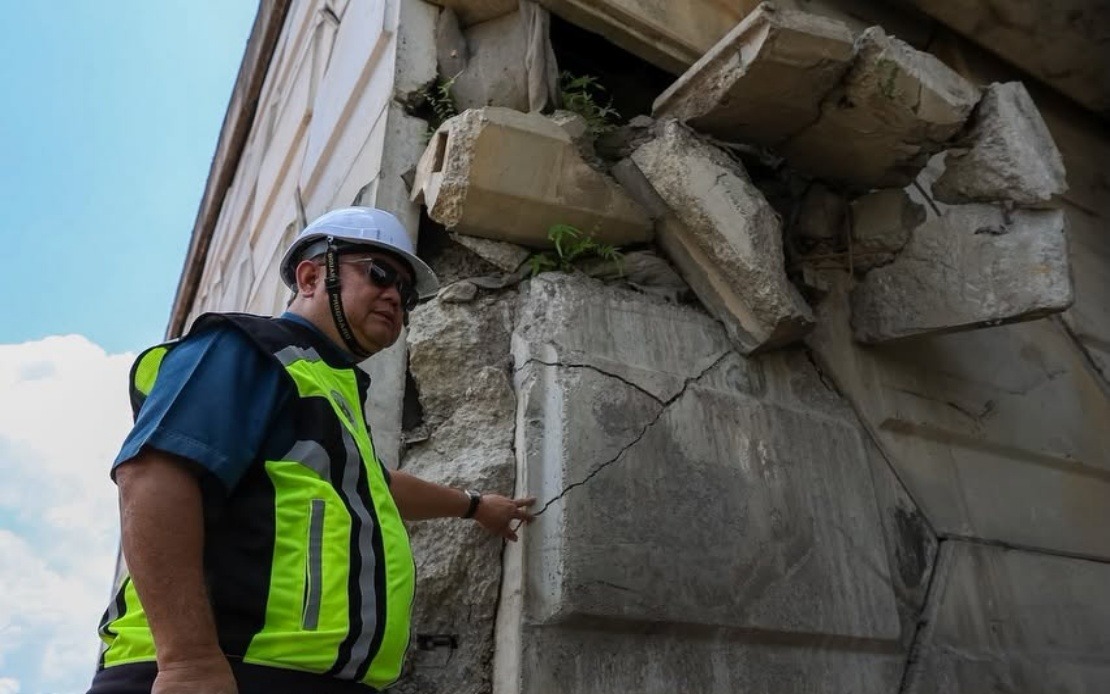
Malaysia's Works Minister Datuk Seri Alexander Nanta Linggi has committed to reopening the Selangau-Mukah Interchange Flyover on the Pan Borneo Highway through a carefully managed phased approach, but only after comprehensive safety verification has been completed. The declaration came following an inspection of the site where Ramp 1 sustained significant structural damage from a collision with a palm oil tanker, forcing authorities to close the critical transport artery that serves thousands of daily users across Sarawak's central regions.
The incident exposed vulnerabilities in the infrastructure that connects the Bintulu-Mukah-Sibu corridor, one of Sarawak's most economically significant routes. The palm oil tanker strike damaged portions of the retaining wall structure supporting Ramp 1, compromising the overall integrity of that section and necessitating immediate closure to prevent potential catastrophic failure. Rather than rushing repairs to restore traffic flow, the ministry has adopted a conservative stance that reflects evolving attitudes towards infrastructure safety following several high-profile structural failures across Malaysia in recent years.
Nanta outlined a structured approach to reconstruction that distinguishes between different sections of the interchange. Sections that engineering assessments determine to be safe will be progressively reopened to traffic even as repair crews work on the compromised areas. This differentiated strategy aims to restore partial connectivity while ensuring that routes deemed hazardous remain cordoned off until remedial work is concluded and verified. The minister acknowledged that this measured approach, while necessary, will extend the inconvenience already being experienced by commuters who depend on this route for business and daily activities.
The disruption carries particular weight for Sarawak's economy, as the Pan Borneo Highway serves as a vital artery connecting the state's palm oil processing facilities, agricultural zones, and urban centres. Small businesses, logistics companies, and regular commuters have absorbed substantial costs from the diversion and extended travel times resulting from the closure. Nanta recognised these hardships but emphasised that premature reopening would risk far greater economic damage through potential accidents or structural collapse that could entirely sever the route for extended periods.
Public communication has emerged as a secondary priority in the ministry's response framework. Nanta stressed the importance of maintaining transparent dialogue with affected communities through both traditional media channels and social media platforms, recognising that modern citizens expect real-time updates and clear information about closures and alternative arrangements. This acknowledgment reflects lessons learned from previous infrastructure incidents where poor communication amplified public frustration and eroded confidence in government institutions.
The minister identified three pillars guiding the reconstruction process. First, uncompromising adherence to safety standards ensures that road users face no elevated risk from hastily completed repairs. Second, strict oversight of the repair schedule aims to prevent unnecessary delays that could extend commuter inconvenience without justification. Third, consistent public information dissemination will provide users with reliable data on which routes remain closed, which have reopened, and which alternative pathways are available. These three elements form an integrated response rather than separate initiatives.
The structural damage assessment revealed that targeted, controlled repairs will be required to restore stability to the affected section. This is not a simple patching operation but rather a comprehensive engineering intervention designed to restore the retaining wall to its original specifications and certify that the structure can safely bear the dynamic loads imposed by continuous heavy vehicle traffic. Testing and inspection protocols will be implemented throughout the repair phase to verify that work meets engineering standards before sections reopen.
For Sarawak's business community and commuters, the closure underscores ongoing challenges with critical infrastructure maintenance and resilience. The Pan Borneo Highway represents a significant investment in regional connectivity, yet incidents like the tanker collision reveal that even modern infrastructure requires vigilant monitoring and rapid response protocols. The extended closure, while disruptive, reflects a more sophisticated understanding of risk management and the true costs of structural failure compared to temporary inconvenience.
Nanta's public commitment to oversee the reconstruction personally signals ministerial accountability for outcomes. This personal engagement aims to assure stakeholders that the priority is genuine safety restoration rather than bureaucratic box-ticking. The pledge to keep the interchange under close observation addresses public scepticism about whether government institutions truly prioritise safety or simply process incidents through standard procedures.
The phased reopening strategy represents a pragmatic middle ground between indefinite closure and reckless premature reopening. As sections are verified as safe, they will incrementally restore connectivity while repair work continues on remaining sections. This approach acknowledges that perfect certainty is unattainable but that careful engineering assessment and staged verification can restore confidence in the infrastructure's integrity.
The incident and its aftermath highlight systemic challenges facing infrastructure management across Southeast Asia. Rapid development has created extensive networks of roads, bridges, and flyovers, but ensuring ongoing safety through rigorous inspection and maintenance regimes remains underfunded and under-prioritised in many jurisdictions. Malaysia's response to the Selangau-Mukah Interchange damage will be observed closely as a potential model for balancing infrastructure accessibility with user safety across the region.

