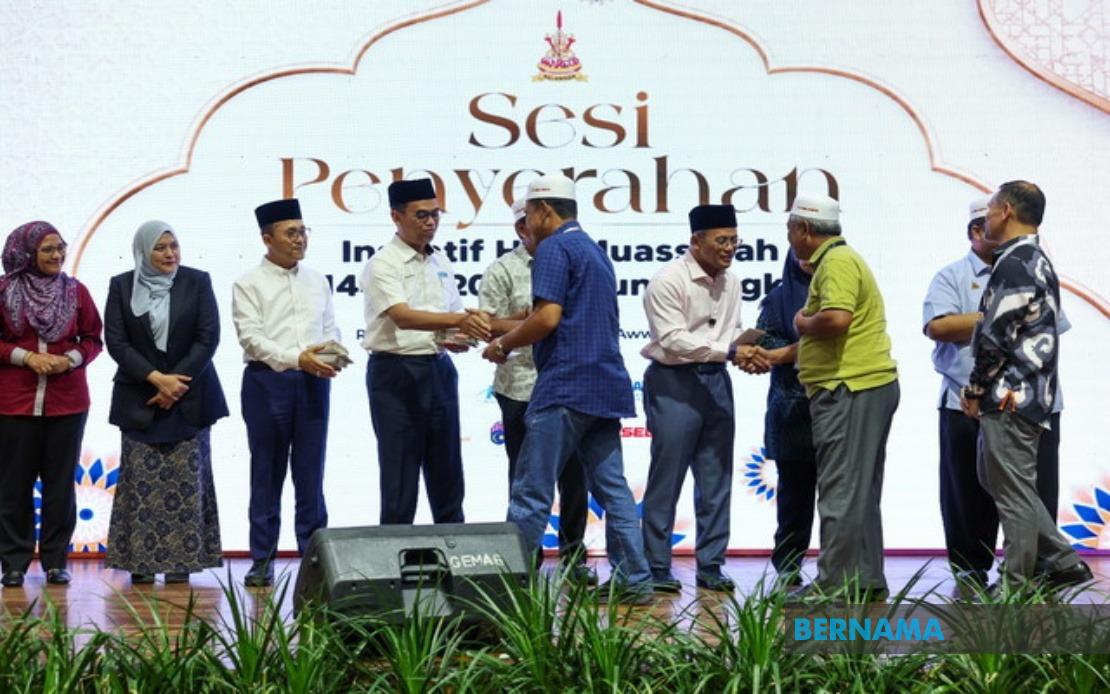
Selangor's efforts to ease the financial burden on prospective pilgrims are gathering momentum, with authorities confirming that 4,800 out of 6,000 intended beneficiaries have already received state-funded assistance for the 2026 Haj journey. Menteri Besar Datuk Seri Amirudin Shari disclosed the progress during a contribution ceremony in Puchong, indicating that the administration expects to resolve outstanding applications and complete the full disbursement cycle by the close of September.
The Selangor Muassasah Haj Incentive Programme represents a substantial commitment of public resources, with the state government channeling RM9 million through the Selangor Menteri Besar Incorporated Foundation to support Muslim worshippers preparing for one of Islam's five pillars. Each beneficiary receives RM1,500 in direct financial support, a figure calibrated to address the practical expenses associated with Haj preparation such as religious garments, medicinal provisions, and essential travel-related items.
The remaining allocation affecting slightly more than one thousand pilgrims reflects logistical challenges in identifying and maintaining contact with all eligible applicants across Selangor's diverse constituencies. Officials are actively pursuing these outstanding cases to ensure no eligible pilgrim is inadvertently excluded from the assistance scheme. The targeted completion date of early September provides a reasonable window for resolving documentation issues and conducting final verification procedures before the pilgrimage season materializes.
Amirudin's disclosure of aspirations to escalate the individual incentive to RM2,000 demonstrates political commitment to expanding social support for religious observance, though the Menteri Besar was appropriately cautious about fiscal realities. Any enhancement would likely materialise between 2027 and 2028 at the earliest, contingent on the state's revenue performance and competing budgetary demands. This measured approach reflects the tension between expansive policy ambitions and the constrained fiscal environment that most Malaysian states encounter.
The Haj assistance initiative sits within Selangor's broader social welfare portfolio and carries particular significance given the state's substantial Muslim population and economic position as Malaysia's commercial heartland. By providing targeted pre-pilgrimage support, the programme acknowledges that despite the widespread economic development in Selangor, many households struggle with the concentrated expenditure requirements of international pilgrimage. The initiative simultaneously reflects the state government's recognition that facilitating religious practice constitutes legitimate state function.
From a regional perspective, Selangor's approach offers a template that other Malaysian states may study. While several state governments provide Haj-related support through various Islamic religious councils and charitable foundations, few have formalised the commitment through dedicated budget allocations and coordinated distribution mechanisms comparable to the Selangor scheme. The programme's scale—serving six thousand pilgrims across an entire state—represents systematic intervention rather than ad-hoc charitable responses.
The Dengkil ceremony that prompted Amirudin's statements involved 259 recipients, underscoring that the state is conducting locality-based contribution presentations rather than centralised mass distribution events. This decentralised approach allows state elected representatives to maintain community engagement while pilgrims receive support. Deputy Housing and Local Government Minister Datuk Aiman Athirah Sabu's participation as Sepang Member of Parliament illustrated how federal and state officials can coordinate in delivering social programmes with religious dimensions.
The Muassasah classification of eligible pilgrims refers to groups proceeding under Islamic institutional arrangements, typically organised through mosque committees and Islamic welfare bodies. This targeting mechanism ensures assistance reaches organised pilgrims with verified religious affiliation and genuine pilgrimage intent, providing administrative safeguards against potential misuse of public funds designated for religious observance. The verification process that has consumed several months likely reflects this due diligence imperative.
Looking forward, the state government's stated capacity to increase assistance contingent on financial circumstances reveals flexibility in programme design. However, state leaders must balance competing demands from education, healthcare, and infrastructure sectors that typically consume substantially larger budget allocations. The question whether Haj support should absorb increasing resources remains subject to ongoing political debate within Selangor's governance structures and among constituencies seeking state investment.
For Malaysian Muslims planning 2026 pilgrimage participation, the Selangor initiative provides tangible financial relief at a critical preparation stage. Cumulative costs for Haj—encompassing official registration, airfare, accommodation, and daily expenses—frequently exceed RM20,000, placing the pilgrimage beyond immediate financial capacity for numerous middle and lower-income households. RM1,500 assistance, while modest relative to total expenditure, meaningfully reduces the urgency of borrowing or compromising other household obligations to fund pilgrimage participation.
The programme's completion trajectory by September provides assurance to remaining beneficiaries that processing delays appear manageable and disbursement remains probable before year-end. However, beneficiaries should maintain contact with state authorities to confirm receipt status and address any outstanding documentation requirements that may delay their individual payments. The state government's demonstrated commitment to fulfilling its RM9 million allocation suggests administrative determination to resolve outlier cases rather than allow budget underspend.

