Selangor is emerging as Malaysia's rail transport hub, leveraging its dominant position in the sector to build a robust local workforce capable of sustaining the state's rapid expansion of public transit infrastructure. With between 63% and 67% of the country's rail operations and headquarters concentrated within its borders, the state government has identified the rail industry as a cornerstone high-value sector offering significant employment and career advancement opportunities for the next generation of professionals.
Mentri Besar Datuk Seri Amirudin Shari outlined the strategic vision during an official visit to Universiti Tun Hussein Onn Malaysia (UTHM) in Sungai Buloh on August 19. He emphasised that Selangor's commitment extends beyond infrastructure development to encompassing comprehensive investment in training, education, and the cultivation of homegrown expertise. The approach reflects a forward-thinking recognition that ambitious transport expansion projects require not just capital investment but also a pipeline of qualified technicians, engineers, and system operators capable of managing sophisticated rail networks.
Underscoring this commitment, the state government has established the Selangor State Rail Council, a dedicated body tasked with mapping the rail industry's entire ecosystem and identifying emerging skills gaps. This institutional framework enables policymakers to align education and training programmes with actual market demands, ensuring graduates possess qualifications aligned with employer needs. The council's formation signals a maturation beyond ad-hoc training initiatives toward systemic, coordinated workforce planning.
A visible marker of this strategy came with the official rebranding of Metro System Academy (MSA UTHM) to RailX, signifying an expanded remit beyond metro systems to encompass the broader rail transportation landscape. The academy, jointly operated by UTHM and Mass Rapid Transit Corporation (MRT Corp), serves as the primary training institution for workers and students entering modern rail, public transport, and mobility systems. Its rebrand reflects evolving industry scope as Selangor's rail network diversifies across light rapid transit, express rail links, and mass rapid transit systems.
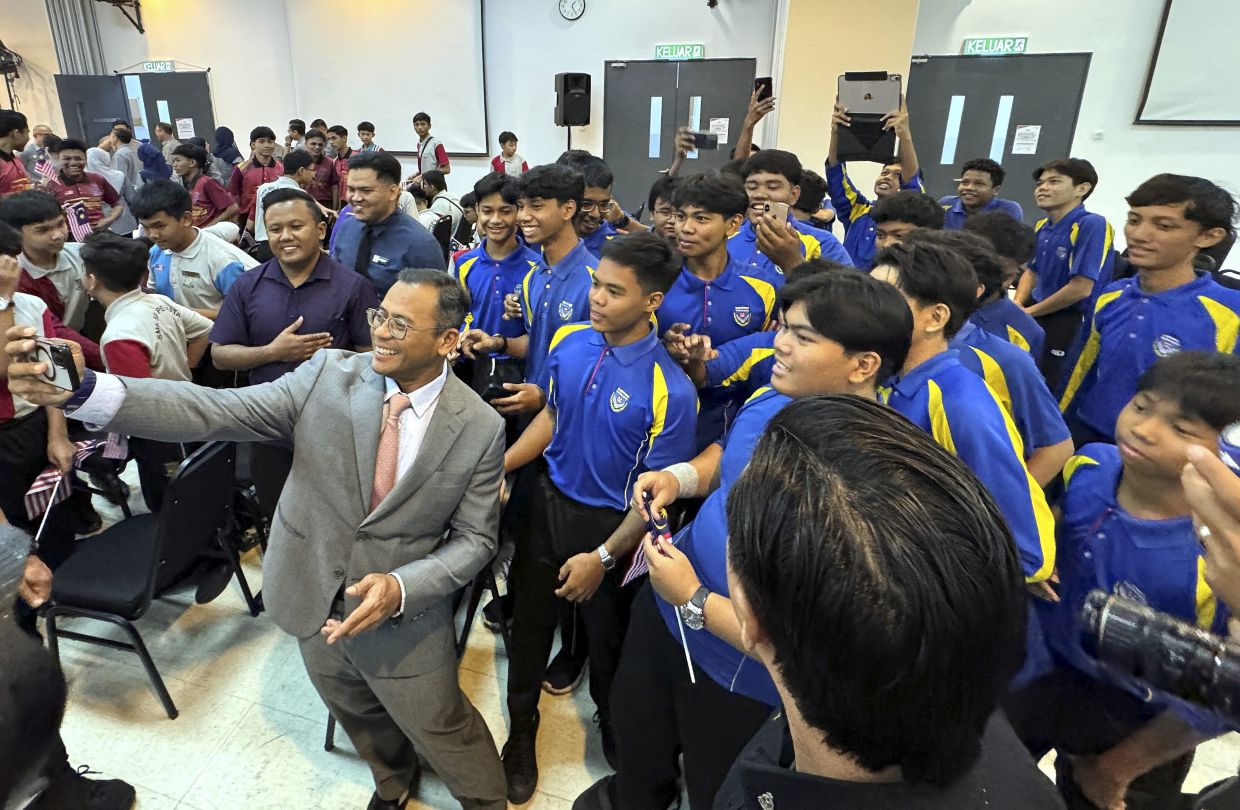
To introduce the rail industry to secondary school students, UTHM has launched a treasure hunt programme engaging schools from ten districts across Selangor, including Gombak, Petaling, Hulu Langat, Sepang, Klang, Sabak Bernam, and Kuala Selangor. Participants will experience interactive activities at selected MRT stations, demystifying rail operations and career pathways for younger learners. This grassroots engagement strategy acknowledges that workforce development must begin early, capturing student interest before tertiary education choices are finalised.
Amirudin positioned these initiatives within the broader framework of Malaysia's Education Plan 2026–2035, suggesting that rail sector promotion aligns with national skills development priorities. By anchoring Selangor's initiatives in national education strategies, the state government frames rail workforce development not as parochial state interest but as contributing to Malaysia's human capital objectives. This strategic narrative alignment facilitates securing federal support and coordination with other state education systems.
The state's evolving rail ecosystem—encompassing the LRT3 expansion, the East Coast Rail Link (ECRL), and additional Mass Rapid Transit routes—creates sustained demand for skilled professionals across multiple specialisations. Rather than rely on imported expertise or international recruitment, Selangor is constructing a complete technical education pathway from basic training through advanced degree qualifications. This vertical integration of the workforce development system minimises skills bottlenecks and reduces long-term operational costs associated with international recruitment premiums.
Amirudin emphasised the triple helix model uniting government, universities, and industry partners including MRT Corp and Rapid Rail. This collaborative framework ensures that curriculum design reflects current industry standards and evolves with technological change. Industry participation in training design eliminates the lag between educational programmes and workplace requirements, accelerating graduate integration into employment. Regular feedback loops between employers and educators enable continuous curriculum refinement.
The Selangor Technical Skill Development Centre (STDC) functions as a strategic entry point within this ecosystem, delivering foundational technical and vocational education and training (TVET). Critically, STDC operates an articulation pathway enabling successful graduates to pursue diploma and bachelor's programmes at UTHM, creating a seamless progression from basic competency through advanced qualification. This structured escalation model recognises diverse learner abilities and economic circumstances, allowing individuals to enter at appropriate levels and advance based on capability and aspiration.
For Malaysian policymakers in other states, Selangor's integrated approach offers valuable lessons in strategic workforce development. Rather than treating education and industry development as separate concerns, the state demonstrates how coordinated investment in human capital directly enables infrastructure ambitions. As Malaysia positions itself as a regional transport and logistics hub, replicating elements of Selangor's rail workforce strategy could accelerate capability development in other transport-critical sectors and states.
The sustainability of this approach depends on maintaining adequate funding, ensuring curriculum relevance, and creating genuine employment pathways for graduates. If executed effectively, Selangor's rail workforce model could become a benchmark for sectoral workforce development across Malaysia, demonstrating how strategic foresight and institutional coordination translate ambitious infrastructure visions into economically productive outcomes.

