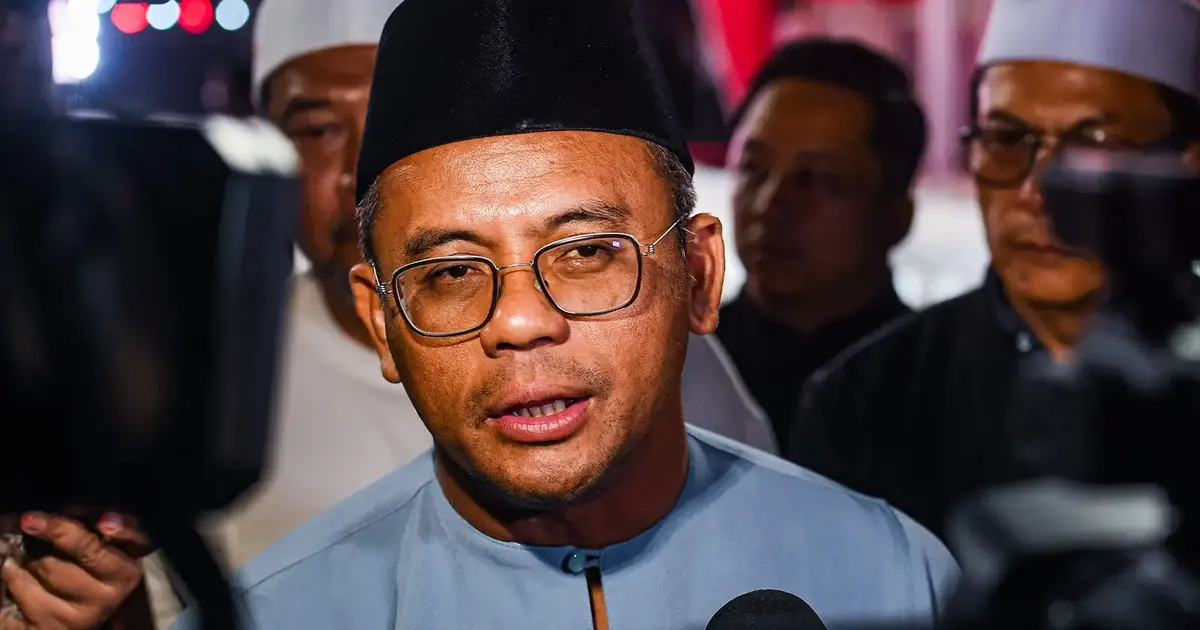
The Selangor state government finds itself navigating uncertain constitutional terrain after allegations emerged questioning the eligibility of one of its lawmakers to hold elected office. Menteri Besar Amirudin Shari has indicated that the administration is carefully examining whether the situation warrants holding a by-election, a process that would require both procedural and legal clarity before proceeding. The statement signals that state leadership is taking the matter seriously whilst remaining cautious about drawing conclusions without thorough investigation.
Election-related eligibility disputes carry significant weight in Malaysian politics, as they touch upon fundamental principles of representative democracy and constitutional compliance. When questions arise about whether a sitting representative meets the statutory requirements for office, the implications extend beyond that individual to affect the legitimacy of the administration itself. In Selangor's case, the state government appears conscious of this broader dimension, with the Menteri Besar's approach suggesting a deliberate, consultative methodology rather than hasty action.
Amirudin Shari's decision to engage legal counsel demonstrates the complexity inherent in such matters. Constitutional lawyers and electoral specialists must evaluate whether the allegations constitute grounds for invalidating the representative's position under Malaysia's federal constitution and Selangor's state constitution. This legal analysis will likely prove decisive in determining whether voluntary resignation, intervention by election authorities, or a formal by-election becomes necessary. The consultation phase itself may take considerable time, as comprehensive legal opinions typically require detailed examination of statutes, precedents, and the specific facts of the case.
For Selangor voters, eligibility disputes introduce an element of uncertainty into their representation. If a lawmaker's position proves untenable, a by-election would force the electorate to revisit their choice through the ballot box. Such electoral processes, whilst democratic, carry financial costs and administrative burdens for both the state government and the election commission. The prospect of a by-election also creates a temporary period of potential limbo, where the affected constituency's representation remains clouded by ongoing legal and administrative procedures.
The timing of this eligibility question carries political implications for Selangor's governing coalition. The state, currently ruled by a PKR-led administration in partnership with DAP and Amanah, operates within a delicate balance of seat numbers and coalition dynamics. Any vacancy or disruption to the assembly composition could theoretically affect government stability, depending on the distribution of seats among the governing parties and opposition groupings. This reality likely informs the measured, consultative approach evident in Amirudin Shari's statement.
Malaysia's electoral framework contains several provisions regarding representative eligibility, encompassing citizenship, age, residency, and various disqualifying factors. The specific nature of the allegations against the Selangor representative remains unclear from available information, but such disqualifications typically hinge on statutory violations or constitutional prerequisites. Whether the allegations relate to citizenship status, constituency residence requirements, or other eligibility criteria will fundamentally shape the legal analysis and ultimate outcome.
The state government's public acknowledgment of the matter, rather than attempting to minimize or suppress it, suggests institutional adherence to constitutional propriety. Malaysian politics has occasionally witnessed episodes where eligibility questions were either delayed in surfacing or addressed through procedural manoeuvring rather than transparent legal evaluation. The Selangor administration's apparent commitment to consulting legal counsel and allowing established processes to operate offers a counterpoint to such approaches and may help preserve public confidence in electoral integrity.
From a broader Southeast Asian perspective, Malaysia's federal structure means that state governments like Selangor must often balance respect for the Election Commission's independence with their own administrative and constitutional responsibilities. The Menteri Besar's consultation approach respects this institutional separation whilst ensuring the state government can fulfill its own governance obligations. This matters because state-level coherence and legitimacy contribute significantly to Malaysia's overall democratic functioning.
The resolution of this matter will likely set minor precedent for how Selangor handles future eligibility disputes. If the legal review results in a formal determination that a by-election is necessary, the process would demonstrate the relative efficiency or cumbersomeness of Malaysian electoral procedures. Conversely, if the investigation concludes that allegations lack substance or that the representative's position remains constitutionally sound, the episode would nonetheless illustrate the importance of periodic legal scrutiny in maintaining electoral standards.
Stakeholders in Malaysian politics—from opposition parties to civil society observers to ordinary voters—will likely watch how this situation unfolds. The episode serves as a reminder that eligibility requirements, though sometimes technical in nature, carry genuine democratic significance. Ensuring that elected representatives meet constitutional standards protects the integrity of representative institutions and maintains public confidence that elected bodies genuinely reflect the will of constituents.
As Amirudin Shari pursues legal clarification, the relevant authorities must balance procedural thoroughness with timely resolution. Prolonged uncertainty about a lawmaker's validity could undermine confidence in the administration's legitimacy and distract from substantive governance challenges facing Selangor. The coming weeks will likely reveal whether the allegations constitute genuine constitutional impediments to the representative's continued tenure or whether they prove insubstantial upon detailed legal examination. Until that legal process concludes, the state government appropriately remains cautious about predictions regarding by-election necessity.

