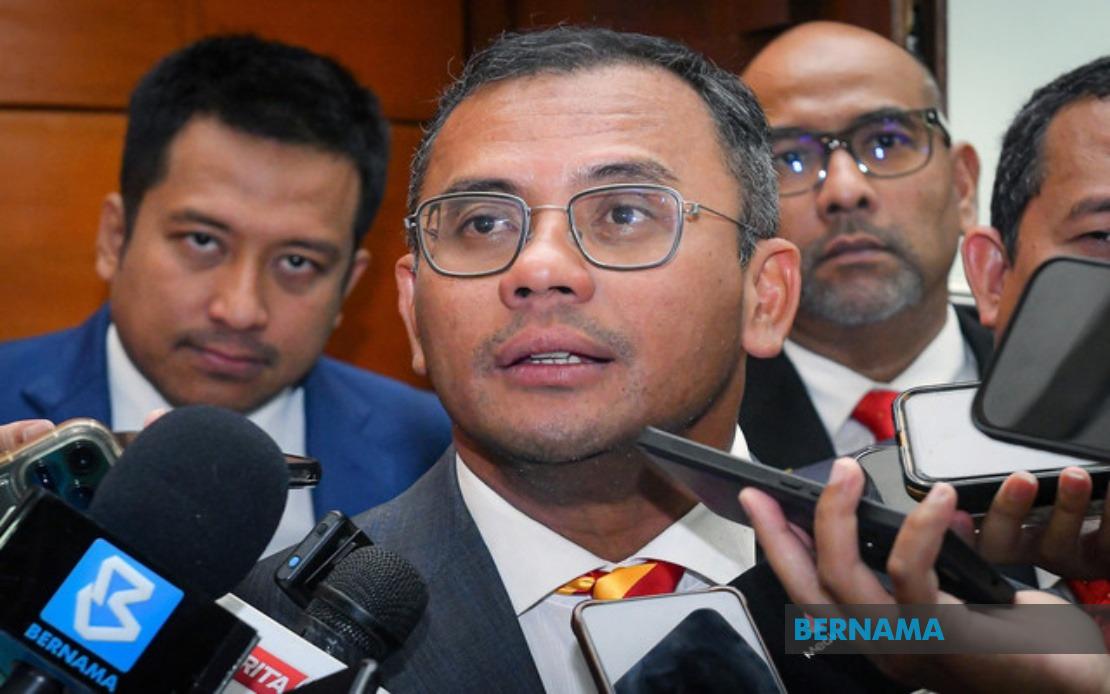
The Selangor state government has committed RM3.5 million to fund a revamped research initiative designed to advance the state's broader economic and social development agenda through 2030. Menteri Besar Datuk Seri Amirudin Shari announced the allocation during a grant handover ceremony, marking a significant step in translating policy ambitions into tangible research outcomes that can inform future state programmes and strategic initiatives across multiple sectors.
The new Selangor Development Grant, known as SELidik 2026, represents an evolution from the previous Selangor Research Grant framework established in 2024. Rather than limiting support to isolated academic studies, the restructured programme deliberately aligns research activities with the state's overarching development blueprint. This institutional shift reflects growing recognition among Malaysian state governments that research productivity must serve practical governance objectives, particularly when public funds are at stake. By channeling academic inquiry directly toward policy implementation, Selangor aims to create tighter feedback loops between the research community and executive decision-making.
The allocation strategy demonstrates a two-tier approach to expanding research capacity. Initially, RM2.5 million has been directed toward two state-owned institutions, Universiti Islam Selangor and Universiti Selangor, which will focus on producing immediately applicable outputs. These institutions are expected to generate modules, applications, and working prototypes that can be piloted or implemented relatively quickly. This emphasis on tangible deliverables rather than purely theoretical contributions signals confidence in both universities' capacity to bridge the gap between academic inquiry and practical application, a challenge that frequently impedes research commercialisation across Southeast Asia.
The remaining RM1 million has been designated for other local universities throughout Selangor, broadening participation beyond the two state-owned institutions. This distributed approach encourages a wider ecosystem of researchers to engage with the state's strategic priorities, potentially surfacing innovative solutions from unexpected institutional corners. The programme administration has been entrusted to Yayasan Selangor, a state foundation that will manage application processes and oversee project implementation, ensuring institutional coordination and accountability.
All research submissions must demonstrate direct alignment with six core themes embedded within the Second Selangor Plan, which Selangor unveiled on August 7. These thematic pillars span economic leadership, balanced district development, social livability, human capital productivity, environmental sustainability, and responsive governance. The requirement that studies connect explicitly to relevant government departments creates structured pathways for research to inform departmental planning, though it also raises questions about academic freedom and the extent to which researchers might pursue unconventional or critical inquiries that fall outside predetermined policy frameworks.
The Second Selangor Plan itself targets RM600 billion in economic value generation between 2026 and 2030, representing an ambitious but somewhat opaque benchmark against which state performance will eventually be measured. The six missions underpinning this plan reflect contemporary governance priorities shared across Malaysia and Southeast Asia: economic competitiveness, spatial equity, welfare provision, workforce development, climate resilience, and administrative efficiency. Research funded through SELidik 2026 will presumably support evidence-based progress toward these objectives, though the effectiveness of such funding depends heavily on whether research findings are genuinely incorporated into decision-making or merely collected for ceremonial purposes.
Amirudin indicated that the state government anticipates generating returns on investment through multiple channels: economic development outcomes, enhanced academic standing for state institutions, and strengthened human capital in strategic fields. This expectation reflects sophisticated thinking about research as an asset class capable of producing measurable returns, yet realising such returns requires patient capital and institutional commitment that often extends beyond electoral cycles. Malaysian state governments have sometimes struggled to maintain research support during fiscal pressures, potentially undermining long-term initiatives that demand sustained funding.
The programme structure includes provisions for expansion into subsequent phases. Once the initial cohort of projects reaches maturity, organisers may extend participation to other public research institutions across Malaysia, potentially transforming SELidik from a Selangor-centric initiative into a broader national research platform. This ambition reflects confidence in the model's viability and suggests that Selangor views itself as capable of developing replicable frameworks for research governance that could appeal to other states facing similar challenges in translating research into policy outcomes.
Future involvement of international universities remains possible should budgetary surpluses emerge, signaling openness to comparative and cross-border research partnerships. Such collaboration could enrich research quality and expose Selangor-based scholars to international methodologies and networks, though it would require careful structuring to ensure that partnership benefits flow primarily toward strengthening local research capacity rather than simply outsourcing intellectual work to established foreign institutions.
The research application process remains open to local investigators, with the central requirement that proposed studies demonstrate clear linkages to one of the six RS-2 themes and engage relevant state departments throughout their lifecycle. This collaborative structure aims to build mutual understanding between researchers and policymakers while reducing the likelihood that completed studies will gather dust without application. Previous research under the original Selangor Research Grant framework examined topics including agricultural advancement, innovation ecosystem development, and technological application, suggesting that the new programme will inherit a portfolio of ongoing and completed work that can inform initial direction-setting.
For Malaysian observers and researchers, this investment signals Selangor's determination to couple ambitious development planning with intellectual infrastructure capable of supporting policy implementation. The state's willingness to allocate resources during what many analysts view as a constrained fiscal period suggests confidence in research's instrumental value. Whether SELidik 2026 ultimately achieves its objectives will depend on the quality of research proposals submitted, the rigour of project management, the genuine receptivity of government departments to research findings that may contradict prior assumptions, and the sustained political commitment to learning from evidence rather than using research merely to retrospectively justify predetermined decisions.

