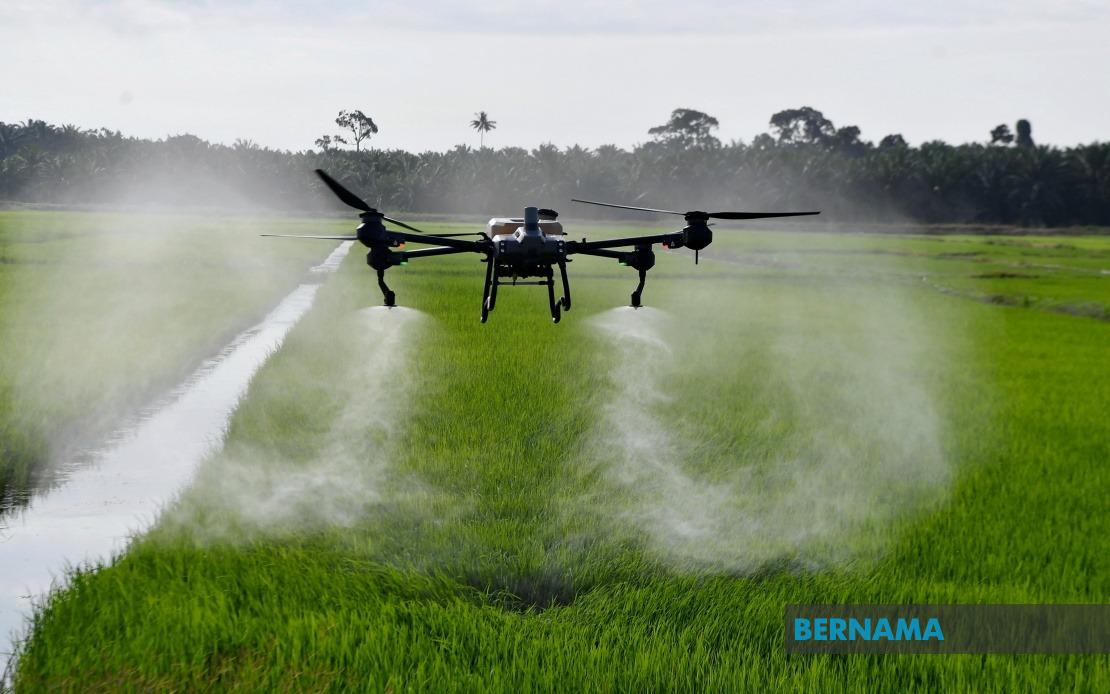
Selangor is stepping up efforts to establish itself as a major player in the unmanned aerial systems sector with an investment of RM500,000 directed toward strengthening the state's drone technology ecosystem. The funding forms part of a broader strategic initiative to position the high-growth sector as a key economic driver for the state through 2027, with officials emphasizing the potential to unlock substantial returns across multiple industries that increasingly depend on drone and artificial intelligence integration.
Dr Mohammad Fahmi Ngah, chairman of the Selangor State Islamic Affairs and Innovation Culture Committee, outlined the allocation at the pre-launch ceremony of Droneport-1000 at Universiti Selangor Bestari Jaya. The funding represents an increase on previous investments and will be directed toward completing infrastructure upgrades at existing facilities while simultaneously supporting collaborative programmes with private sector partners. By combining capital investment with sector-specific incentive structures, Selangor aims to create conditions that encourage both domestic and international companies to establish operations within its drone ecosystem.
Central to this strategy is the Droneport-1000 initiative itself, which operates within Malaysia's largest designated airspace for unmanned vehicle operations. Spanning 24 square kilometres with ceiling permissions up to 1,000 metres in altitude, the facility currently awaits full certification from the Civil Aviation Authority of Malaysia. Officials have characterized the potential economic impact as virtually unlimited, particularly given the intersection of airspace management and drone technology with future industrial demands. The scale of the authorized airspace is ten times larger than Singapore's equivalent zones, providing Selangor with considerable advantage in demonstrating advanced operational capabilities.
The strategic value extends well beyond hardware manufacturing. The sector encompasses software development, artificial intelligence systems, and semiconductor chip production—components of the supply chain currently being developed in Puchong. This multi-layered approach means that companies engaged at different stages of the value chain can establish operations in Selangor, creating a vertically integrated ecosystem that supports everything from basic research through to finished product deployment. The state's broader digital innovation ambitions incorporate support from established technology firms including Aerodyne, which brings operational expertise and market connectivity to the developing sector.
Practical applications demonstrating the technology's immediate value proposition have already been identified within Selangor's governance priorities. Environmental monitoring represents a particularly compelling use case, with drone and AI systems enabling detection and tracking of forest reserve encroachments, coastal erosion patterns, and bund breaches far more efficiently than traditional manual inspection methods. The speed of analysis combined with reduced labor intensity creates a direct cost-benefit argument for rapid technology adoption across state environmental agencies. This practical foundation provides credibility to broader claims about the sector's economic potential.
The Droneport-1000 facility itself functions as a meeting point for industrial practitioners and academic researchers, deliberately designed to bridge the persistent gap between theoretical innovation emerging from university research and commercial product development. This bridging function addresses a longstanding challenge in Malaysia's technology sector—the difficulty of translating research findings into market-ready applications. Zannifa Azura Ahmad, chief executive officer of Selangor Aviation & Technology Innovation, emphasized that the facility's core mission involves connecting knowledge generation with practical application, academic talent with industry employment opportunities, and research findings with commercialization pathways.
The matching grant incentive structure represents the state government's commitment to cost-sharing with private sector investors, lowering the financial barrier for companies considering entry into the Selangor drone ecosystem. Rather than subsidizing operations indefinitely, this approach encourages matched investment from companies whose capital commitment signals genuine confidence in commercial viability. Such arrangements typically attract more serious investors while ensuring public resources are deployed alongside private capital willing to accept commercial risk.
For Malaysian readers tracking technology sector development, Selangor's investment signals the country's broader positioning within regional technology competition. Singapore has long dominated unmanned systems development in Southeast Asia, but Selangor's larger designated airspace and lower operational costs could support manufacturing and testing operations that Singapore's constrained geography cannot accommodate. International drone companies requiring proof-of-concept operations or regional testing facilities may find Selangor's infrastructure more suitable than relocation to Singapore or Hong Kong.
The initiative also reflects recognition that drone technology deployment transcends pure commercial applications. Government agencies responsible for environmental management, disaster response, and infrastructure inspection increasingly depend on unmanned systems. By developing local expertise and manufacturing capacity, Selangor positions itself to supply both public sector needs and commercial markets. The Civil Aviation Authority of Malaysia's ongoing certification process for Droneport-1000 indicates growing national comfort with commercial airspace integration, a necessary prerequisite for sector growth.
The involvement of Universiti Selangor in hosting the facility creates direct pathways for student engagement and applied research. University-based drone operations centers typically generate both trained graduates and intellectual property that can be commercialized by spin-off companies. This combination of academic development and commercial application has proven effective in other innovation hubs globally, creating sustainable ecosystems rather than temporary initiatives dependent on periodic government funding.
Looking forward, the 2027 timeline mentioned by officials suggests recognition that meaningful sector development requires sustained effort beyond single budget cycles. Drone technology markets globally are growing at double-digit rates as regulatory frameworks mature and application domains expand. Malaysian participation in this growth depends partly on infrastructure availability and regulatory clarity—both elements Selangor appears determined to establish. The RM500,000 allocation should be understood as initial capital establishing conditions for substantially larger private investment flows, rather than as the total extent of resources that will ultimately flow into the sector.

