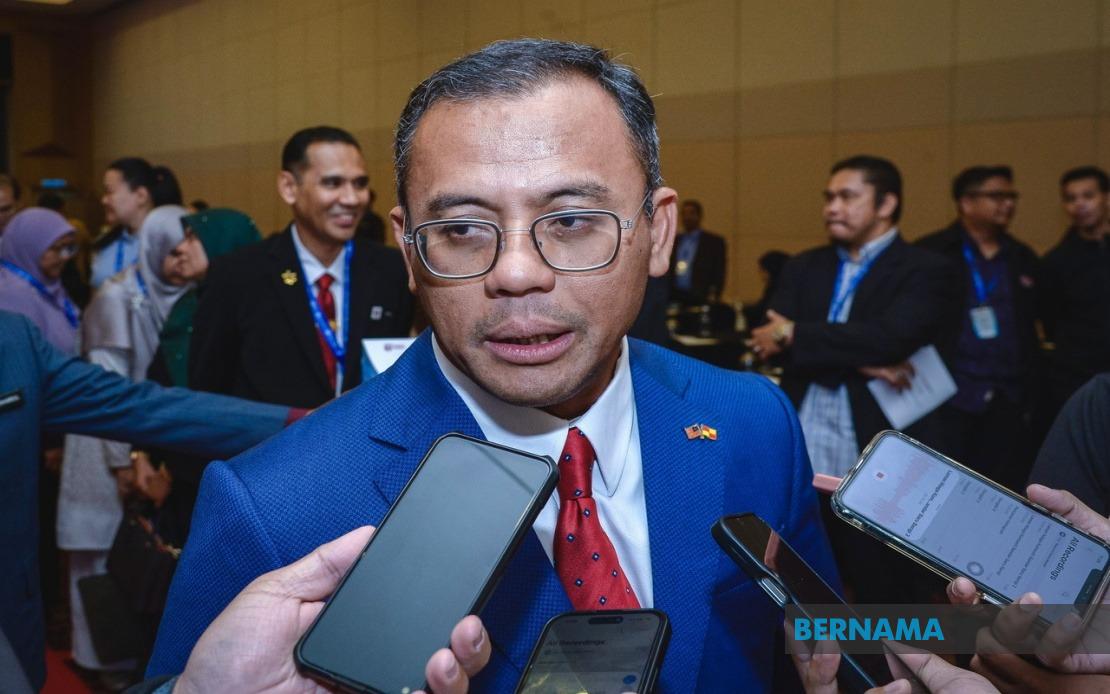
Selangor Menteri Besar Datuk Seri Amirudin Shari has delivered a pointed critique of conventional governance approaches, arguing that effective policymaking must abandon the practice of treating individual social challenges as discrete, isolated problems. Speaking at the Human Ecology International Conference II 2026 in Bangi, Amirudin contended that truly impactful policies require governments to recognise and respond to the complex, interwoven nature of the difficulties faced by ordinary Malaysians in their daily existence.
At the heart of Amirudin's argument lies a recognition that citizens do not compartmentalise their lives according to traditional policy silos. When families navigate decisions about work, childcare arrangements, medical appointments and transport logistics, they experience these domains as fundamentally linked rather than separate concerns. A mother choosing between accepting employment and securing affordable childcare, or a worker spending hours commuting that could otherwise be devoted to family responsibilities, exemplifies how these supposedly distinct policy areas converge and create cascading consequences. The Selangor leader's observation challenges policymakers to think systemically rather than sectionally about the structural pressures bearing down on Malaysian households.
Amirudin identified a constellation of mounting pressures confronting contemporary families that demand this integrated approach. Rising living expenses, lengthy daily commutes, caregiving obligations, the evolution of employment arrangements, housing shortages and the pace of technological disruption combine to create environments where households struggle not merely to survive, but to flourish. These pressures transcend any single policy domain, yet traditional governance structures often address them through disconnected ministerial portfolios and uncoordinated interventions. The Menteri Besar's observation suggests that fragmented approaches, however well-intentioned individually, risk leaving families caught between conflicting demands because they fail to account for genuine human experience.
The critical reorientation Amirudin proposes shifts the fundamental question governments should pose from whether families are merely coping to whether the policy environment actually enables them to thrive. This represents a significant philosophical departure from administrative approaches focused narrowly on meeting minimum standards or delivering isolated services. Instead, it demands that policymakers evaluate whether their interventions collectively create conditions for genuine human flourishing—where work, family, health, education and community participation become mutually reinforcing rather than perpetually competing demands.
Realising this vision requires reimagining the relationship between government and academic institutions. Amirudin emphasised that universities must transition from peripheral observers to integral partners throughout the entire policy lifecycle, from the initial stage of problem definition through design and implementation to rigorous evaluation of outcomes. Malaysian universities possess research capacity, community connections and analytical expertise that remain underutilised in contemporary policymaking. Greater institutional collaboration could ground policy design in empirical evidence about how Malaysians actually live, rather than assumptions built into existing bureaucratic frameworks.
The conference itself, convening under the theme Sustaining Human Well-being, assembled diverse stakeholders including academics, researchers, practitioners, policymakers, institutional leaders, students and community representatives from Malaysia, Indonesia, the Philippines and beyond. This multidisciplinary gathering reflects recognition that addressing complex human challenges requires perspectives spanning multiple disciplines and sectors. The participation of representatives from neighbouring ASEAN nations underscores that pressures on family well-being, housing security and employment patterns are not uniquely Malaysian phenomena, but rather transnational challenges demanding regional understanding.
During the conference, UPM and the University of the Philippines Los Baños formalised a Memorandum of Understanding, signalling institutional commitment to collaborative research addressing these interconnected challenges. More significantly, the gathering witnessed announcement of an initiative to establish the ASEAN Human Ecology Consortium, creating a regional platform for joint research endeavours, student and faculty exchange, joint publications, policy dialogue and community engagement among institutions across Southeast Asia focused on human ecology and well-being.
This consortium represents a substantive development for Malaysian researchers and policymakers. It provides structured mechanisms for Malaysian institutions to benefit from comparative research examining how different ASEAN societies address housing affordability, childcare accessibility, employment flexibility and transportation challenges. The emphasis on policy dialogue suggests the consortium aspires to influence not merely academic discussion but actual government decision-making. For a country like Malaysia facing substantial demographic shifts, urbanisation pressures and evolving work patterns, systematic comparison with regional counterparts offers valuable evidence about which integrated approaches prove most effective.
The significance of Amirudin's intervention extends beyond rhetorical flourish. Selangor, as Malaysia's most populous state and economic engine, possesses considerable latitude to pilot integrated policy approaches. Housing development decisions could incorporate transportation infrastructure planning from inception rather than as afterthought. Employment policies could address childcare provisioning. Healthcare delivery could integrate mental health support recognising caregiver stress. Such integration requires breaking institutional siloes that often frustrate coherent governance. The Menteri Besar's public emphasis on this necessity creates political space for administrative entities to collaborate across traditional boundaries.
Yet translating philosophical commitment into operational reality presents substantial challenges. Government budgeting processes, organisational structures and political incentives remain fundamentally oriented towards sectional rather than integrated approaches. Overcoming institutional inertia requires not merely leadership rhetoric but sustained commitment to resource reallocation and structural reform. Additionally, demonstrating measurable improvements in family well-being from integrated approaches demands sophisticated evaluation mechanisms that move beyond counting service deliveries to assessing actual life quality impacts.
Amirudin's framing also carries implications for how Malaysia approaches broader development questions. As the nation contemplates long-term economic strategies and demographic trends, recognising that policy effectiveness ultimately depends on whether interventions cohere into supportive environments for human flourishing suggests conventional growth-focused metrics require supplementation. Economic development unaccompanied by improvements in family stability, leisure time and community connection may prove hollow regardless of GDP gains. This perspective aligns with emerging international thinking about wellbeing economics that several governments, from New Zealand to Scotland, have begun integrating into policymaking frameworks.
The ASEAN consortium initiative particularly matters for Malaysia's future trajectory. As the country experiences technological disruption, demographic ageing and evolving family structures, learning from how regional neighbours address resulting policy challenges becomes strategically valuable. The consortium creates institutional mechanisms for this learning while positioning Malaysian researchers and policymakers as contributors to collective regional knowledge rather than passive consumers of international best practice. For a middle-income nation aspiring to join high-income peers, such systematic knowledge generation and exchange offers competitive advantage.
Ultimately, Amirudin's intervention serves as reminder that effective governance demands clarity about ultimate objectives. If the purpose of economic development and public policy is enabling Malaysians to lead flourishing lives within stable, cohesive communities, then policymaking must be reorganised around that human-centred vision. Fragmented approaches addressing healthcare, employment, transport and housing as separate concerns will inevitably fail when citizens experience these domains as interconnected aspects of daily life. Whether Malaysian policymakers respond to this challenge by embracing genuinely integrated approaches remains to be seen, but Amirudin's public articulation of the necessity suggests the conversation is shifting.

