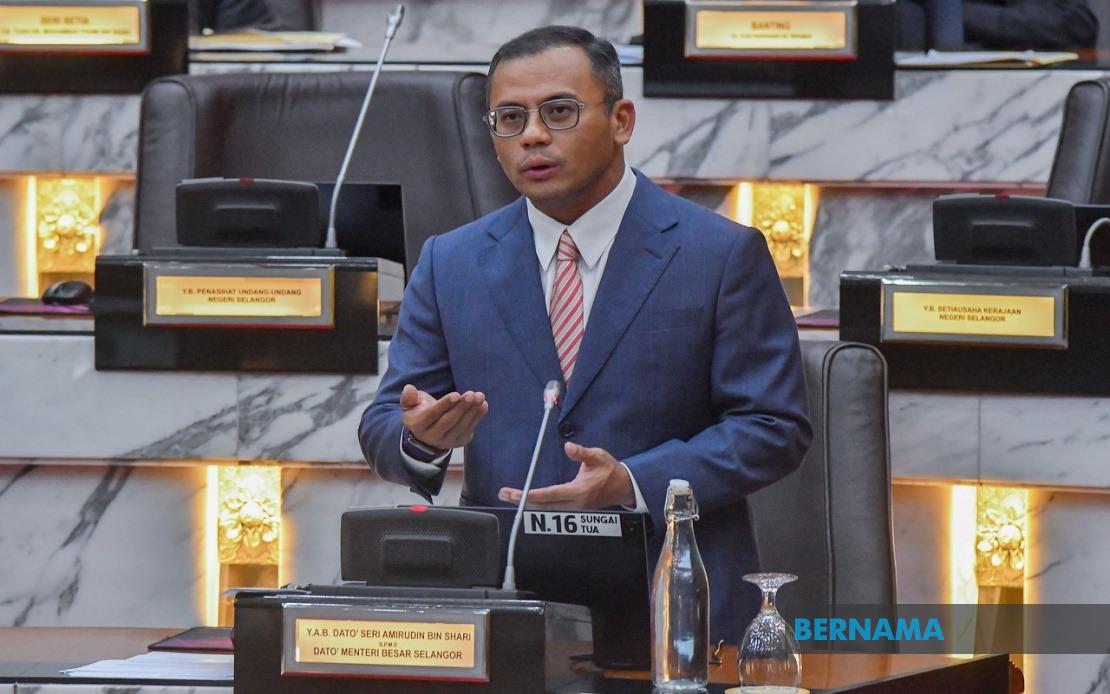
Selangor's Menteri Besar Datuk Seri Amirudin Shari has directed all local authorities across the state to conduct a thorough examination of public transportation connectivity, signalling a potential shift in how the government responds to infrastructure challenges. The announcement, made during legislative proceedings in Shah Alam on June 23, reflects growing pressure from residents and elected representatives concerned about inadequate links between transit systems and surrounding neighbourhoods.
The directive comes at a time when connectivity between major transit networks—particularly the LRT3—and residential and commercial areas has become an increasingly visible issue on social media platforms. Rather than dismiss these complaints as anecdotal, Amirudin has chosen to frame them as legitimate governance concerns requiring institutional response. This approach suggests recognition that first-mile and last-mile connectivity problems directly influence public transport adoption rates across the state.
State authorities have signalled willingness to commit additional financial resources toward improving the physical infrastructure supporting transit access. The proposed investments would focus on pedestrian walkways, environmental safety features, and accessible pathways connecting residential zones to public transport hubs. However, the Menteri Besar emphasised that any expenditure must serve the broader strategic objective of increasing ridership on public vehicles rather than simply constructing expensive standalone projects.
Amirudin's comments reveal an implicit frustration with reactive governance models. He stressed that local authorities should actively identify and address service deficiencies through consultation with council members and key stakeholders, rather than relying on viral social media posts to trigger official action. This shift toward proactive administration suggests the state government views public complaints circulating on platforms like X and Threads as an indicator of systemic failure in local governance structures.
The Kinrara assemblyman and state Investment, Trade and Mobility Committee chairman Ng Sze Han has been tasked with convening all public transport operators in Selangor to develop comprehensive service mapping. This mapping exercise would identify specific geographic areas where transit access is inadequate, creating a data-driven foundation for subsequent interventions. Such an approach moves beyond anecdotal concerns toward systematic analysis of where connectivity gaps actually exist.
Operator subsidies will form part of the state's response strategy, though Amirudin acknowledged that financial support alone cannot solve underlying problems. The government recognises that operators might maintain subsidised services while operating under scheduling constraints that render those services ineffective for commuters. Therefore, any subsidy programme must be paired with performance expectations regarding operating hours and service frequency to ensure genuine improvement in transit accessibility.
The connectivity challenge facing Selangor reflects a broader Southeast Asian urban problem. Rapid expansion of heavy rail networks—such as LRT3—often leaves surrounding communities underserved during off-peak hours or inadequately connected to final destinations. Commuters who might otherwise use public transport default to private vehicles when transit connections prove inconvenient, perpetuating congestion and reducing the environmental and economic benefits that integrated public transport systems promise. Selangor's experience suggests this pattern affects multiple cities across the region.
For Malaysian commuters, particularly those in outer Selangor areas, this development may signal genuine improvement in mobility options. However, implementation effectiveness will depend on whether local authorities treat the directive as a mandate requiring concrete action or as aspirational guidance easily deferred. The emphasis on proactive rather than reactive governance suggests officials understand that delayed implementation undermines credibility and perpetuates public frustration.
The state government's willingness to allocate additional funds for transit-related infrastructure improvements contrasts with budget constraints faced by some neighbouring jurisdictions. This financial commitment, combined with operational coordination between public agencies and private operators, could establish a model worth monitoring for effectiveness and replicability elsewhere in Malaysia. Success would require sustained political will and accountability mechanisms ensuring local authorities follow through on commitments.
Danial Al-Rashid Haron Aminar Rashid, the Batu Tiga representative whose legislative interjection prompted the announcement, highlighted how elected representatives can leverage assembly proceedings to elevate constituent concerns to executive levels. His action demonstrates that social media pressure, when channelled through formal political institutions, can generate measurable policy responses. This dynamic may encourage other assemblypersons to similarly raise service delivery issues affecting their constituencies.
The mapping exercise Ng Sze Han will undertake offers an opportunity to establish transparent, measurable benchmarks for transit connectivity. Publishing results could provide Selangor residents with clear understanding of where problems exist and what the government plans to address first. Transparency might also create accountability pressure on both operators and local authorities to deliver promised improvements.
Moving forward, the success of this initiative will hinge on whether operational coordination between government agencies, transport operators, and local authorities actually improves. If implemented seriously, Selangor's approach could provide valuable lessons for other Malaysian states wrestling with similar transit connectivity challenges. The coming months will reveal whether this directive represents genuine policy reorientation or merely symbolic response to public pressure.