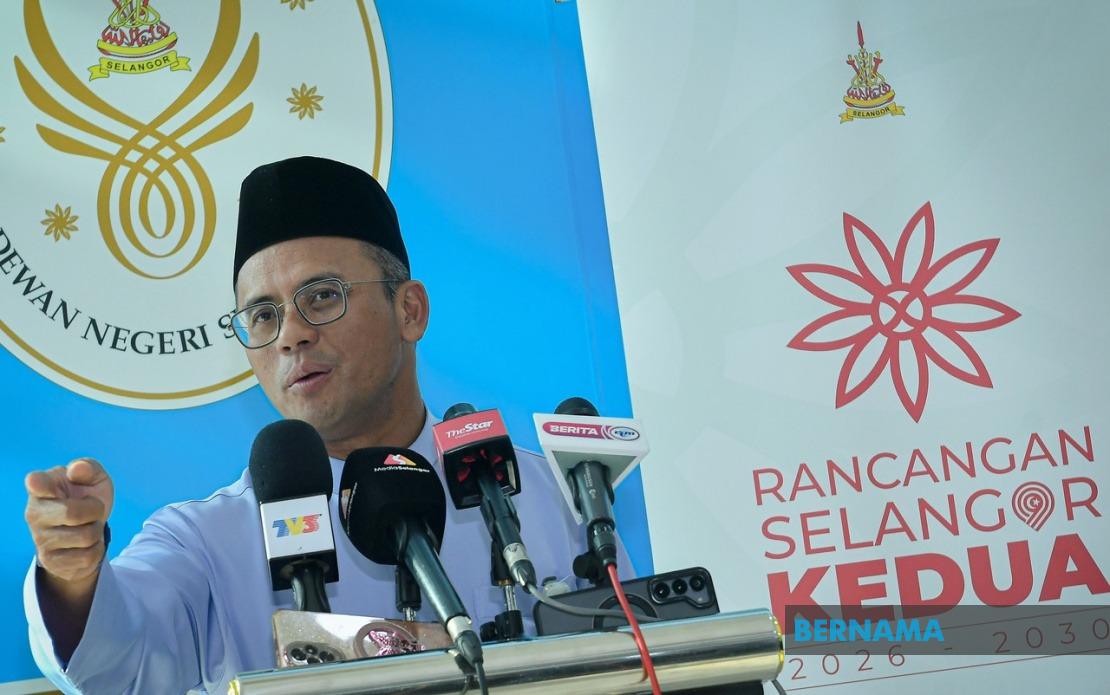
Selangor's housing ambitions have reached a new milestone with the state government committing to deliver 200,000 affordable homes under its RS-2 initiative, a comprehensive programme designed to democratise property ownership among middle and lower-income residents. Menteri Besar Datuk Seri Amirudin Shari unveiled the progress during the recent State Legislative Assembly sitting in Shah Alam, signalling the government's determination to tackle one of Malaysia's most pressing social challenges: the widening gap between housing costs and household incomes.
The scale of the initiative becomes apparent when examining the current progress figures. As of the announcement, 64,188 units have been completed and ready for occupation, whilst a further 69,014 units are actively under construction across various locations within the state. This combined total of 133,202 units represents substantial ground already covered, leaving roughly 67,000 units still to be developed to meet the full target. The staggered delivery approach allows the government to manage resources effectively whilst ensuring quality standards are maintained across all projects.
What distinguishes the RS-2 programme from conventional housing schemes is its integrated approach to affordability and resident welfare. Beyond simply constructing homes, the state government has designed mechanisms to support lower-income households in accumulating the financial capital necessary for homeownership. The rental-to-ownership component of the scheme operates on an innovative principle where 30 per cent of monthly rental payments made by tenants are automatically retained by the Selangor Housing and Property Board (LPHS) and accumulated as a housing deposit. This structured savings approach removes the burden of simultaneous rent and forced savings, allowing families to gradually build equity whilst maintaining housing security.
The implications of this model extend beyond individual household finances. By enabling renters to transition into homeowners over time, the scheme addresses a critical life-stage challenge facing many Malaysian families. Young professionals and growing families who might otherwise remain trapped in the rental cycle can now see a clear pathway to property ownership, an outcome that carries significant psychological and financial benefits. The accumulated deposits function as a tangible reward for sustained rental compliance whilst providing the down payment security that financial institutions typically require for mortgage approval.
Recognising that housing exists within a broader urban ecosystem, the state government has integrated public transport and urban walkability considerations into the RS-2 framework. The decision to mandate bus stops within every Rumah Selangorku Harapan and Rumah Selangorku Idaman development acknowledges that affordable housing located far from employment centres and essential services becomes a burden rather than a benefit. This spatial planning requirement forces developers to think holistically about resident mobility and accessibility, ensuring that affordable housing projects are genuinely liveable communities rather than distant bedroom suburbs.
The proposed expansion of public transport frequencies to enhance connectivity with LRT and MRT stations reflects a deeper understanding of transport-poverty linkages. For residents of affordable housing—who statistically experience lower income levels—reliable and affordable public transportation becomes essential to accessing employment opportunities. The commitment to increasing service frequency directly addresses a common complaint in Malaysian urban centres where infrequent buses and trains force commuters into car ownership despite limited budgets. The initiative to construct covered walkways at transit stations further demonstrates attention to practical daily realities, acknowledging that tropical weather poses genuine barriers to walking-based transport modes.
The state has also undertaken to develop a household support effectiveness index, a data-driven mechanism designed to evaluate how well various assistance and support programmes actually serve their intended recipients. This index, to be administered through the state's new statistical unit framework, will employ rigorous assessment methodologies with evaluation cycles conducted at 12 and 24-month intervals. Such regular monitoring allows the government to identify which programmes successfully improve recipient outcomes and which require redesign or discontinuation. For Malaysian policymakers often criticised for implementing programmes without adequate impact assessment, this commitment to measurable evaluation represents notable progress.
The technological dimension embedded within the state's planning approach signals modernisation of how affordable housing schemes are developed. By leveraging technology to identify areas experiencing highest traffic volumes, mapping public gathering points, and analysing housing estate distribution, the government can deploy limited resources more strategically. Small bus stop placement, determined through such data analysis rather than intuition or politics, becomes more likely to serve actual transport demand. This evidence-based planning methodology, whilst not revolutionary elsewhere, remains relatively uncommon in Malaysian housing policy and suggests Selangor is attempting to move beyond traditional approaches.
For Southeast Asian observers, Selangor's RS-2 programme offers instructive lessons about integrated housing policy. Rather than treating housing as a standalone real estate issue, the state connects homeownership to transport, walkability, financial inclusion, and programme evaluation. This holistic approach recognises that housing operates within interconnected social and economic systems. The rental-deposit accumulation mechanism particularly deserves regional attention as a potential model for other countries grappling with affordable housing shortages and rental market dynamics.
The challenge ahead remains significant, both in completing the remaining 67,000 units and in ensuring that affordability is maintained across the full programme lifespan. Sustained political commitment, consistent funding allocation, and effective coordination between various state agencies will determine whether RS-2 fulfils its potential. Nevertheless, the progress to date and the programme's sophisticated design elements suggest that Selangor is pursuing one of Malaysia's more ambitious and thoughtfully constructed housing initiatives.

