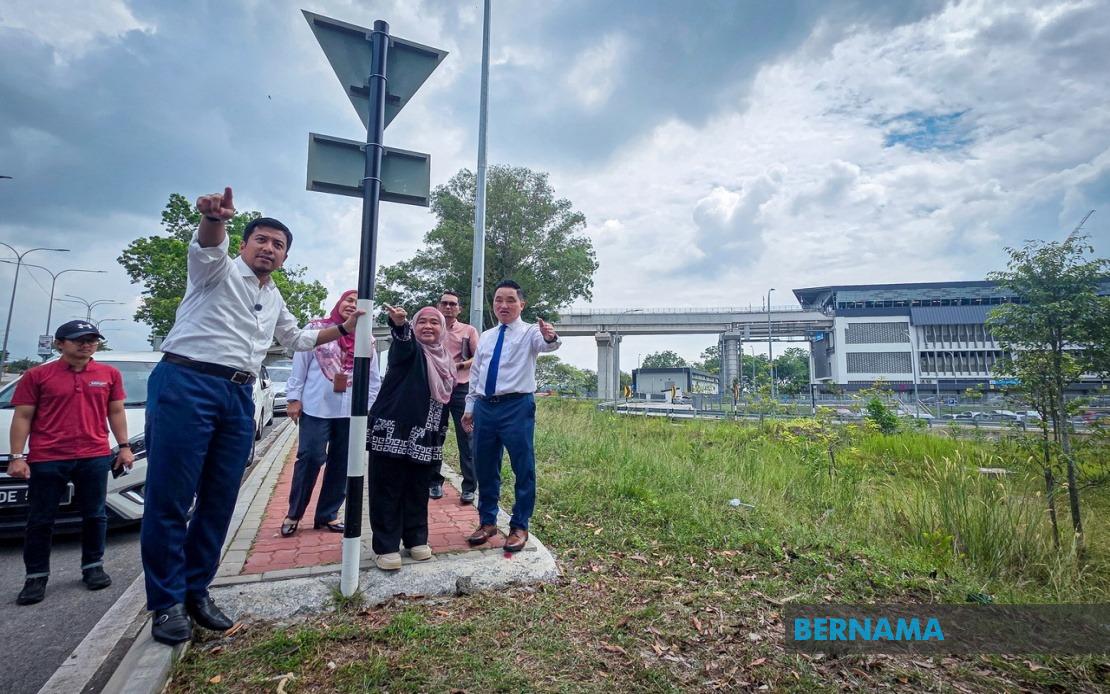
The Selangor State Government has committed to expediting the completion of connectivity infrastructure at Shah Alam Line LRT3 stations to provide commuters with improved access and safer travel conditions. State Local Government and Tourism Exco Datuk Ng Suee Lim announced the initiative following an inspection of public connectivity facilities across the light rail network, signalling the administration's determination to address deficiencies identified since the line's operational launch.
Two stations have emerged as immediate focal points for remedial work. At Dato' Menteri Station, administrative hurdles involving permit applications have delayed the installation of essential pedestrian infrastructure, prompting state officials to direct Prasarana, the operator of Kuala Lumpur's rapid transit systems, to complete these facilities within a two-month window. The measures are expected to enhance accessibility for the significant daily commuter traffic that uses this interchange, which serves multiple transport modes and districts across the Klang Valley region.
Shah Alam Stadium Station presents a more complex timeline, as unfinished connectivity work falls under the purview of nearby private developers navigating tender processes. Rather than imposing immediate deadlines, the state government has opted for a monitoring framework, acknowledging that the involvement of multiple private stakeholders requires careful coordination. This pragmatic approach reflects the realities of mixed-development projects where government authority and private enterprise intersect, a common scenario across Malaysian urban infrastructure.
Datuk Ng's acknowledgement that operational transit systems inevitably reveal design or construction gaps represents a refreshingly transparent approach to infrastructure management. Rather than deflecting responsibility, state officials have framed the identification of deficiencies as a natural phase in any major public works project, emphasising that accountability lies in swift remediation rather than perfection at launch. This positioning may serve to manage public expectations around infrastructure quality while maintaining commitment to continuous improvement.
The Shah Alam City Council (MBSA) will assume an active monitoring role, overseeing both Prasarana's work and coordinating with private developers to ensure schedules remain on track. This institutional arrangement distributes responsibility across multiple agencies, creating accountability checkpoints throughout the remediation process. Additionally, coordination meetings between state government representatives, local authorities, and developers will be convened to facilitate faster resolution of outstanding issues and prevent bureaucratic delays.
The scope of the remedial initiative extends beyond the two prioritised stations. State authorities are instructing all Local Authorities (PBT) operating within their districts to conduct comprehensive reviews of LRT3 connectivity infrastructure, identifying shortcomings in pedestrian walkways, zebra crossings, and other user-facing facilities. This systematic audit approach suggests that the issues at Dato' Menteri and Shah Alam Stadium stations may represent symptoms of broader design or implementation gaps across the Shah Alam Line rather than isolated problems.
The engagement of the Royal Klang City Council (MBDK) and other relevant municipal bodies underscores an institutional commitment to shared ownership of the rapid transit ecosystem. By tasking local authorities with monitoring and feedback collection from elected representatives and assemblymen, the state government is building community accountability into infrastructure management. Elected officials working at grassroots level are positioned to gather direct user feedback, creating channels through which persistent accessibility issues can be escalated before they become entrenched problems.
For Malaysian commuters and urban planners, this initiative carries broader implications for rapid transit development in Southeast Asia. The Shah Alam Line LRT3 represents a significant capital investment in regional mobility, and the quality of connectivity infrastructure directly influences ridership adoption and public satisfaction. Commuters are increasingly expecting seamless multimodal integration, with safe, accessible pedestrian pathways forming the critical last-mile connections between residential areas and transit stations. The Selangor government's focus on these "soft" infrastructure elements reflects evolving standards for what constitutes adequate public transportation provision in Malaysia's major urban centres.
The two-month completion target for Dato' Menteri Station work establishes a measurable benchmark against which the state government's performance can be assessed. In an era of heightened public scrutiny over infrastructure delivery, concrete deadlines carry political weight, signalling seriousness about addressing grievances. However, the more extended timeline for Shah Alam Stadium Station acknowledges the complexity of coordinating across public and private interests, a dynamic that frequently causes delays in Malaysian infrastructure projects.
The involvement of Exco Youth, Sports and Entrepreneurship Mohd Najwan Halimi in the inspection underscores how transit infrastructure issues intersect with economic development and recreational access. Effective connectivity to Shah Alam Stadium, a venue hosting sporting and entertainment events, influences visitor flows and economic activity in surrounding districts. Conversely, pedestrian safety deficiencies create liabilities for local governments and transit operators, exposing them to potential legal claims and reputational damage if users are injured on poorly maintained pathways.
The state government's emphasis on identifying and correcting construction or design flaws represents a philosophical shift from defensive positioning toward proactive problem-solving. Rather than suggesting that the LRT3 launch was premature or that contractors shirked responsibilities, officials are framing infrastructure improvement as an ongoing process inherent to complex public works. This narrative approach may help maintain public confidence in the transit system's long-term viability while acknowledging legitimate concerns about current facility standards.
As Selangor continues to urbanise and absorb significant population growth, the adequacy of transit connectivity infrastructure will increasingly determine whether public transportation can compete effectively with private vehicle use. The state government's current intervention suggests recognition of this reality, positioning rapid transit success as contingent upon complementary investments in pedestrian infrastructure and multimodal integration. Monitoring how effectively the pledged improvements are executed within the stated timelines will reveal whether Selangor's institutional frameworks can sustain the pace of infrastructure delivery demanded by a rapidly growing metropolitan region.

