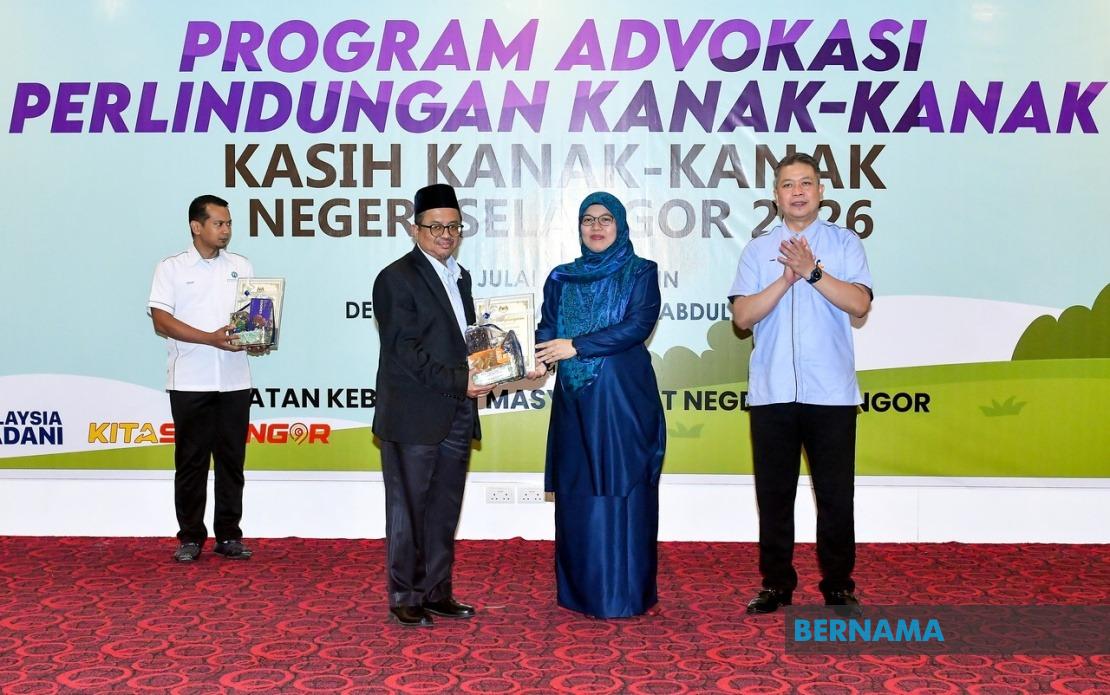
Selangor is ramping up its commitment to child safety and welfare through a comprehensive advocacy initiative designed to protect the state's 1.8 million young residents. The intensified efforts come as the state government recognises the mounting challenges posed by crime, social issues, and safety risks that disproportionately affect children in Malaysia's most densely populated region. The push represents a strategic shift towards prevention and community awareness rather than reactive responses to incidents after they occur.
Selangor Women Development and Social Welfare Committee chairman Anfaal Saari unveiled the scope of the challenge facing the state during a formal launch event in Shah Alam. Between January and June of this year alone, Selangor recorded 2,306 child-related cases that required official intervention and support. The breakdown reveals the complexity of issues confronting the state: 1,877 cases involved child care and protection concerns, 366 involved criminal misconduct directed at minors, and a further 63 involved children whose behaviour placed them beyond parental control. These figures underscores why sustained, proactive measures have become essential rather than optional.
The newly launched initiative, formally titled "Program Advokasi Perlindungan Kanak-Kanak: Kasih Kanak-Kanak Selangor", represents a collaborative approach drawing together disparate government agencies and civil society organisations. The programme's reach extended to 250 participants representing 52 schools and tahfiz institutions across Selangor at its inaugural event. This multi-institutional participation reflects recognition that child protection cannot remain siloed within a single agency but requires coordinated action across education, religious affairs, law enforcement, and digital regulation portfolios.
A significant aspect of this initiative involves partnership with Yayasan Islam Darul Ehsan (YIDE), which has maintained continuous child protection programming since 2004. Over two decades, this collaboration has extended benefits to more than 100,000 students nationwide, demonstrating the scalability and enduring impact of sustained advocacy work. Rather than fragmenting efforts across multiple short-term campaigns, Selangor's approach emphasises institutional memory and cumulative progress towards embedding child protection values within communities.
The participating institutions represent a comprehensive educational ecosystem. Institutions under the Selangor State Education Department (JPNS), religious schools supervised by the Selangor Islamic Religious Department (JAIS), and dedicated tahfiz centres affiliated with the Selangor Tahfiz Al-Quran Institutions Association (PITAS) all feature prominently. This breadth is deliberate, recognising that children's safety must be ensured across secular and religious educational settings, with consistency in approach and messaging regardless of institutional type.
Saari stressed that prevention through continuous advocacy represents a fundamentally different philosophy from conventional child protection responses that typically activate only after crimes or misconduct incidents surface. This preventive orientation requires sustained investment in community education, institutional capacity-building, and awareness raising among both adults and children themselves. The recurring nature of these programmes signals governmental commitment to embedding safety consciousness rather than treating child protection as a periodic initiative.
The collaborative framework assembles agencies with distinct mandates and capabilities. The Royal Malaysia Police (PDRM) brings law enforcement expertise and crisis intervention capacity, while the Malaysian Communications and Multimedia Commission (MCMC) addresses digital safety concerns increasingly relevant to modern childhood. This multi-agency approach ensures comprehensive coverage of the physical, digital, and institutional environments where children spend significant time. The integration of religious departments proves particularly significant in Malaysian context, where Islamic education institutions serve substantial populations and require tailored protection protocols respecting their particular operational frameworks.
A notable emphasis falls on protecting vulnerable populations within institutional care settings. Children in care institutions, tahfiz centres, and religious schools represent concentrated populations requiring heightened attention and oversight. These environments, while providing valuable education and spiritual development, can also present heightened risks without adequate safeguarding mechanisms. Selangor's approach explicitly prioritises these settings, acknowledging that protection cannot assume uniform application but must be calibrated to institutional context.
For Malaysian policymakers and regional observers, Selangor's intensified child protection advocacy offers important lessons in scaling welfare initiatives beyond rhetoric into sustained institutional practice. The state's high population density and economic complexity create distinctive challenges requiring sophisticated, multi-layered responses. The emphasis on long-term partnership frameworks rather than time-limited projects suggests confidence in incremental progress towards systemic cultural change regarding child safety priorities. As other Malaysian states and regional neighbours confront similar challenges, Selangor's experience with institutionalised advocacy approaches and inter-agency coordination provides a potentially replicable model for translating child welfare commitments into measurable protective outcomes.

