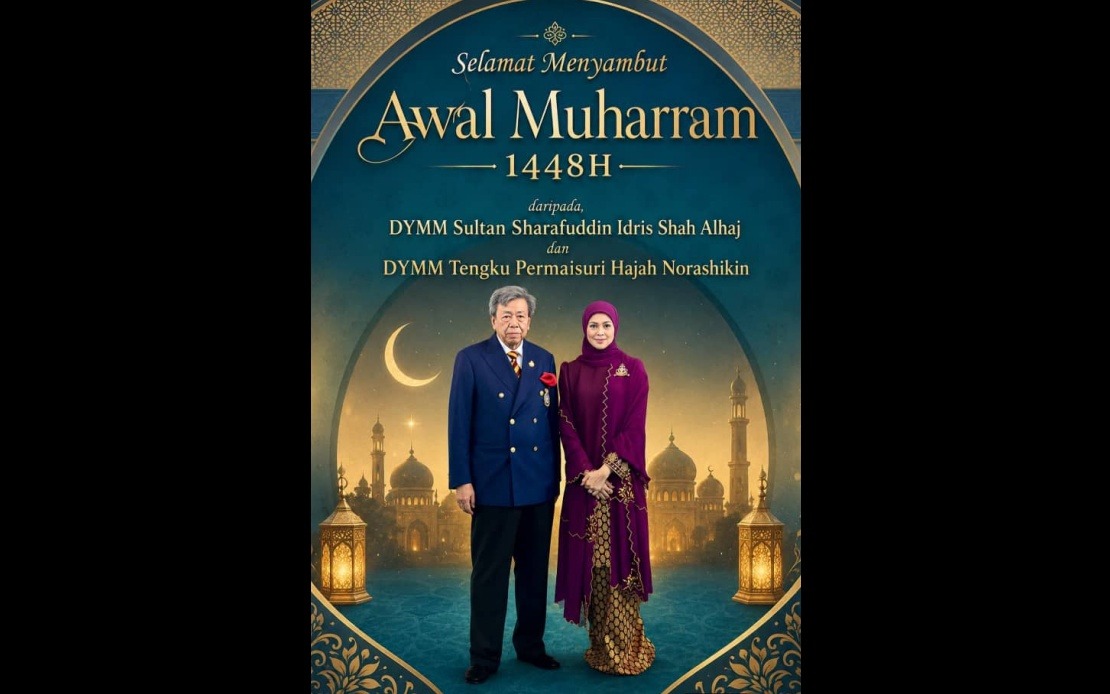
Sultan Sharafuddin Idris Shah, the Sultan of Selangor, has renewed his appeal for Muslims to place unity at the forefront of their collective response to the challenges facing the faith and nation, coinciding with celebrations marking Maal Hijrah 1448H. The Islamic calendar's commencement, observed across the Muslim world, provided him an occasion to reflect on the deeper spiritual significance of migration in Islamic tradition and its relevance to contemporary community cohesion.
The Maal Hijrah observance commemorates the Prophet Muhammad's migration from Mecca to Medina in 622CE, an event that fundamentally shaped Islamic history and established the foundation of the early Muslim state. However, Sultan Sharafuddin emphasised that the historical journey transcends mere geographical relocation, instead representing a profound spiritual transformation and a clarion call for believers to undertake positive personal and collective change. In this context, the celebration becomes less about commemorating a distant historical event and more about inspiring modern-day Muslims to embody the values of righteousness, community welfare and mutual solidarity that characterised that epoch.
Drawing on his father's teachings, the late Sultan Salahuddin Abdul Aziz Shah, Sultan Sharafuddin articulated a framework for managing disagreements within the Muslim community. He stressed that differences of perspective, which naturally arise in any diverse population, should be addressed with wisdom and propriety rather than acrimony. This guidance reflects a long-established Islamic jurisprudential principle that legitimate disagreement, when conducted respectfully, constitutes a form of intellectual blessing rather than a deficiency. The Sultan's invocation of his father's legacy underscores the continuity of thoughtful leadership within Selangor's royal household.
The ruler delineated specific protocols for constructive engagement when criticism or corrective advice becomes necessary. Such communications, he insisted, must be conveyed through channels characterised by courtesy, respect and genuine concern for the welfare of the recipient and the broader community. This distinction between the substance of a message and its delivery mechanism reflects sophisticated understanding of interpersonal and organisational dynamics. When sensitive matters require discussion, the manner of expression can determine whether the outcome strengthens bonds or fractures relationships, a principle increasingly recognised in modern management and conflict resolution frameworks.
Sultan Sharafuddin advocated strongly for resolving contentious issues through private consultation rather than public airing of grievances. When disputes escalate into the public realm without prior attempt at confidential resolution, they risk exposing internal fractures that adversaries may exploit to weaken the community. The ruler's perspective aligns with classical Islamic administrative practice, wherein scholars and leaders historically conducted sensitive deliberations behind closed doors before presenting unified positions to the populace. Contemporary geopolitical dynamics, particularly in Southeast Asia where religious communities navigate pluralistic societies, lend weight to this cautionary approach.
The Sultan articulated a sobering consequence of allowing internal quarrels to persist visibly: external observers and potential adversaries gain intelligence about community divisions and may opportunistically leverage such rifts for their own strategic advantage. This observation carries particular resonance for Malaysia, where inter-religious and inter-ethnic harmony constitute foundational pillars of national stability. When any community demonstrates internal discord publicly, it potentially undermines the trust that other communities place in it as a partner in national building, creating cascading consequences for social cohesion.
When differences spiral into unresolved public disputes, Sultan Sharafuddin cautioned, no faction truly emerges victorious. Instead, the community collectively loses credibility, coherence and capacity to advance shared interests. This zero-sum characterisation of unmanaged conflict contrasts sharply with the positive-sum outcomes possible when disputes are resolved through patience, private dialogue and mutual respect. The warning implicitly addresses contemporary Malaysian discourse, where social media platforms have lowered barriers to airing grievances instantly and broadly, often without the moderating influence of community elders or institutional oversight.
Beyond his emphasis on conflict management, Sultan Sharafuddin invoked the spiritual essence of Hijrah as a catalyst for renewing commitment to unity, tolerance and interfaith respect. He appealed to Muslims to embody the Hijrah spirit by consciously subordinating personal ambitions and factional interests to the greater good of the faith community and the nation state. This universalist framing suggests that religious identity, while central, must coexist with national identity and broader human solidarity. For Malaysian Muslims, this resonates deeply with the constitutional framework that guarantees religious freedom whilst maintaining Islam's special position within a multicommunal polity.
The Sultan's message carried explicit wishes that the new Islamic year would usher in divine blessings, tranquility and material prosperity for all inhabitants of Selangor and beyond. This inclusive language, extending blessings to the entire population rather than Muslims alone, reflects Malaysia's constitutional and philosophical commitment to religious pluralism. It demonstrates how Muslim leaders can articulate faith-specific messages whilst maintaining inclusive national citizenship frameworks. The blessing extends to strengthened harmony among Muslims themselves and between Muslim and non-Muslim communities, suggesting an understanding that Malaysia's stability depends on mutual respect across religious lines.
Implicitly, Sultan Sharafuddin's address carries relevance for Malaysian political dynamics, where factional disputes within government and opposition formations have occasionally surfaced publicly, potentially damaging institutional credibility. His emphasis on private resolution and public unity resonates as counsel applicable beyond strictly religious contexts, touching on governance norms and political culture more broadly. As Selangor plays a pivotal economic and political role within Malaysia's federal structure, the Sultan's moral authority and calls for restraint carry weight that extends beyond Selangor's boundaries.
The Maal Hijrah celebration provides an annual occasion for Muslim leaders across Malaysia to renew spiritual commitments and recalibrate community priorities. Sultan Sharafuddin's 1448H message positioned unity not as a luxury but as an existential necessity in an increasingly complex world where external pressures and internal differences both threaten communal wellbeing. His careful distinction between acknowledging disagreements and airing them publicly offers a middle path between enforced uniformity and destructive polarisation, reflecting mature leadership cognisant of community complexity.