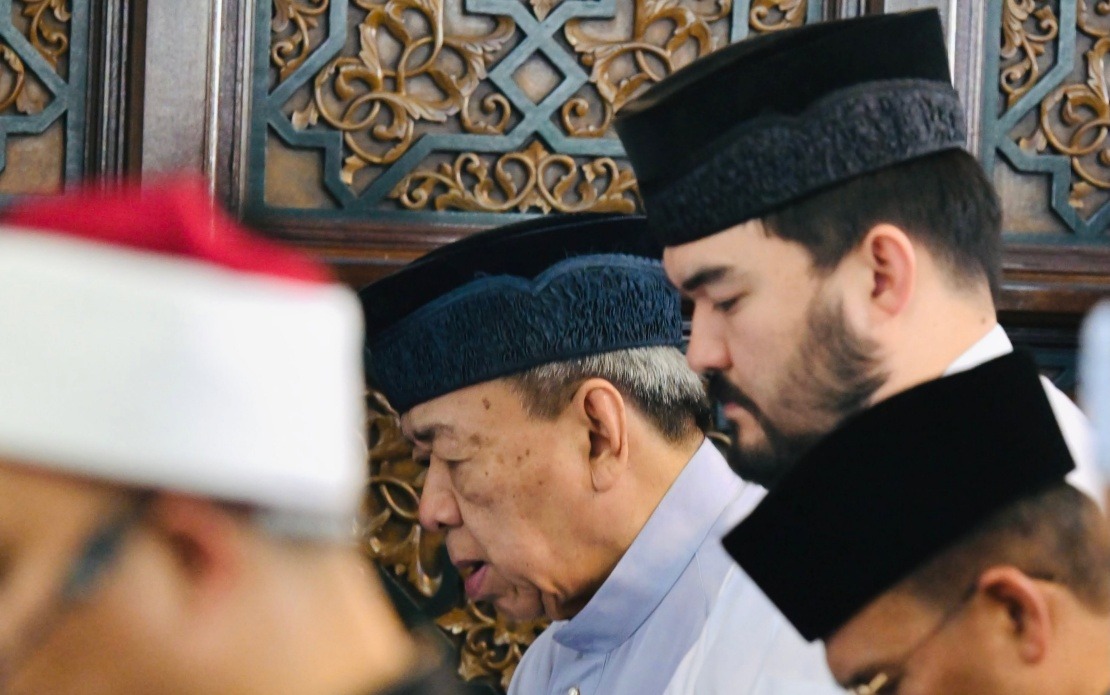
The Sultan of Selangor, Sultan Sharafuddin Idris Shah, has issued a significant call for the Muslim community to embrace compassion as a fundamental value in their treatment of animals, reflecting broader Islamic ethical principles that extend beyond human relationships. Speaking through the Selangor Royal Office's official communications following Friday sermons delivered across the state, His Royal Highness emphasised that demonstrating kindness towards creatures—whether domestic strays, wild fauna, or livestock—represents a core obligation for believers seeking to live in accordance with Islamic teachings.
The Sultan's message emerged in conjunction with congregational sermons titled "Ihsan Terhadap Mahkluk Allah SWT," which translates to compassion towards the creatures of Allah, underscoring the theological foundation for animal welfare within Islamic doctrine. His Royal Highness explicitly encouraged Selangor's Muslim population to reflect deeply on the sermon's content and integrate its principles into daily practice, suggesting that understanding animal welfare is not peripheral to Islamic learning but central to spiritual development.
Central to the Sultan's position is the concept of human stewardship over the natural world. As custodians of Earth, His Royal Highness argued, humans bear profound responsibilities that extend to protecting and sustainably managing all living systems, including fauna, flora, geographical features such as mountains, and aquatic ecosystems. This frameworkrejects the notion that environmental care represents a secular concern disconnected from religious obligation. Rather, the Sultan articulated that preserving the integrity of creation serves as an expression of reverence for divine greatness, making ecological responsibility inseparable from spiritual commitment.
The Sultan grounded his appeal in established Islamic jurisprudence by referencing the Prophet Muhammad's own emphasis on animal treatment. Islamic tradition holds numerous examples of the Prophet's concern for creatures, from specific instructions on feeding animals to warnings against cruelty. His Royal Highness noted that Islam mandates believers to provide animals with adequate sustenance and water, and at minimum, to refrain from inflicting harm on any creature fashioned by Allah. This establishes a positive obligation rather than merely prohibiting abuse—suggesting active care and provision rather than passive non-interference.
However, the Sultan acknowledged a crucial tension that frequently arises in contemporary urban and rural contexts across Malaysia: the conflict between protecting animals and ensuring human safety. Recognising that wildlife sometimes poses genuine threats to public security or causes property destruction, His Royal Highness articulated an important Islamic principle permitting intervention when creatures endanger communities. This exception operates within the framework of Maqasid Syariah—the objectives of Islamic law—which prioritises protecting human life and preserving property as fundamental principles. The Sultan's statement thus introduces nuance, preventing animal welfare advocacy from becoming absolutist in ways that ignore legitimate human concerns.
The interplay between compassion and pragmatism represents a sophisticated theological position that attempts to reconcile what might appear as competing values. The Sultan explicitly stated that defending human welfare and demonstrating kindness to animals are not inherently contradictory but rather complementary aspects of Islamic ethics properly understood. This framing is particularly relevant for Malaysian policymakers grappling with wildlife management, particularly concerning problematic elephants in agricultural areas, snakes in urban settlements, or crocodiles in inhabited zones. The Sultan's intervention provides religious legitimacy for measured responses that neither demonise nor unnecessarily endanger wildlife while acknowledging legitimate human interests.
For Selangor specifically, this religious directive carries weight extending beyond spiritual guidance. As Malaysia's most economically developed and densely populated state, Selangor experiences acute tensions between rapid urbanisation and wildlife habitat preservation. The state's natural areas continue shrinking, while human-animal conflicts increase as development encroaches on animal corridors and feeding grounds. The Sultan's emphasis on human responsibility for environmental stewardship suggests that Selangor's residents—and by extension, the state government—should view animal welfare and habitat protection as Islamic obligations rather than luxuries or environmental extras.
The Sultan's message also carries implications for how animal welfare is framed in contemporary Malaysian discourse. By anchoring compassion towards creatures in religious teaching rather than secular animal rights philosophy, His Royal Highness makes animal welfare discourse accessible and compelling to Malaysia's predominantly Muslim population. Many Malaysians who might resist Western-derived animal rights arguments may find greater resonance with teachings rooted in Prophet Muhammad's example and Islamic jurisprudence. This approach potentially bridges divides between secular conservationists and religiously observant communities, creating common ground for protecting endangered species and managing human-wildlife conflicts.
The timing and prominence of the Sultan's statement—distributed through official royal channels and coordinated with statewide Friday sermons—suggests deliberate institutional attention to animal welfare. This elevation indicates that Selangor's religious leadership views animal treatment as sufficiently important to warrant direct royal intervention and statewide coordination. Such interventions are relatively rare and typically reserved for issues of significant concern, suggesting that the state perceives growing problems with animal cruelty, habitat destruction, or wildlife conflicts warranting religious correction.
The Sultan's position also implicitly critiques cultural practices or attitudes that treat animals with indifference or cruelty. While not explicitly naming specific practices, the emphasis on compassion and responsibility suggests concern about inadequate treatment of strays, improper slaughter practices, habitat degradation, or casual cruelty. By issuing this directive through religious channels, the Sultan attempts to shift cultural norms and social expectations regarding how Muslims should relate to animals in their communities.
For Malaysians across other states and the broader Muslim world observing Selangor's religious leadership, the Sultan's message provides a template for integrating environmental and animal welfare concerns within Islamic frameworks. As climate change and habitat loss accelerate across Southeast Asia, religious leaders occupying positions comparable to the Sultan of Selangor possess significant potential to mobilise communities around conservation and animal welfare by framing these concerns as religious obligations rather than foreign impositions.
Ultimately, the Sultan of Selangor's intervention represents an attempt to cultivate what might be termed Islamic environmental ethics—a holistic approach recognising that caring for creatures reflects reverence for creation and aligns with the Prophet's teachings. By acknowledging the legitimate exceptions concerning dangerous wildlife while insisting on baseline compassion as a religious principle, the Sultan offers Malaysian Muslims a nuanced ethical framework capable of addressing real contemporary conflicts while maintaining core Islamic values of mercy and justice.

