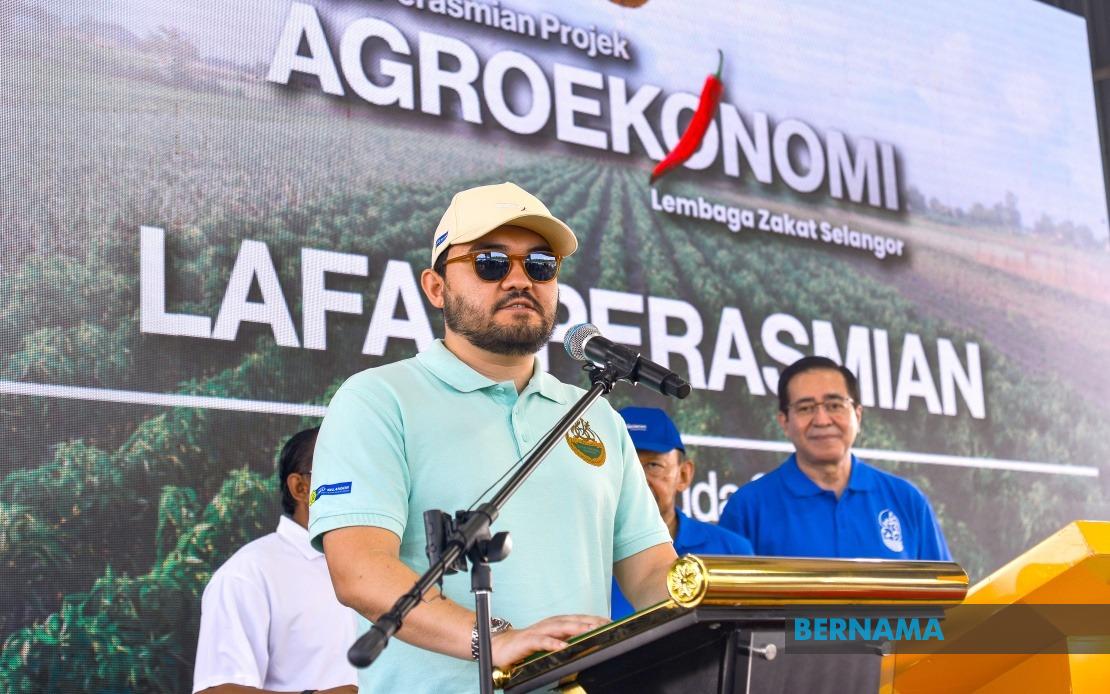
The Selangor Zakat Board has taken a significant step toward reshaping how it supports disadvantaged communities, shifting focus from conventional financial handouts to creating durable economic pathways. The newly launched Agroeconomic Project, inaugurated by the Raja Muda of Selangor, Tengku Amir Shah Sultan Sharafuddin Idris Shah, represents a RM26 million investment in agricultural enterprise designed to empower 48 carefully selected asnaf participants across 110 acres in Bukit Beruntung.
This initiative reflects a broader rethinking among Malaysian Islamic institutions about the nature of poverty alleviation. Rather than perpetuating dependency through welfare distributions, Zakat Selangor has adopted a model centred on skill acquisition, entrepreneurial capacity-building, and long-term wealth generation. The approach signals recognition that sustainable development of economically disadvantaged households requires comprehensive support systems encompassing training, infrastructure, and mentorship alongside capital provision.
The project allocates 76 acres specifically for agro-development operations, with particular emphasis on intensive chilli cultivation using advanced fertigation technology. Participants will each manage 0.5-acre plots containing approximately 2,000 chilli plant bags, accumulating to roughly 96,000 plants across the entire site during each growing cycle. This structured approach combines modern agricultural methods with individual responsibility, allowing participants to acquire expertise while contributing to commercial-scale production.
Economic projections underpinning the initiative suggest considerable promise. Once production systems stabilise and farmers develop competence in crop management, monthly household incomes could potentially reach RM4,000 per participant. This income level, though modest by affluent standards, represents transformative earnings potential for asnaf families currently struggling with subsistence living, capable of addressing education costs, healthcare needs, and other essential expenditures previously constrained by poverty.
The programme design incorporates comprehensive support mechanisms extending well beyond farming inputs. Zakat Selangor provides accommodation at Prima Beruntung housing, with rental fees completely subsidised throughout the entire three-year development cycle. This accommodation component addresses housing insecurity while reducing household expenditure, enabling participants to retain maximum income from agricultural activities. The approach recognises that stability in living arrangements is prerequisite for successful economic participation.
Participant selection employed rigorous screening processes conducted jointly with the Kuala Langat Area Farmers' Organisation, ensuring candidates possessed inherent capability and commitment despite economic disadvantage. This careful vetting contrasts sharply with indiscriminate distribution models, targeting support toward individuals demonstrating genuine capacity for agricultural enterprise. Such selectivity, while potentially restrictive in scope, aims to maximise success rates and ensure productive deployment of zakat resources.
The three-year developmental framework provides structured progression covering technical agricultural training, continuous crop monitoring, and hands-on operational guidance. This extended timeframe acknowledges that sustainable livelihoods cannot be established overnight; participants require progressive skill acquisition and confidence-building before achieving genuine independence. Regular supervision and knowledge transfer create accountability mechanisms while preventing common failure patterns in agricultural ventures among economically vulnerable populations.
Financing partnerships demonstrate how zakat institutions can leverage external capital to amplify development impact. Strategic collaborators including the Pilgrims Fund Board, RHB Islamic Bank Berhad, and Cagamas Berhad contributed RM2.07 million through wakalah arrangements, representing voluntary partnership contributions that complement zakat resources. This collaborative financing approach expands available capital while distributing implementation risk across multiple stakeholders aligned with social development objectives.
For beneficiaries like Norfhadilah Mohd Shafiin, a 45-year-old mother of five, the programme represents pivotal opportunity to transition from financial precariousness toward genuine self-reliance. Her remarks emphasise how the initiative transcends monetary support, instead furnishing knowledge frameworks and practical experience enabling autonomous agricultural management. This psychological and technical empowerment transforms recipients from aid-dependent individuals into capable entrepreneurs controlling their economic destinies.
Similarly, participant Raimi Rusydi Rodi highlighted how the programme imparts valuable agricultural competencies while fostering community bonds among participants undergoing parallel development journeys. Peer learning networks often prove instrumental in sustaining agricultural enterprises, as farmers collaboratively solve problems, share innovation discoveries, and provide mutual encouragement through inevitable challenges. The collective structure embedded within the project architecture deliberately cultivates such supportive ecosystems.
The initiative carries significant implications for Malaysia's broader poverty reduction architecture. As conventional welfare approaches increasingly face criticism regarding sustainability and long-term effectiveness, models emphasising productive employment and entrepreneurial development offer compelling alternatives. Zakat Selangor's investment suggests growing institutional recognition that Islamic charitable mechanisms can function as developmental instruments, not merely emergency relief providers.
For Southeast Asian policymakers and development practitioners, the project demonstrates feasibility of combining religious charitable frameworks with modern agricultural technologies and business methodologies. The integration of traditional zakat principles with contemporary agribusiness practices creates hybrid models potentially replicable across the region, where Islamic charitable institutions control substantial resources and large asnaf populations require sustainable livelihood pathways.
Moving forward, the project's success will largely depend on sustained commitment to supporting participants through post-programme phases. Graduation from the three-year development cycle presents critical vulnerability periods when newly independent farmers face market dynamics, price fluctuations, and operational challenges without institutional scaffolding. Zakat Selangor's vision of creating self-reliant entrepreneurs will ultimately be tested by whether participants maintain agricultural viability and income stability beyond structured programme parameters.

