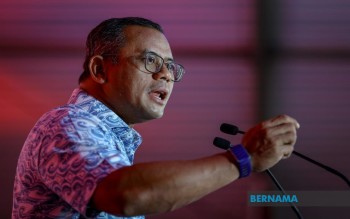
Selangor has consolidated its position as Malaysia's economic powerhouse, with the state's gross domestic product reaching RM460.1 billion in 2025, a substantial RM28 billion increase from 2024. The achievement marks another milestone for the industrial and commercial hub, which now accounts for more than a quarter of the nation's total economic output. Menteri Besar Datuk Seri Amirudin Shari highlighted that Selangor's growth rate of 6.3 percent significantly outpaced Malaysia's overall economic expansion of 5.2 percent, demonstrating the state's capacity to drive national prosperity despite broader economic headwinds.
The state's economic expansion has elevated Selangor's share of Malaysia's GDP from 26.2 percent to 26.5 percent, a gain that underscores the region's accelerating economic trajectory. Official data released by the Department of Statistics Malaysia shows that Selangor's growth substantially exceeds that of any other state in the country, with the RM28 billion increment representing at least double the economic expansion achieved by the next-largest contributor. Kuala Lumpur, despite recording respectable growth with its GDP climbing to RM265.1 billion following a RM13.2 billion increase, remains considerably smaller than its neighbouring state. The disparity illustrates how Selangor's diversified economic base and strategic positioning have created a self-reinforcing cycle of competitive advantage.
The growth trajectory exceeded expectations set by academic researchers and independent analysts. An economic forecast prepared jointly by Universiti Putra Malaysia and the Selangor Research Institute had projected the state's economy would reach approximately RM455.3 billion by 2025. Selangor's actual performance surpassed this estimate by nearly RM5 billion, suggesting either greater underlying economic momentum than anticipated or improved effectiveness in economic policy implementation. This outperformance carries significance for policymakers and investors alike, as it indicates that government initiatives and private sector responsiveness are translating into measurable economic gains beyond baseline forecasts.
Three principal sectors drove the RM28 billion economic expansion. The services sector contributed RM15.9 billion of the growth, reflecting Selangor's increasing specialisation in financial services, logistics, tourism, and professional services. Manufacturing accounted for RM5.3 billion of the increase, maintaining the state's traditional strength in this capital-intensive sector despite regional competition and shifting global supply chains. Construction contributed RM3.7 billion, demonstrating robust demand for infrastructure development and real estate expansion across the state. Together, these three sectors reveal an economy in transition, becoming increasingly sophisticated while retaining its industrial foundations.
Selangor's sectoral dominance extends across the national economy. The state now accounts for 35.9 percent of Malaysia's entire construction activity, a position that reflects both the scale of development projects underway and the state's role as a testing ground for national infrastructure initiatives. Within manufacturing, Selangor's share of national output has climbed to 32.8 percent, despite global manufacturing challenges and regional competition from Vietnam, Thailand, and Indonesia. The services sector share stands at 27.1 percent of the national total, positioning Selangor as the leading provider of high-value economic services within Malaysia. These proportions underscore how concentrated economic power has become in the state, raising questions about regional development equity and potential economic vulnerabilities should Selangor experience a significant downturn.
The state government attributes much of this sustained growth to the First Selangor Plan (RS-1), a comprehensive five-year socioeconomic development strategy that covered the 2021-2025 period. Over this implementation cycle, Selangor's economy expanded by 33.94 percent, an increase equivalent to RM116.6 billion. The state's GDP rose from RM343.5 billion when the plan commenced to the current RM460.1 billion, a transformation that reflects deliberate policy choices and alignment between public sector planning and market dynamics. This five-year performance provides a roadmap for other states examining how to accelerate economic diversification and growth, though questions remain about whether similar strategies would work outside Selangor's uniquely advantaged geographical and institutional context.
Looking forward, the Selangor administration has articulated an ambitious new target: becoming the first Malaysian state to achieve a RM500 billion economy. This objective would require additional growth of approximately RM40 billion, demanding sustained investment, productivity improvements, and sectoral expansion. Amirudin emphasised that current success must not breed complacency, instead calling upon public and private sector stakeholders to maintain momentum and execute higher-productivity strategies. The challenge ahead requires not merely incremental improvement but qualitative transformation, potentially involving greater integration of technology, higher value-add manufacturing, and services exports that can command premium international pricing.
Meanwhile, Invest Selangor, the state's investment promotion agency, characterised the 2025 performance as exceptional momentum building on RM406.1 billion recorded in 2023. The state became the first in Malaysia to surpass the RM400 billion GDP threshold for two consecutive years, an accomplishment that reflects sustained investor confidence and operational resilience. This sequential performance eliminates any possibility that 2024 growth represented a statistical anomaly, instead confirming a structural strengthening of economic fundamentals. For Malaysian policymakers and business leaders, Selangor's trajectory raises the question of whether the state's success model offers lessons for other regions seeking to accelerate development.
The state's expanding national economic share carries implications beyond simple accounting. At 26.5 percent of GDP, Selangor now accounts for more than one-quarter of Malaysian economic output, a concentration that benefits the state through economies of scale and attracts talent and capital, but also creates dependency relationships for other states. Neighbouring Johor's economy remains at a size approximately 2.7 times smaller than Selangor's, while even Kuala Lumpur, despite its federal status and concentrated professional services base, trails considerably. This regional imbalance reflects historical patterns of investment concentration but also poses long-term challenges for national cohesion and political stability, as economic opportunity becomes increasingly geographically skewed.
Menteri Besar Amirudin articulated a commitment to translating economic expansion into tangible improvements in living standards for Selangor residents. Beyond GDP growth figures, he pledged that the administration would focus on enhancing quality of life, suggesting that future policy priorities will emphasise equitable distribution of prosperity rather than growth pursued as an end in itself. This framing acknowledges that sustained political legitimacy depends not merely on aggregate economic statistics but on how benefits percolate through society. Whether this commitment translates into concrete wage growth, improved public services, and housing affordability will ultimately determine whether Selangor's impressive economic gains generate corresponding social satisfaction.
For investors throughout Southeast Asia monitoring Malaysian economic developments, Selangor's performance offers encouraging signals about the country's fundamental resilience and capacity for growth. The state's diversified sectoral base suggests reduced vulnerability to single-industry downturns, while its outperformance of national averages indicates that strategic geographical locations combined with effective governance can produce outsized economic returns. The RM500 billion target, while ambitious, remains within reach given current trajectories, and achievement of this goal would further cement Selangor's position as one of Asia's most dynamic regional economies. Whether other Malaysian states can replicate this success or whether Selangor's advantages prove too entrenched remains a crucial question for national economic planning.

