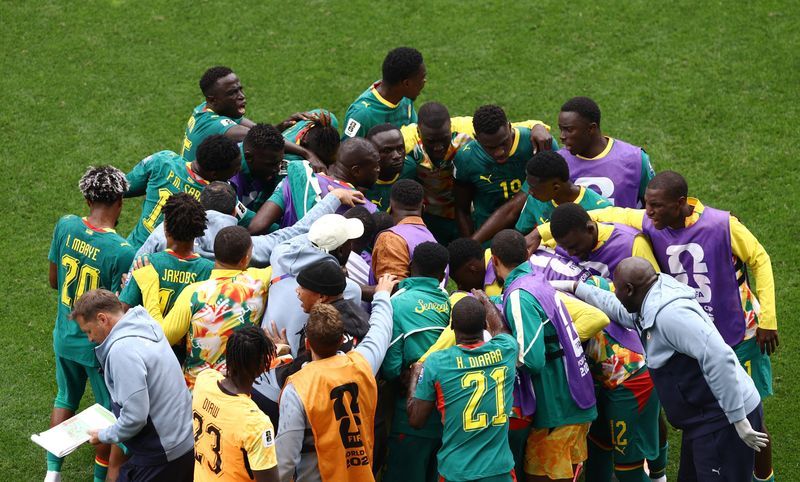
Senegal's football federation has opened a public dispute over the medical credentials of its national team doctor, with federation president Abdoulaye Fall citing concerns that emerged during the squad's disappointing World Cup campaign in North America. Speaking at a press conference on Monday, Fall disclosed that the team physician lacked appropriate specialist training in sports medicine, a revelation that he suggested had troubled players seeking assurance about their medical care during the tournament.
The controversy centres on Dr Abderahmane Fediore, who served as team doctor for the African champions during their World Cup participation. According to Fall, the doctor's primary background in gynaecology raised significant concerns among squad members who questioned whether they were receiving adequate medical support. The federation president indicated that players expressed insufficient confidence in the level of healthcare available to them, prompting team management to seek additional medical expertise to restore player morale and assurance.
Fall elaborated on the federation's response to these concerns, emphasising that securing credible medical professionals became a priority once the issue surfaced. He stressed that reassuring players about the quality of medical support took precedence over other considerations, framing healthcare provision as fundamental to the team's operational effectiveness. The federation's efforts to supplement the existing medical staff represented an acknowledgement of the underlying anxieties within the squad regarding their wellbeing during the tournament.
However, Senegal's Association of Sports Medicine swiftly rejected Fall's characterisation as inaccurate and harmful to Fediore's professional reputation. In a statement issued Monday evening, the association firmly countered that the team doctor holds legitimate specialist credentials in sports medicine and sports biology, specifically citing a graduate diploma from Cheikh Anta Diop University's faculty of medicine. This direct contradiction underscores a significant institutional conflict regarding professional standards and credibility.
Fediore's track record in football management extends considerably beyond the recent World Cup. He previously held leadership responsibilities within Fann Hospital's physiotherapy department and has served as Senegal's team doctor continuously since 2017, a tenure encompassing three World Cup tournaments and five Africa Cup of Nations competitions. This extensive experience in African football's most prestigious competitions suggests an established professional presence within the sport, complicating the federation's narrative about inadequate qualifications.
Senegal's World Cup participation proved substantially below expectations for a squad that had demonstrated competitive strength by winning the Africa Cup of Nations in January. The team suffered elimination during the group stage after losing their opening two matches to France and Norway respectively. Their subsequent encounter with Belgium illustrated the tournament's frustration, as Senegal squandered a commanding 2-0 advantage with merely five minutes of regular time remaining, ultimately suffering a 3-2 defeat after extra time that ended their tournament.
The federation responded to its disappointing performance by removing coach Pape Bouna Thiaw from his position on Saturday, citing tournament results as justification for managerial change. This decision to replace the coaching staff followed what federation officials characterised as a campaign falling short of realistic objectives. Yet the subsequent revelations about the medical team suggest deeper structural concerns within the federation's tournament preparation extended beyond coaching strategy and tactical implementation.
The timing of these allegations raises important questions about accountability within Senegal's football governance. By raising medical staff concerns publicly only after tournament elimination, the federation deflected responsibility for poor on-field performance toward institutional failings rather than acknowledging tactical or player performance deficiencies. Whether genuine medical concerns motivated this disclosure or whether it represents post-hoc rationalisation of disappointing results remains unclear from available information.
For Malaysian and Southeast Asian football observers, this controversy illustrates vulnerabilities within even historically successful African football programmes. The dispute demonstrates how institutional conflicts can emerge during high-pressure international competition, particularly when administrative bodies lack transparent communication structures. The public airing of medical staff disputes also reflects the complex dynamics of professional football administration, where credential verification and professional backgrounds should be established well before tournament participation rather than emerging during or after competitions.
The broader implications for Senegal involve potential consequences for professional relationships and the federation's credibility among its staff and players. If the association's defence proves accurate, the federation president's public statements constitute unfounded professional criticism that could damage workplace relationships and institutional trust. Conversely, if legitimate concerns existed regarding medical qualifications, the federation's failure to address them before tournament participation represents serious administrative negligence.
This dispute also raises questions about football federation oversight mechanisms across African football and how governing bodies verify professional credentials for support staff. Standard procedures for credential verification, particularly for positions directly affecting player welfare, should operate independently of competitive outcomes. Senegal's situation suggests that some organisations may lack robust verification systems until problems surface during high-stakes competitions, potentially exposing players to unnecessary risks during their most important matches.

