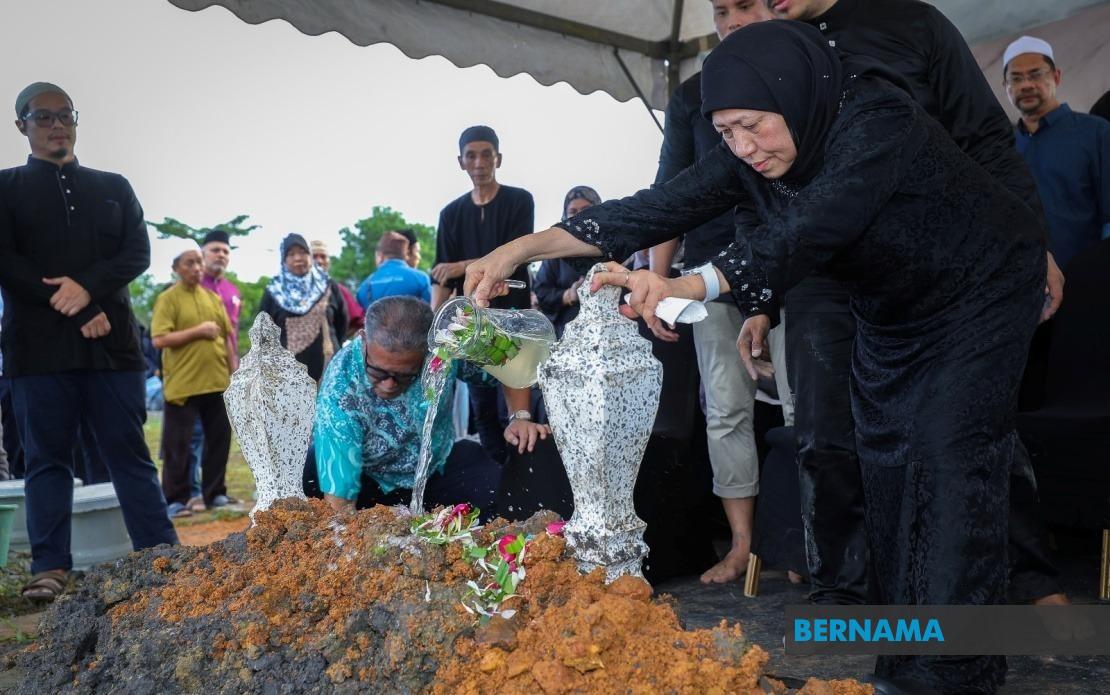
Datuk Kamil Misuari, the long-time spouse of Women, Family and Community Development Minister Datuk Seri Nancy Shukri, was committed to his final resting place at the Samariang Muslim Cemetery in Kuching at 5.15 pm on Wednesday, concluding a day of farewell ceremonies that drew close family and associates to honour his memory. The funeral rite was attended by approximately 100 family members and friends who gathered to pay their respects and support the bereaved household during the solemn occasion.
Kamil's earthly journey ended at a Kuala Lumpur medical facility, though the specific circumstances and duration of his illness were not disclosed in the official announcement. His passing marks the conclusion of a marriage spanning nearly four decades, having wed Nancy in 1985 in what would become a enduring partnership that produced three children together. The family's grief is now anchored in the responsibilities of continuing his legacy while managing the demands of public life.
The logistics of the funeral arrangements moved with deliberate pace throughout the day. Kamil's remains were transported by air from the federal capital, arriving at Kuching International Airport at 12.50 pm, whereupon they were conveyed directly to the family residence. This transfer allowed the household to conduct the customary funeral prayers in an intimate setting before proceeding to the cemetery for the final rites, ensuring that Islamic protocols were observed with appropriate solemnity and family presence.
At 65 years of age, Kamil's passing represents the loss of a husband who had navigated the complexities of being married to a high-ranking government official. Nancy Shukri's portfolio in women, family, and community development places her among the nation's more prominent ministerial voices, giving her public responsibilities that extend far beyond her immediate family circle. The minister's professional obligations in a demanding cabinet position necessarily create unique pressures on family life, particularly during difficult periods such as illness and bereavement.
The attendance of approximately 100 mourners speaks to the social standing of the family within Sarawak's community networks. While the exact composition of attendees was not detailed, such gatherings typically encompass extended family branches, long-standing family friends, and professional associates of both the deceased and the bereaved minister. In Malaysian culture, the presence of such numbers reflects the esteem in which the family is held and the importance placed on collective mourning practices.
For Nancy Shukri personally, the loss of a spouse after 38 years of marriage represents a profound personal transition. Having established a family unit with three adult children, she now enters a new chapter of life circumstances. The minister's ability to continue her official duties while managing personal grief demonstrates the resilience often expected of senior public figures in Malaysia, though such demands are typically acknowledged with sensitivity from government and parliamentary colleagues.
Kamil's role as a spouse to a cabinet minister, though largely removed from public scrutiny, would have involved navigating the protocols and expectations that accompany ministerial life. State functions, diplomatic events, and community engagements often require spousal presence and participation. His 65 years encompassed a period of Malaysian transformation, from the nation's earlier post-independence decades through to the contemporary period of rapid modernisation and political evolution.
The burial at Samariang Muslim Cemetery places Kamil within the broader community framework of Kuching, where Nancy Shukri maintains her strongest political constituency. Sarawak has long been her political home, and the choice of this final resting place reinforces the family's continuing connection to the state despite the demands of federal politics requiring frequent residence in Kuala Lumpur.
The passing of Kamil occurs within a broader context of Malaysian public life, where ministerial families navigate the intersection of private tragedy and public responsibility. The government establishment typically extends condolences and allows appropriate period for adjustment, recognising that personal loss transcends political position. Nancy Shukri's colleagues in cabinet and parliament would be expected to demonstrate support during this period of transition.
For Malaysian observers, this event serves as a reminder of the human dimensions underlying political life. Ministers and senior officials are not immune from the universal experiences of illness, loss, and bereavement that affect all citizens regardless of social standing. The funeral arrangements, conducted with traditional respect and family-centred dignity, reflect the enduring importance of ritual and community in providing structure during moments of profound personal change.

%22%2F%3E%3C%2Fpattern%3E%3C%2Fdefs%3E%3Crect%20width%3D%22100%25%22%20height%3D%22100%25%22%20fill%3D%22url(%23ph48y62g)%22%2F%3E%3Crect%20width%3D%22100%25%22%20height%3D%22100%25%22%20fill%3D%22url(%23ph48y62p)%22%2F%3E%3Ctext%20x%3D%2250%25%22%20y%3D%2250%25%22%20text-anchor%3D%22middle%22%20dominant-baseline%3D%22central%22%20fill%3D%22rgba(255%2C255%2C255%2C0.95)%22%20font-family%3D%22Georgia%2C%20'Times%20New%20Roman'%2C%20serif%22%20font-weight%3D%22700%22%20font-size%3D%22320%22%20letter-spacing%3D%22-0.02em%22%3EPKR%3C%2Ftext%3E%3C%2Fsvg%3E)
%22%2F%3E%3C%2Fpattern%3E%3C%2Fdefs%3E%3Crect%20width%3D%22100%25%22%20height%3D%22100%25%22%20fill%3D%22url(%23ph50dweg)%22%2F%3E%3Crect%20width%3D%22100%25%22%20height%3D%22100%25%22%20fill%3D%22url(%23ph50dwep)%22%2F%3E%3Ctext%20x%3D%2250%25%22%20y%3D%2250%25%22%20text-anchor%3D%22middle%22%20dominant-baseline%3D%22central%22%20fill%3D%22rgba(255%2C255%2C255%2C0.95)%22%20font-family%3D%22Georgia%2C%20'Times%20New%20Roman'%2C%20serif%22%20font-weight%3D%22700%22%20font-size%3D%22320%22%20letter-spacing%3D%22-0.02em%22%3EUS%3C%2Ftext%3E%3C%2Fsvg%3E)