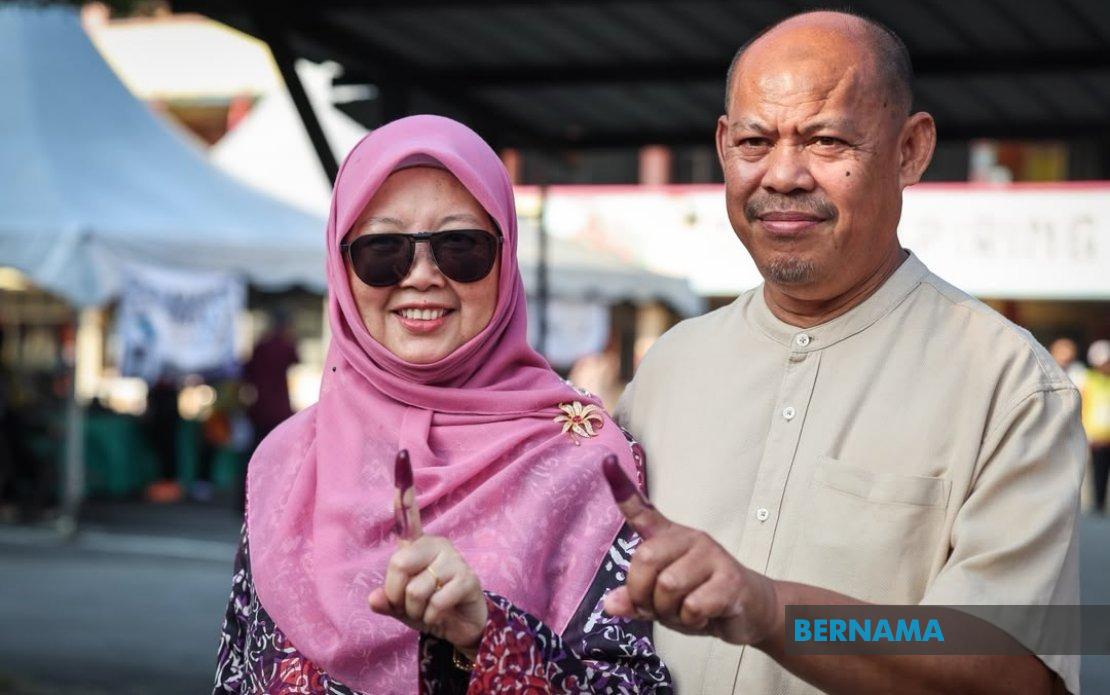
Senior figures from Malaysia's major political parties joined voters at polling stations across Johor on July 11 for the state's 16th general election, with several casting their ballots among the earliest in the morning. The participation of high-profile leaders at the outset of voting served as a symbolic gesture of civic engagement, setting the tone for what was expected to be a significant electoral exercise in one of the country's most politically important states.
Datak Seri Dr Zaliha Mustafa, chairman of the Johor branch of Parti Keadilan Rakyat, made her way to Sekolah Menengah Kebangsaan Bandar Baru Uda in Johor Bahru shortly after the polls opened at 9 am. Accompanying her was her husband, Dr Ahmad Adzlan Musa, and the pair cast their votes in the Larkin constituency. As a former Minister in the Prime Minister's Department with responsibility for Federal Territories, Dr Zaliha's presence at the ballot box carried particular symbolic weight, underscoring the significance party leadership placed on the electoral process.
Recognising the challenge posed by Johor's tropical climate, Dr Zaliha made an appeal to the broader electorate shortly after voting. She encouraged citizens to make an early appearance at polling stations, stressing the practical advantages of participating before the afternoon hours when meteorologists had forecast significant rainfall across the state. Such weather-related considerations are not uncommon during Malaysia's monsoon seasons and can affect turnout if not managed strategically.
Meanwhile, the Democratic Action Party's presence in the election was marked by Teo Nie Ching, the party's Johor chairman, who voted at Sekolah Jenis Kebangsaan Cina Kulai Besar in the Kulai constituency at approximately 9:30 am. The participation of DAP leadership reflected the party's commitment to contesting the election across multiple constituencies and demographic groups. The choice of voting location in a Chinese vernacular school also reflected the party's historical strength among certain communities in Johor.
The early voting by party leaders demonstrated a coordinated approach to the electoral exercise, with senior figures making their participation visible to both media and the public. Such gestures, though symbolic in nature, carry weight in Malaysian electoral culture, where the conduct and engagement of political leaders often influences public perception of the legitimacy and importance of the voting process itself. The presence of these figures at polling stations in the morning hours conveyed a message of confidence in the electoral machinery and commitment to democratic participation.
Johor's 16th state election represented a continuation of the state's vibrant democratic tradition. As one of the country's most developed and populous states, Johor has long been a bellwether for national political trends, with electoral outcomes often carrying implications for broader political dynamics across Peninsular Malaysia. The state's economic significance and strategic location also mean that its governance structure is closely watched by both domestic and international observers.
The weather forecast issued prior to polling day highlighted a practical concern for electoral administrators and voters alike. Afternoon rain, while common during certain seasons, can create logistical challenges for polling stations, affect voter turnout, and complicate the transport of materials and personnel. By encouraging early voting, party leaders acknowledged these realities while also subtly promoting their own visibility at the ballot box during peak media coverage hours.
The election itself unfolded against the backdrop of Malaysia's evolving political landscape, marked by shifting coalitions, rising voter expectations for accountability, and ongoing debates about economic management and social policy. Johor, with its diverse population encompassing Malay, Chinese, Indian, and indigenous communities, serves as a microcosm of these broader national concerns. The participation of PKR and DAP, both components of opposition-aligned coalitions at various points in recent political history, underscored the competitive nature of electoral politics in the state.
The turnout and conduct of the election would subsequently become subject to analysis by political observers, academics, and party strategists seeking to discern trends in voter sentiment and preferences. Early indications such as the enthusiasm displayed by party leadership, the apparent organisation of polling infrastructure, and public engagement with the democratic process provided initial signals about the health of democratic participation in Johor. These factors, taken collectively, offered insights into voter confidence in electoral institutions and the perceived legitimacy of the electoral process itself.
The 16th Johor state election demonstrated that despite Malaysia's complex political environment and occasional challenges to democratic norms, the fundamental commitment to holding regular, competitive elections remained intact. The participation of senior party figures, their willingness to engage with media, and their encouragement of public participation all reflected an understanding that electoral credibility depends not only on the technical administration of voting, but also on the visible commitment of political elites to the democratic process. As results were subsequently tallied and analysed, the early morning presence of these leaders would be remembered as part of the broader narrative of how this particular electoral chapter unfolded in Johor's political history.

