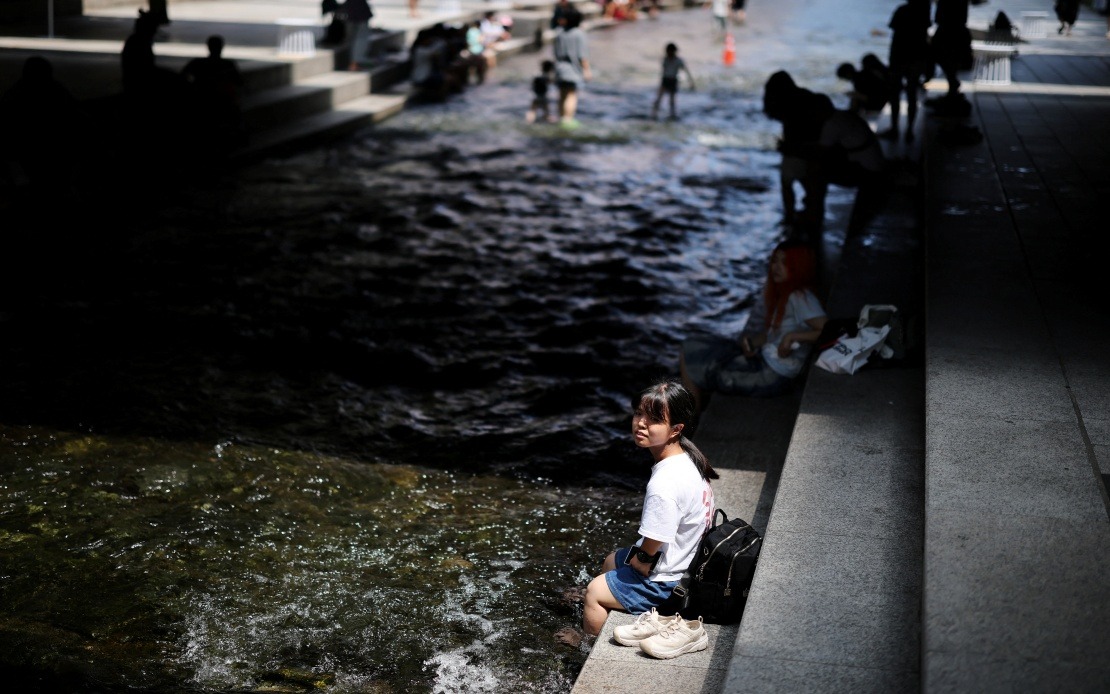
South Korea's capital Seoul has reached a grim meteorological milestone by issuing its highest-level heat wave warning for the first time in history, marking an escalation in the nation's battle against record-breaking temperatures. The Korea Meteorological Administration activated the serious heat wave warning on Tuesday morning, affecting southeastern and southwestern areas of the city as forecasters predicted daytime temperatures climbing to 38 degrees Celsius. This unprecedented alert underscores the severity of the ongoing heat crisis gripping the Korean peninsula and raises important questions about climate adaptation strategies that Southeast Asian nations like Malaysia may face in coming decades.
The warning encompasses 11 administrative wards across Seoul, with prominent districts such as Gangnam, Songpa, Gangseo and Gwanak now operating under the highest alert status. The serious heat wave warning system, relatively new to South Korea's meteorological framework having been introduced on June 1, is triggered when perceived temperatures reach 38 degrees Celsius or above, or when maximum daily temperatures exceed 39 degrees Celsius, particularly in regions where the perceived temperature has already exceeded 35 degrees Celsius for at least two consecutive days. The stringency of these criteria underscores how extraordinary conditions must be for authorities to activate this maximum alert level.
The heat surge has already taken a tangible human toll on the capital's population. Government statistics reveal that 18 additional heat-related illness cases were documented in Seoul on Monday alone, pushing the cumulative total since mid-May to 185 documented cases, of which two proved fatal. These figures illustrate not merely the intensity of the current weather phenomenon but also its duration and relentless impact on public health infrastructure. The concentration of cases in the bustling capital reflects both the urban heat island effect and the vulnerability of densely populated areas where cooling solutions are unevenly distributed across socioeconomic strata.
Malaysian observers should note the parallel challenges facing Seoul and tropical Southeast Asian cities, where heat management during monsoon seasons and climate disruptions poses growing public health threats. Unlike Malaysia's year-round warm climate, Seoul's extreme heat represents a departure from historical norms, making adaptation particularly difficult for an aging population and infrastructure designed for cooler conditions. The Korean capital's experience demonstrates how even developed nations with advanced meteorological systems can be caught off-guard by intensifying climate extremes.
In response to the escalating crisis, Seoul's metropolitan government has mobilized a comprehensive emergency response strategy addressing both immediate symptom relief and vulnerable population protection. The administration has implemented road-watering initiatives aimed at reducing ambient temperatures in urban microclimates and has prioritized outreach to high-risk groups, particularly residents confined to inadequate housing with limited air conditioning access. Approximately 4,000 designated heat shelters, including community centers, senior citizen facilities and welfare institutions, have been activated across the city to provide refuge for those lacking safe cooling spaces at home.
The government's approach reflects a two-tiered strategy: environmental amelioration through infrastructure interventions combined with social safety nets for those unable to access private cooling solutions. This framework mirrors approaches being considered across Southeast Asia, where informal settlements and aging housing stocks present similar vulnerability challenges. Malaysia's own urban centers, particularly in the Klang Valley and Penang, have explored comparable cooling center initiatives, though the scale and frequency of extreme heat events remain less severe than what Seoul currently experiences.
The interior ministry's public guidance, distributed via text message to all citizens, emphasized behavioral modifications and self-protection measures. Citizens were instructed to minimize outdoor exposure, avoid strenuous activities in direct sunlight, maintain consistent hydration and seek refuge in climate-controlled environments. This mass communication strategy represents an important recognition that official warnings alone prove insufficient without accompanying behavioral guidance grounded in public health principles.
Seoul's heat crisis occurs within a broader pattern of intensifying summer temperatures across East Asia, where climate scientists attribute the phenomenon to atmospheric circulation patterns, ocean warming and the urban heat island effect concentrated in megacities. The unprecedented nature of Seoul's highest-level warning carries symbolic weight beyond the immediate forecast—it signals that even well-resourced metropolitan areas with advanced climate monitoring capabilities are experiencing weather patterns that exceed historical precedent and existing response infrastructure.
For regional policymakers in Southeast Asia, Seoul's situation offers cautionary lessons about climate preparedness and the necessity for forward-looking adaptation frameworks. While Malaysia's equatorial climate has long meant managing heat as a chronic condition rather than crisis phenomenon, the intensification of weather extremes globally suggests that heat waves of unexpectedly severe character may become more frequent. The Korean capital's experience demonstrates that institutional preparedness, public communication systems and targeted support for vulnerable populations require constant refinement as climate baselines shift.
The broader implications extend beyond immediate public health management to urban planning, energy infrastructure and social policy. Cities experiencing unprecedented heat must simultaneously address acute medical emergencies while implementing longer-term mitigation strategies including green infrastructure, building efficiency standards and equitable access to cooling resources. Seoul's mobilization of 4,000 heat shelters, while impressive in scale, also reveals the limitations of ad-hoc crisis response when fundamental infrastructure gaps persist.
Looking forward, Seoul authorities face the challenge of managing not only the immediate heat emergency but also the cumulative physiological and psychological stress of prolonged exposure to extreme temperatures. The two heat-related deaths already recorded this season underscore that severe heat remains a genuine mortality risk, particularly for elderly populations and those with existing health vulnerabilities. This reality should prompt Southeast Asian governments to enhance heat emergency protocols before such crises become routine occurrences in tropical regions already operating near thermal tolerance thresholds.

