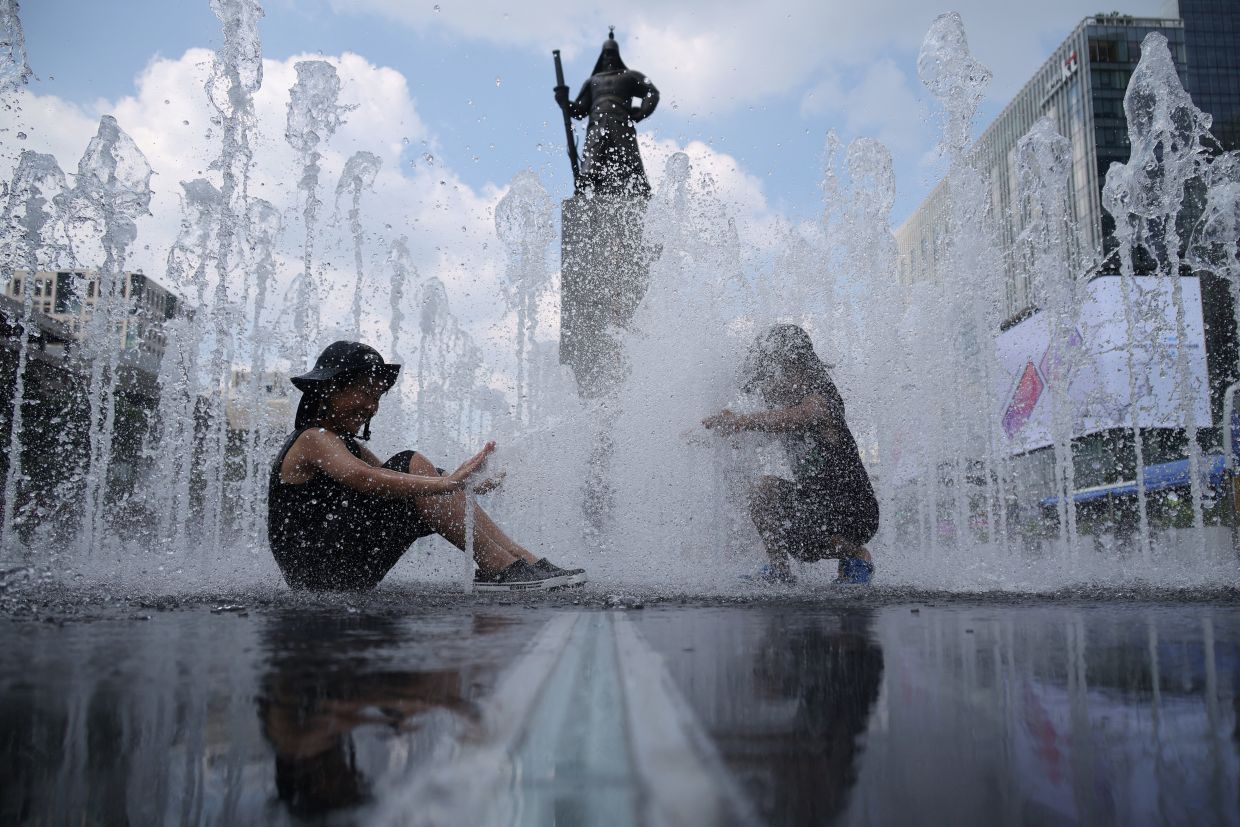
South Korea's weather authority has activated a new alert system for the first time, issuing a "severe heatwave warning" for Seoul as the capital endures an unprecedented bout of extreme heat that has pushed temperatures beyond 42 degrees Celsius. The Korea Meteorological Administration introduced this fresh warning category earlier in the year to better communicate danger to the public when dangerous heat conditions develop, and its deployment on Monday signals the intensity of the current conditions gripping the nation's largest metropolitan area.
The weekend proved particularly brutal for South Korea's citizens. New national temperature records tumbled on Friday, Saturday, and Sunday consecutively, with the mercury reaching 42.5 degrees Celsius at its peak. The cascade of record-breaking temperatures triggered a public health emergency, with nearly 300 individuals requiring hospital treatment for heat-related illnesses. The consistent breaking of heat records across three consecutive days underscores how the current weather pattern has shattered previous benchmarks that stood for years.
While Monday's temperatures did not quite match the weekend's extreme peaks, the oppressive conditions persisted without significant respite. The Seoul metropolitan area, home to approximately nine million residents, remained firmly in the grip of the heatwave. The Korea Meteorological Administration specifically warned that certain districts within the sprawling capital would experience continued intense heat, with conditions expected to worsen rather than improve in the coming days.
Temperature indices that account for humidity and perceived conditions—known as "feels-like" temperatures—tell an even more alarming story. Monday marked the second consecutive day when the apparent temperature in some parts of Seoul reached 35 degrees Celsius, a figure that reflects how the human body experiences the heat. Forecasters projected these perceived temperatures could climb even further, potentially reaching 38 degrees Celsius from mid-morning Tuesday, compounding the health risks facing residents already exhausted by days of exposure.
Public health officials responded to the crisis with explicit guidance. The heatwave warning explicitly recommends halting or postponing outdoor activities and work whenever feasible. Citizens have been advised to seek refuge in air-conditioned spaces, whether private residences, commercial establishments, or government-designated heat relief shelters established across the city. The measures reflect growing acknowledgement that temperatures at this extreme level pose genuine threats to life and wellbeing, particularly among vulnerable populations including the elderly, infants, and those with underlying health conditions.
On Seoul's streets, residents adapted their daily routines to survive the onslaught. Commuters making their way to workplaces on Monday displayed visible strategies for coping, moving deliberately through patches of shade and minimizing direct sun exposure even during the cooler early morning hours. Such behavioural adjustments, though individually rational, collectively demonstrate how extreme weather fundamentally disrupts normal urban life and forces society to reorganize around survival priorities.
The introduction of the "severe heatwave warning" classification represents South Korea's attempt to align its meteorological communication systems with the evolving climate reality. The designation was established this year specifically to provide clearer, more granular warnings during extreme heat events, enabling the public and authorities to calibrate response measures appropriately. This represents a recognition that traditional weather advisory systems may not adequately convey the danger posed by the most severe conditions.
Regionally, neighbouring Japan has simultaneously grappled with comparable meteorological extremes, introducing its own terminology to capture unprecedented heat conditions. Tokyo has begun using the phrase "cruelly hot days" as an official meteorological designation for periods when temperatures exceed 40 degrees Celsius. This parallel development across East Asia underscores how the region faces a shared climate challenge requiring coordinated public communication strategies.
The scientific consensus regarding these intensifying heat events points toward anthropogenic climate change as the primary driver. Researchers studying extreme weather patterns have documented that heatwaves are increasing in both frequency and severity globally as a consequence of human-induced alterations to the planet's climate system. The escalating toll these events exact—measured in hospitalizations, economic disruption, and mortality—suggests that societies across Asia will need to develop ever more sophisticated adaptation mechanisms, from early warning systems to infrastructure investments in cooling capacity, even as global emissions reduction efforts proceed.
For Southeast Asian nations monitoring this situation, South Korea's experience offers instructive lessons. The region's tropical and subtropical climates already experience intense heat, and climate projections suggest further warming in coming decades. The deployment of new warning systems, the establishment of heat shelters, and public education campaigns may warrant consideration by Malaysian, Singaporean, and Thai health authorities as they prepare for increasingly severe heat events. The question of how societies can protect vulnerable populations while maintaining economic activity during extended extreme heat periods will likely become increasingly pressing throughout the region.

